Sri Kannapiran Mills’ GFF-Backed Upgrades Drive Efficiency, Sustainability Gains

Coimbatore-based Sri Kannapiran Mills Ltd (SKML) has reported significant operational, environmental and social improvements following capital and technical assistance from the Good Fashion Fund (GFF). The company upgraded its singeing machine, purchased several second-hand air jet looms, and installed a cone winding machine, boosting capacity and efficiency.
Post-investment, SKML has improved its energy mix to 58.1% solar (up from 32.6%), 20.7% wind (up from 18.1%), 10.8% natural gas (down from 25.6%), with the remainder sourced from the grid (as of March 2025).
“Without the Good Fashion Fund, we may not have moved forward with these upgrades so confidently. As an SME navigating a turbulent global supply chain, marked by trade disruptions, rising input costs and sustained margin pressures, long-term investments are difficult to justify without the right support. The flexible capital and technical guidance from GFF helped us take a leap we couldn’t have taken alone. We’re now seeing benefits not just in cost savings and operational improvements, but also in product quality, data systems and worker well-being,” said Srihari Balakrishnan, Managing Director, SKML.
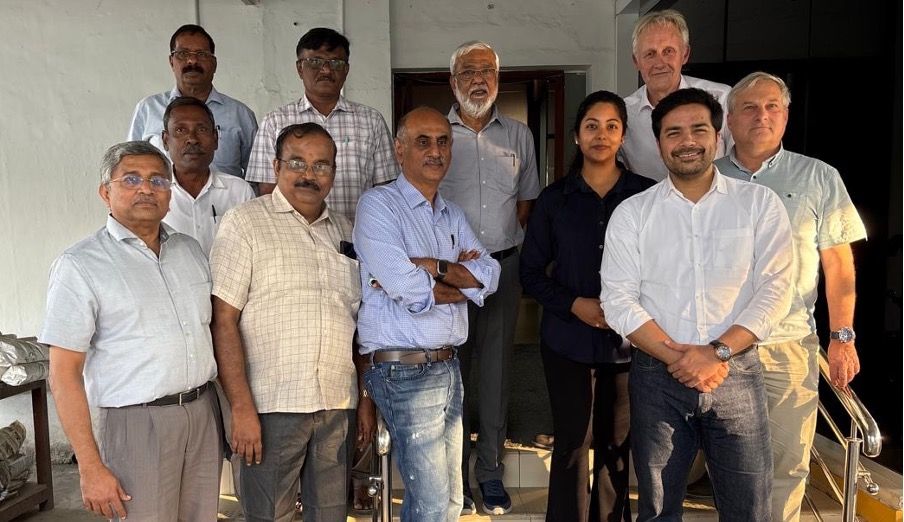
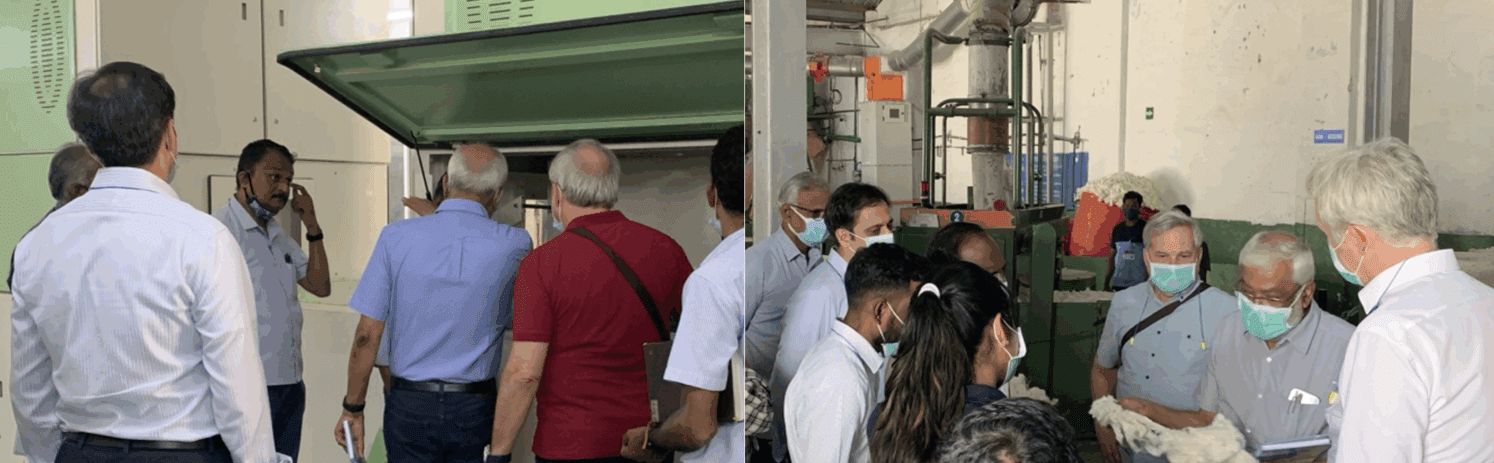
(L-R) Jayaraj (SKML), Ravi Kumar (Fairwear), David Varghese (Fairwear), Gurunathan (SKML), Krishnakumar (SKML), Srihari Balakrishnan (SKML), Seenivasahan (SKML), Sruthi Ramesh (GFF), Bob Assenberg (GFF), Jayanth Kashyap (GFF), Dr. Jürgen Hannak (adelphi Consult).
Key results from GFF-financed equipment monitoring (2024):
Environmental
- Up to 59% reduction in energy consumption from key equipment – 886,439 kWh saved annually
- Up to 95% reduction in cotton waste – 4,756 kg saved annually
- ~1,272 tonnes of CO₂ savings from GFF-financed equipment
Social
- Safer working conditions via automation of manual doffing
- Enhanced ESG performance through data monitoring systems
- Improved grievance mechanisms and health & safety measures
Financial
- Approx. US$ 140,000 annual gross savings from energy-efficient spinning and waste reduction
- Approx. US$ 115,000 annual gross savings from improved weaving efficiency
- Monthly fabric output increased to 220,000 metres due to additional air jet looms
Bureau Veritas verified the investment’s impact at three SKML units, confirming the above savings and efficiencies. “Our two-part assessment found SKML’s culture of structured data and cross-functional collaboration key to success. Upgrades like auto-doffers, Saurer rotor machines, and Reshmi winders boosted efficiency while enabling stronger operational monitoring,” said Rakesh Vazirani, Head of Decarbonization, Bureau Veritas.
Case study release
With support from GlobalCAD and Adelphi Consult, GFF has released a detailed case study outlining the fund’s use of proceeds, outcomes and lessons for the textile sector. As one of the first publicly documented examples of impact validation in Tier 2 and Tier 3 textile manufacturing, the study offers insights for investors, brands and stakeholders seeking to accelerate sustainable supply chain transformation.
“This case strengthens our conviction that catalytic finance must go deeper into the supply chain,” said Bob Assenberg, Co-Founder, FOUNT and Fund Director, GFF. “Sri Kannapiran Mills shows that transformation doesn’t always require the newest technology, it requires a mindset. By prioritising what’s available, affordable and adaptable, they have delivered measurable progress and laid a strong foundation for the future.”