
‘Sustainability Will Define Profitability: SEDL’s Clean-Tech Vision For India’s Textile Future’

In the future, being profitable will mean being sustainable. Clean-tech is no longer optional; it’s essential for survival, says Vimarsh Verma in conversation with Henry Dsouza, Associate Editor, Textile Insights
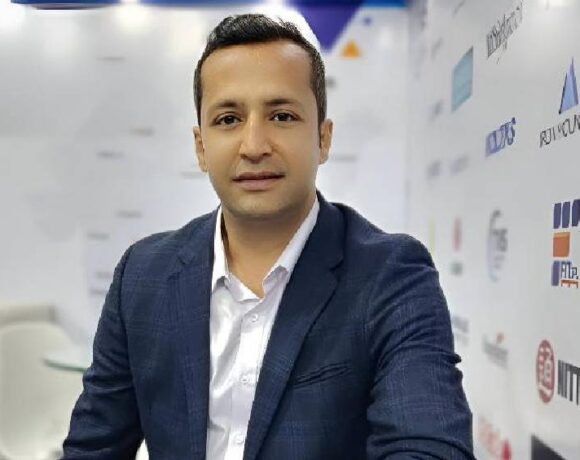
In today’s rapidly shifting industrial landscape, India’s textile sector stands at a pivotal crossroads. Pressured by global competition, tightening environmental norms and rising operational costs, textile manufacturers are being forced to rethink the very foundations of their production models. Amid this transformation, Spray Engineering Devices Limited (SEDL), a company that began its journey in the sugar industry three decades ago, has emerged as a powerful force that is redefining what clean technology can achieve for textile processors. At the heart of this movement is
Verma recalls that SEDL’s tryst with textiles began almost organically. “We realized that our evaporation technologies could solve some of the biggest wastewater challenges in textile clusters,” he says. What started as a side application soon became one of the company’s most important verticals. Textile processing units were generating massive volumes of wastewater, millions of litres every single day and the conventional infrastructure required to treat such volumes was inefficient, sprawling and expensive to maintain.
SEDL saw a clear opportunity to create compact, energy-efficient solutions that could not only help mills meet environmental norms but also dramatically reduce their dependence on fresh water.
Over the past decade, the company has developed boiler-free evaporators, advanced ZLD systems and salt and caustic recovery technologies each aimed at helping mills achieve circularity in the truest sense. “Our caustic recovery systems operate at nearly one-third the cost of conventional systems,” Verma notes, highlighting how sustainability need not come at a premium.
Today, textiles constitute SEDL’s third-largest market after pharmaceuticals/chemicals and beverages/FMCG, a position influenced less by a lack of demand and more by the slowdown in fresh capex that the textile industry has endured over the past two years. Yet, Verma says the momentum is returning. “We’re seeing a strong revival, especially in the dyes and intermediates space. Companies like Colourtex and Spectrum Dyes are adopting advanced solutions much more rapidly.”
When asked about the operational challenges that textile processors face, Verma is quick to point out an often-overlooked weakness. “The biggest gap I see is the decentralised way the water, energy and utilities are managed. They operate in silos and that limits efficiency,” he explains. For instance, dyeing units generate a tremendous amount of heat from their processes, most of which is simply wasted. SEDL has demonstrated that the same heat, captured intelligently, can be reused to treat wastewater and even returned to the process as hot water. “In many dyeing units, hot effluent is simply wasted,” Verma says. “We’ve used that same heat to treat wastewater and return it as hot water, reducing both thermal load and energy bills.”
This integrated approach is the foundation of SED’s clean-tech philosophy, to see energy, water and waste as interconnected rather than isolated elements. Verma believes this is the only way textile companies can maintain profitability in a world where margins are shrinking both domestically and internationally. “The real profitability will come from lowering the cost of production through smart, integrated systems,” he says. “The technology exists. What’s needed now is wider adoption.”
One of SEDL’s most transformative contributions to the textile sector is its reimagining of Zero Liquid Discharge (ZLD). The company offers two types of systems, one that modernizes the traditional ZLD process and another that eliminates the Effluent Treatment Plant (ETP) entirely. “In our next-gen ZLD, we take effluent straight into our evaporator with minimum pre-treatment and recover up to 99% water, often at 15 TDS,” Verma explains. It is practically distilled water. This development is especially beneficial in regions like Erode, Balotra, Pali and Ludhiana, where traditional ETPs occupy vast stretches of land and offer limited recovery.
But water is not the only resource SEDL is helping mills reclaim. “We’re also recovering salts and caustic in a carbon-neutral manner,” Verma says. Notably, the company’s caustic recovery plants operate without any steam from boilers, a huge advantage at a time when fossil fuel-based heating costs are escalating. These systems typically offer a payback period of just one to two years, making them some of the most financially attractive sustainability solutions available today.
When discussing installations, Verma shares that SEDL currently has more than 250 operational projects across India and another 50 underway. Of these, around 40 installations cater specifically to textiles. While regions like Rajasthan and Tamil Nadu lead in adoption, with Erode and Salem emerging as stronghold clusters, new markets like Surat are quickly catching up. Verma notes that Surat, which historically relied on CETPs, is beginning to shift toward decentralized treatment due to its superior flexibility and efficiency.
One project that holds a special place in SEDL’s portfolio is the transformation of Arthanari Loom Center (ALC) in Salem. ALC is a prominent textiles manufacturer supplying brands such as ZARA, GAP, Ralph Lauren and The North Face. The unit faced severe challenges like high TDS, COD and hardness in its wastewater, limited space and escalating operational costs. SEDL installed its patented MVR-based Low Temperature Evaporator (LTE®), a system that operates at just 60°C and recycles heat through mechanical vapour recompression. The results were remarkable. ALC now recovers more than 75% condensate, up to 9 tonnes of salt per day and nearly 5 million kilocalories of heat energy, all while eliminating fossil fuel consumption entirely. “They achieved complete ZLD with almost ‘one-third’ the operating cost,” Verma says proudly. The success of ALC has turned it into a model for circular manufacturing in India’s textile heartland.
As environmental regulations grow stricter, covering water discharge, carbon emissions and resource efficiency, textile mills often fear that compliance will translate into higher costs. Verma sees the opposite. “Our India-specific clean-tech systems reduce operating costs by 80–90% compared to conventional evaporators,” he explains. “When we integrate water treatment with utilities, overall energy and water consumption drops significantly.” This convergence of sustainability and cost-efficiency, he believes, is what will propel the next wave of textile modernization.
One of SEDL’s biggest contributions to sustainability is its ability to cut water footprints dramatically. “We recover up to 99–99.5% of process water,” Verma says. This means mills only draw 1–2% fresh water as makeup. Equally striking is that the recovered water often surpasses local groundwater quality, allowing mills to reduce or even eliminate raw water treatment systems. This closed-loop model is particularly crucial in water-stressed regions where textile clusters typically operate.
Looking ahead, Verma reveals that SEDL is preparing to disrupt yet another cornerstone of textile production: drying. Drying is among the most energy-intensive stages in textile processing and the industry has long relied on fossil fuels to meet its heating requirements. “We’re developing electrically powered dryers based on reverse air-conditioning cycles and induction technologies,” he says. These next-generation dryers aim to deliver higher efficiency, lower operating costs and complete electrification, ushering in a new era of decarbonized textile operations. He adds that the first solutions should be ready by the end of the year.
Reflecting on the next five to ten years, Verma believes the trajectory is clear. “What used to take five years in technology now happens in two,” he points out. “If we don’t adopt clean-tech quickly, we risk falling a decade behind.” With fossil fuel prices rising and global buyers demanding greener supply chains, the window for transformation is narrowing. “In the future, being profitable will mean being sustainable,” he says. “Clean-tech is no longer optional; it’s essential for survival.”
As the conversation draws to a close, Verma’s message for the textile industry is both encouraging and urgent. “This is an exciting time for textiles,” he says. “Slowdowns give us the chance to rethink and reinvent. Our technologies help mills cut costs, recover resources and run carbon-neutral operations. The sooner the industry adopts clean-tech, the faster India can scale and compete globally.” He leaves a final thought that sums up his vision: “Embrace clean technology now, not just for environmental reasons, but to secure a profitable and sustainable future for the entire textile value chain.”