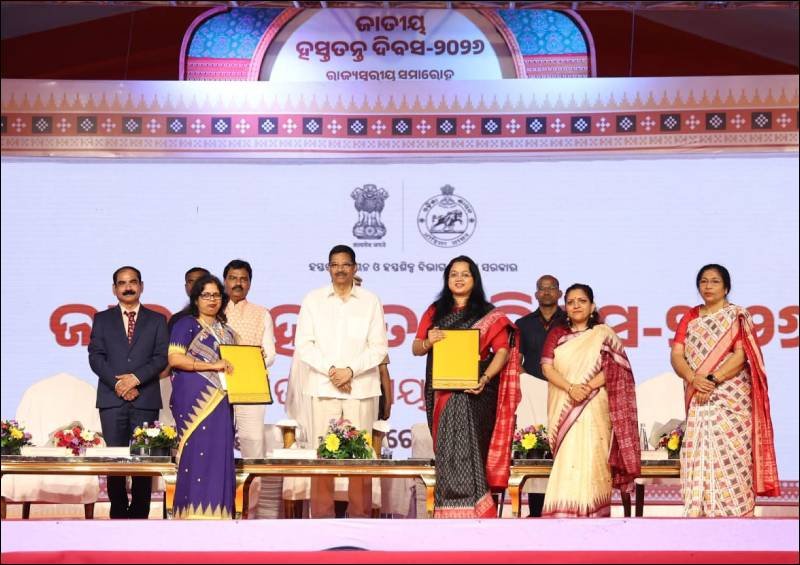
As India’s handloom sector seeks to balance heritage with changing market demands, Birla Cellulose is driving innovation by introducing sustainable man-made cellulosic fibres (MMCFs) into traditional weaving clusters. Through the integration of Livaeco™ Viscose, Livaeco™ Modal and
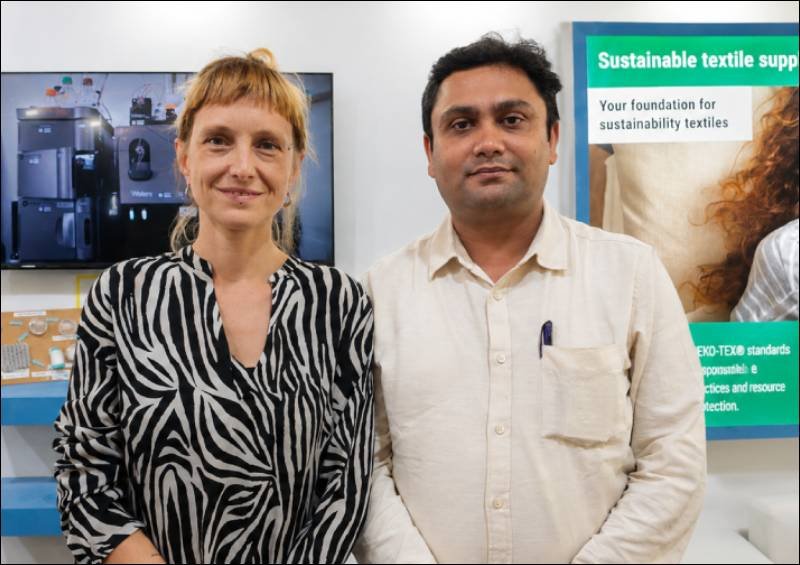
At Bharat Tex 2026, Centexbel highlighted its growing engagement with the Indian textile industry, from technical textile testing and OEKO-TEX certification to PFAS testing and European compliance requirements. The quality of conversations, rather than just the volume of visitors, stood out for Centexbel at Bharat Tex 2026. “The footfall was really good, not only on […]
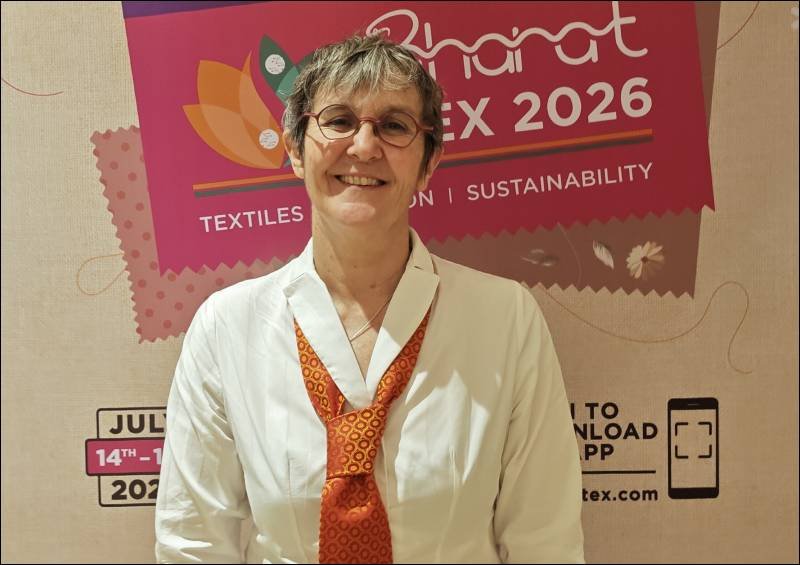
Nicole Rycroft on Bharat Tex 2026, the need to diversify India’s fibre basket and the opportunity to turn agricultural waste into next-generation materials For Canopy, Bharat Tex 2026 is becoming an important platform for India to demonstrate its ambitions in the global textile industry. “India has been a long-respected and trusted major manufacturing hub for […]
Rajeev Gupta on Bharat Tex becoming India’s signature textile exhibition, the company’s transformation journey, India’s need to strengthen garmenting, and the next phase of growth. For Rajeev Gupta, Joint Managing Director, RSWM Ltd., Bharat Tex 2026 has evolved into far more than an industry exhibition. It has become a meeting point for India’s
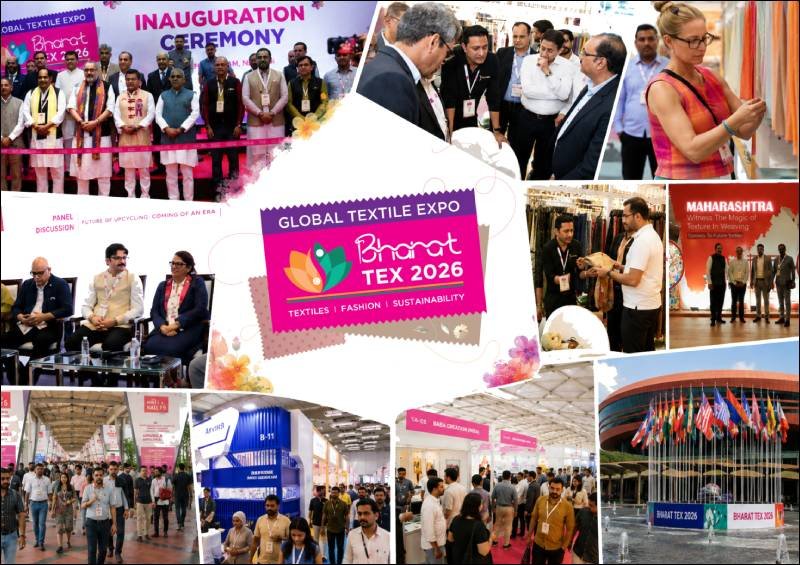
With record participation, major investment commitments, global partnerships and discussions spanning trade, technology and sustainability, Bharat Tex 2026 has emerged as more than an exhibition, it is becoming a platform for India’s textile ambitions. When Bharat Tex 2026 opened at Bharat Mandapam, New Delhi, it presented a powerful picture of India’s textile industry in
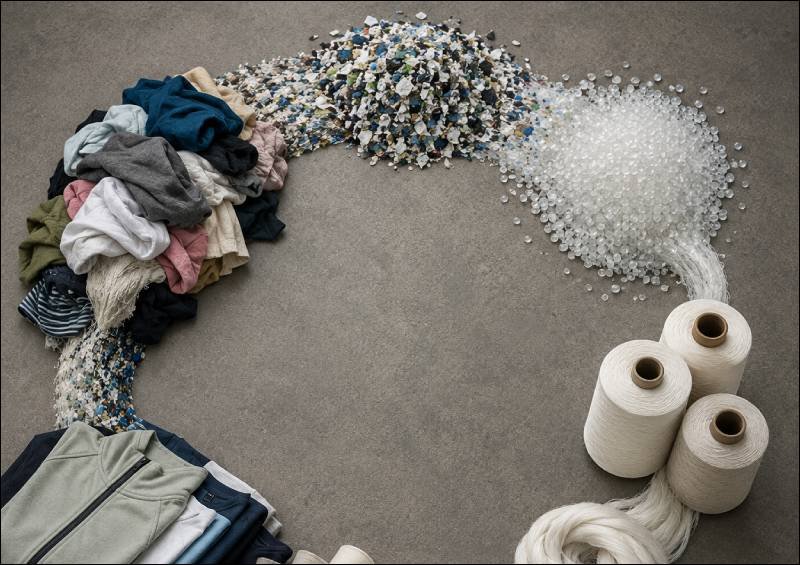
European Commission Study Highlights the Promise and Challenges of Closing the Loop on Textile Waste As the global textile industry races to meet ambitious sustainability targets, chemical recycling is increasingly being viewed as a critical technology for achieving true circularity, particularly for polyester-based textiles. A new report from the European Commission’s
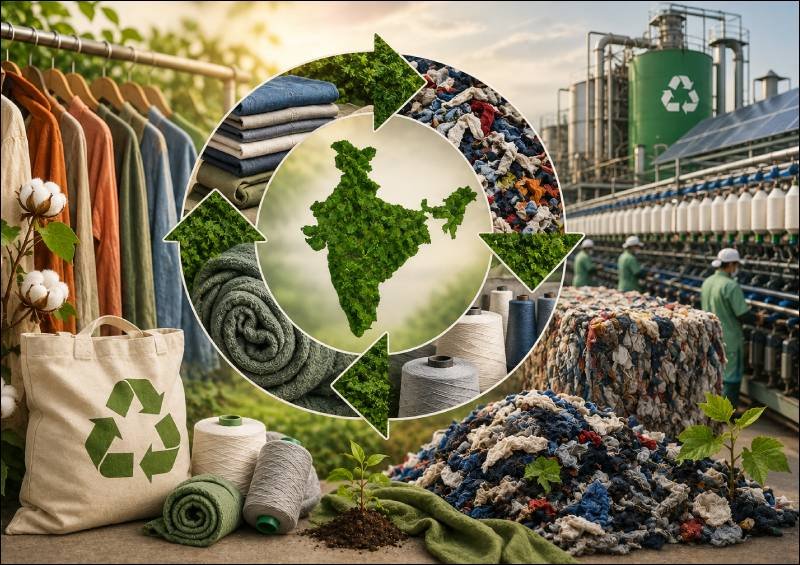
Sustainability is no longer a niche agenda for India’s textile industry. As global markets demand greater transparency, traceability and environmental responsibility, circularity is emerging as a strategic imperative for the sector’s next phase of growth. India’s textile and apparel industry has long been one of the country’s most important economic pillars.
The Bangladesh Garment Manufacturers and Exporters Association (BGMEA) and the Society of Dyers and Colourists (SDC) have signed a Memorandum of Understanding (MoU) aimed at strengthening collaboration in education, sustainability and innovation across Bangladesh’s textile and apparel sector. The partnership seeks to enhance industry capabilities by promoting knowledge and
RSWM Ltd., one of India’s leading manufacturers of value-added yarns, denim fabrics, knitted fabrics and green polyester fibre, reported resilient financial performance for the first quarter ended June 30, 2026, despite continued challenges in global textile markets. The company posted revenue of Rs 1,161 crore in Q1 FY27, up 1.7 percent sequentially, supported by
CHT Group has strengthened the integration of sustainability into its business operations, according to its 2025 Sustainability Report, which highlights progress in climate action, transparency and social responsibility. A major achievement during the year was the German Sustainability Award 2026 for the company’s Pigmentura dyeing process, recognised for combining