
We Try To Create That Bond, That Trust And The Feeling That We Are A Part Of The Fair: Rajeev Gupta
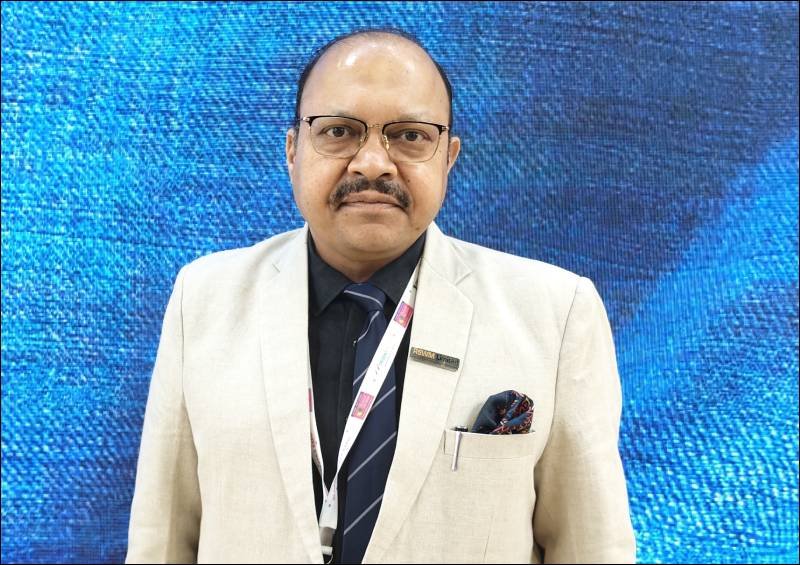
Rajeev Gupta on Bharat Tex becoming India’s signature textile exhibition, the company’s transformation journey, India’s need to strengthen garmenting, and the next phase of growth.
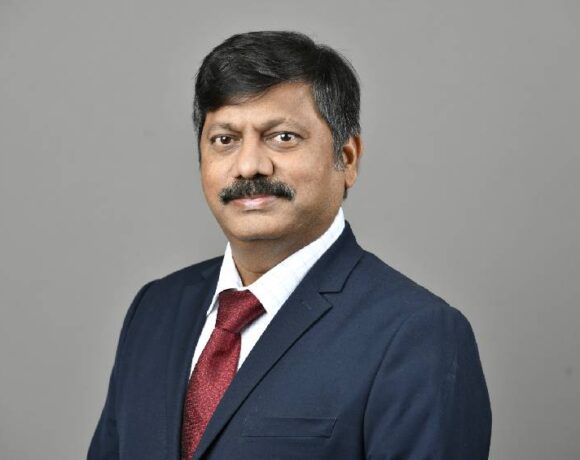
For Rajeev Gupta, Joint Managing Director, RSWM Ltd., Bharat Tex 2026 has evolved into far more than an industry exhibition. It has become a meeting point for India’s entire textile value chain and is increasingly emerging as a signature platform for the country’s textile industry.
Gupta acknowledges that the event’s timing presented some challenges, particularly for European visitors, as July coincides with the holiday season across much of Europe. However, he believes these concerns are outweighed by the growing importance of Bharat Tex.

“This is a great fair. Everybody looks forward to it. Bharat Tex has become a signature textile fair for India,” he says.
What makes the event particularly significant, according to Gupta, is the diversity of stakeholders it brings together. Visitors from major textile hubs such as Tiruppur, Ludhiana, Mumbai, Surat and Bhiwandi are present alongside technology and machinery suppliers, brands, garment manufacturers, customers and other industry stakeholders.
“You are in one place where everybody is coming and is visible,” he says.
The exhibition also brings together the government, industry associations and the business community. Senior officials from the Ministry of Textiles and other government departments are present, providing industry stakeholders with an opportunity to engage directly with policymakers.
“Government, trade partners, associations, customers and suppliers, all are in one place,” Gupta says.
The broad participation was also reflected in the response at the RSWM booth. The company received visitors ranging from large customers and global brands to retailers, converters and garment manufacturers. They came from textile hubs such as Ludhiana, the NCR region, Mumbai, Bengaluru, Tiruppur and other parts of the country and the globe.
The Philosophy Behind RSWM 2.0
One of the key themes at RSWM’s booth was RSWM 2.0, a concept that represents the company’s next phase of transformation i.e., Reflect, Restore and Reshape, alongside this year’s highlighted theme ‘SUTRADHAAR – The Thread That Connects Tradition to Tomorrow,’ inspired by the Government of India’s 5F Vision of Farm to Fibre, Fibre to Fabric, Fabric to Fashion and Fashion to Foreign Markets. The theme represents our integrated approach to textile manufacturing and our commitment to combining India’s rich textile heritage with innovation and sustainability.
RSWM began its journey in 1960 and has now completed more than six decades in the textile industry. According to Gupta, the new initiative is about bringing new energy, focus and agility to the organisation while retaining the values that have defined it.
“RSWM is a 65-year-old company. We started in 1960. RSWM 2.0 is about creating newness in the organisation with new vigour, new energy and a new focus,” he says.
The company’s core values remain centred around the customer, employees, sustainability and giving back to society. However, Gupta believes that the organisation must evolve to meet the demands of a changing industry.
“If I am successful because of certain things and have reached where I am today, the same competencies or the same culture may not take me to the next level,” he says.
This realisation has led to significant introspection within the organisation and the creation of RSWM 2.0. The objective is to become more customer-centric, develop new products, respond faster to changing demand and create greater agility across the organisation.
More Than a Sales Opportunity
While exhibitions are often judged by the immediate business they generate, RSWM approaches Bharat Tex differently.
“We don’t see these fairs as sales opportunities. We never target that,” Gupta says.
Instead, the exhibition allows customers to interact with different levels of the organisation. Customers who normally engage with sales teams can meet RSWM’s product development, quality, production, marketing and business teams on a single platform. The event also allows customers familiar with one particular RSWM business to understand the company’s broader capabilities.
“We have five businesses. Customers are often exposed to one of those businesses. When they come here, they see the entire company,” Gupta explains. The objective is to strengthen relationships, be transparent and build trust.
“We try to create that bond, that trust and that feeling that we are a part of it. We never target sales at this event. If it happens, that is a by-product,” he says.
India Needs to Strengthen Garmenting
Gupta also believes that India must address gaps in its value chain to compete more effectively in global markets.
While the country has strong capabilities in spinning, knitting and weaving, he believes greater investment in garment manufacturing and skill development is essential.
“India needs to develop skills and good large scale capacity in garmenting,” he says.
With free trade agreements opening new markets, strengthening the downstream part of the value chain will become increasingly important.
The market outlook itself appears to be improving. After eight to ten months of uncertainty, Gupta says customers are now talking about increased volumes and strategic partnerships.
Expanding Capacities and Exploring New Opportunities
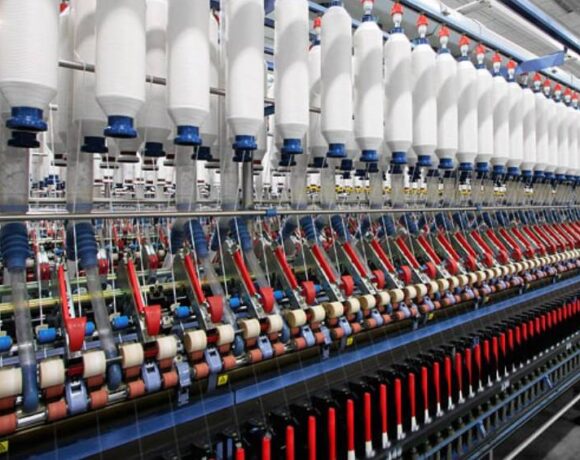
RSWM already has several major projects underway. The company is expanding its knitting capacity from 700 tonnes to 950 tonnes per month following an investment of Rs 92 crore and is also adding printing capabilities to its knitting business.
Through LNJ GreenPET, a subsidiary of RSWM Ltd., the company is investing Rs 427 crore in a bottle-to-bottle recycling project that will convert PET bottles into chips for producing new PET bottles to truly support circularity.
RSWM has also invested Rs 60 crore in green energy through a partnership with Adani, strengthening its captive renewable energy capabilities and currently around 70% of the total energy requirements across operations are met through renewable sources, way ahead of the industry standards.
Looking ahead, the company is evaluating further investments in existing capacities and exploring the possibility of entering garment manufacturing.
“With the opportunities emerging from the upcoming FTAs, we are also thinking of exploring garments as one line,” Gupta says. For RSWM, the next phase will combine the strength of a six-decade legacy with new capabilities, greater agility, investments in sustainability and a sharper focus on customer needs.
That is the essence of RSWM 2.0: preserving the values that built the company while recognising that the future will require new thinking and a willingness to redefine the organisation once again.