
Thailand’s Trade Deficit With China Hits Record High
Thailand’s trade deficit with China widened to a historic high in the first four months of 2025, driven by a sharp surge in imports as businesses rushed to secure raw materials and components amid global trade uncertainty and potential changes to U.S. tariff policy.
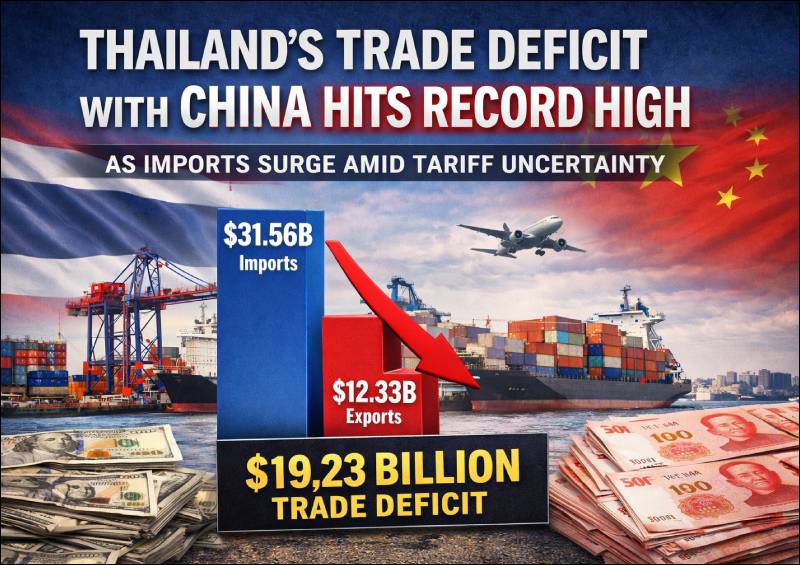
According to the Ministry of Commerce’s Trade Policy and Strategy Office (TPSO), Thailand recorded a trade deficit of US$ 19.23 billion with China between January and April 2025, with imports totaling US$ 31.56 billion and exports amounting to US$ 12.33 billion.
In April alone, imports from China reached a monthly record of US$ 8.82 billion, while exports to China rose 3.2% year-on-year to US$ 3.55 billion, resulting in a monthly trade deficit of US$ 5.27 billion. The import surge was led by machinery and electronics, reflecting stockpiling by export-oriented manufacturers anticipating potential supply-chain disruptions. Electrical machinery and parts imports jumped 110.6% to US$ 1.67 billion, while general machinery and components rose 37.8% to US$ 848.2 million. Imports of home appliances increased 21.6% to US$ 658.6 million, computers and related parts climbed 35.1% to US$ 506.8 million, while chemical imports declined 11% to US$ 496.8 million.
Wisit Limluecha, Vice Chairman of the Thai Chamber of Commerce, said the rise in imports is likely linked to manufacturers securing inputs ahead of possible U.S. tariff changes. With the U.S. imposing global tariffs and initiating a 90-day negotiation window, many countries, including Thailand, are accelerating imports to avoid potential cost increases, a trend expected to continue through May 2025. On the export side, Thailand’s shipments to China have been affected by lower fruit exports due to weather-related declines in crop yields.
Looking ahead, the second half of 2025 will be crucial as the U.S. finalises its tariff structure. The U.S. is Thailand’s largest export market, accounting for 19% of total exports, and any uneven tariff outcomes could impact Thailand’s competitiveness and disrupt regional supply chains.