UK Trade Pact To Open New Opportunities For Haryana Textiles, Footwear, Gems
The India-UK Comprehensive Economic and Trade Agreement (CETA) is expected to create fresh opportunities for Haryana’s textile, footwear, gems and jewellery and engineering sectors, while providing the state’s MSMEs and startups greater access to the UK market, Haryana chief minister Nayab Singh Saini said on Monday.
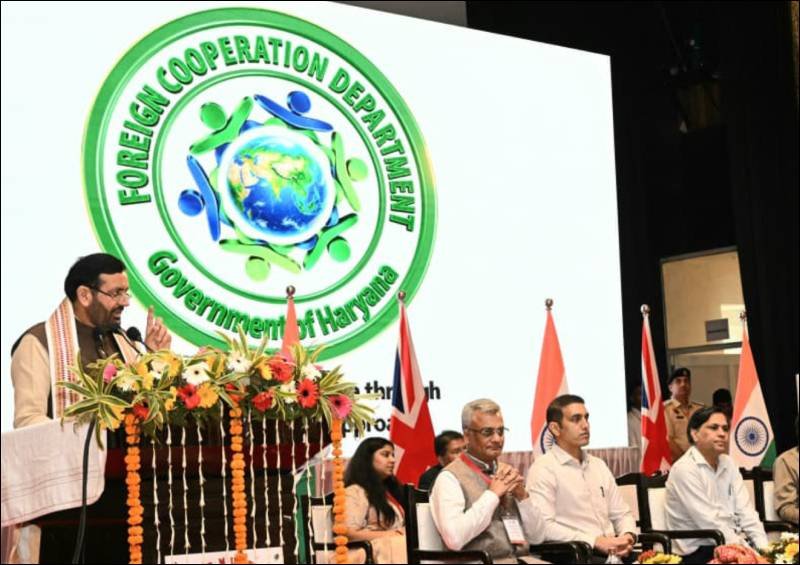
Addressing the ‘Haryana-UK CETA Trade Bridge: Unlocking Global Opportunities for Haryana’ programme, organised in collaboration with the UK High Commission, Saini said the state would seek to convert its industrial strengths into higher exports, investments and employment.
The chief minister said CETA would provide a platform for Haryana’s businesses to expand their international presence and benefit from greater access to global markets, technology and investment.

The agreement, which came into effect on July 15, is already generating opportunities for export orders, investment and employment, said Pawan Choudhary, adviser to the chief minister in the foreign cooperation department.
Haryana’s exports have increased from around US$ 12 billion in 2019-20 to US$ 19 billion in 2025-26, Choudhary said. The state’s economy is currently valued at around US$ 154 billion and is growing at nearly 11%.
The textile and apparel sector is among the industries expected to benefit from improved access to the UK market. Haryana has a significant manufacturing base across textiles, garments, footwear and engineering, while its proximity to major logistics hubs provides exporters with access to international markets.
The state government is also seeking to use CETA to strengthen investment and technology partnerships rather than focusing only on merchandise exports.
Industries and commerce minister Rao Narbir Singh said the government wanted the agreement to translate into technology partnerships, investment and employment. He invited British companies to establish partnerships and invest in Haryana.
British deputy high commissioner Alba Smeriglio said Haryana’s strengths in manufacturing, agriculture, technology and services complemented the UK’s capabilities in advanced manufacturing, innovation, financial services, education and research.
CETA could therefore facilitate new business partnerships and support investment and job creation, she said.
Haryana is also positioning the trade agreement within a broader investment drive. Saini said the state aims to attract Rs 5 lakh crore in fresh investment and create more than 10 lakh jobs by 2030-31.
The state has introduced 10 sector-specific policies covering areas including semiconductors, electronics, artificial intelligence, data centres, medical devices, automobiles, electric vehicles, agribusiness and global capability centres.
Saini said 110 MoUs involving investments of Rs 1.10 lakh crore, including Rs 24,350 crore in foreign investment, were signed on the first day after the launch of the policies.
The newly introduced Haryana Progressive MSME and Export Promotion Policy 2026 targets more than Rs 55,000 crore in investment, five lakh new jobs and a doubling of the state’s exports.
Haryana currently has 12,271 registered startups, including more than 11,500 recognised under the Department for Promotion of Industry and Internal Trade and Startup India, Choudhary said.
Saini also announced that the Happening Haryana Global Investors Summit 2027 would be held from April 5 to 7 next year. The state plans to conduct roadshows in seven Indian cities and nine global economic centres, including the UK, Japan, South Korea, Germany, Brazil, Chile and Dubai, ahead of the summit.
The government has set a broader target of positioning Haryana as a major contributor to India’s economic growth, with the state aiming to contribute USD 1 trillion to the national economy.