
Uster Guides Spinners On Fiber Control To Cut Yarn Claims
Achieving consistent yarn quality remains one of the most demanding challenges for spinning mills worldwide. Recognising that many yarn claims originate from variations in raw material and early-stage processing, Uster Technologies has released practical guidelines to help spinners reduce irregularities right from the start of the process.
The insights are featured in the latest edition of the Uster News Bulletin No. 52, which analyses the most common causes of yarn quality claims and outlines best practices for operational excellence in spinning mills.
Recurring Causes of Yarn Claims
According to Uster’s long-term experience, the underlying reasons behind yarn quality claims have remained largely consistent over the past two to three decades. While the severity may vary depending on the yarn’s end use, recurring factors such as fiber fineness variation, neps formation, and short fiber content continue to impact spinnability and yarn consistency.
By systematically analysing these parameters, mills can significantly reduce the likelihood of customer complaints.
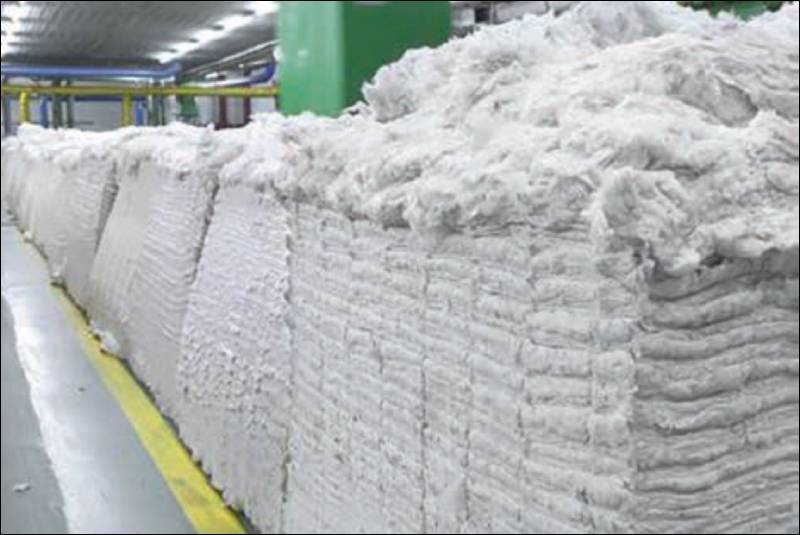
Bale mixing – laydown
Laydown Consistency: Managing Micronaire
One of the most critical parameters influencing yarn quality is fiber fineness, or micronaire. Since cotton naturally varies in fineness, maintaining a narrow and consistent micronaire range during bale laydown is essential.
Fluctuations in micronaire can lead to barré effects and inconsistencies in yarn strength, often resulting in claims. To manage this, many spinners rely on data from Uster HVI systems for laydown planning. Increasingly, mills are adopting automated solutions such as Uster FiberQ, which uses algorithms to optimise bale selection by controlling micronaire and other fiber characteristics simultaneously.
This data-driven approach not only reduces manual intervention but also strengthens long-term quality management from fiber to yarn.
Fiber Process Control: Focus on the Blowroom
Another frequent source of yarn irregularity is the formation of neps. Uster emphasises that preventing nep creation at the beginning of the process is more effective than attempting to remove them later.
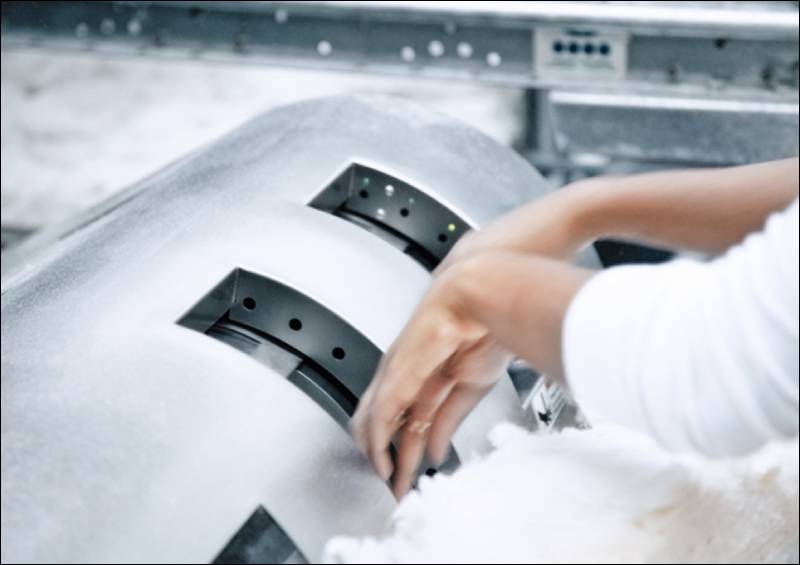
In the blowroom, the focus lies on balancing trash removal with minimal fiber damage. Mechanical opening and cleaning can inadvertently increase short fiber content and neps due to stress on the material. While some mills attempt corrections during carding or combing, Uster recommends thorough testing and optimisation at the blowroom stage as a more economical and sustainable solution.
Routine performance checks using Uster AFIS systems are widely adopted to monitor blowroom and carding efficiency, especially after machine maintenance or changes in cotton laydown recipes. Close monitoring helps maintain optimal opening, cleaning, and waste levels while limiting fiber deterioration.
Processing Statistics: Benchmarking Performance
Processing charts in Uster Statistics enable mills to track fiber characteristics such as neps, short fibers, and impurities across each stage of production. Typically, neps increase in the blowroom from bale to card mat, followed by a reduction after carding.
By benchmarking their performance against global standards, mills can quickly identify areas requiring improvement or confirm overperformance.
Managing Diverse Raw Materials
Process control becomes even more critical when working with mechanically recycled cotton or man-made fibers. Recycled cotton often enters the blowroom with higher short fiber content, depending on its source and opening method. Similarly, synthetic fibers, though uniform initially, can also suffer damage during processing.
Advanced testing solutions such as Uster AFIS 6 enable mills to assess both cotton and synthetic materials, helping identify fiber deterioration before it translates into yarn irregularity.
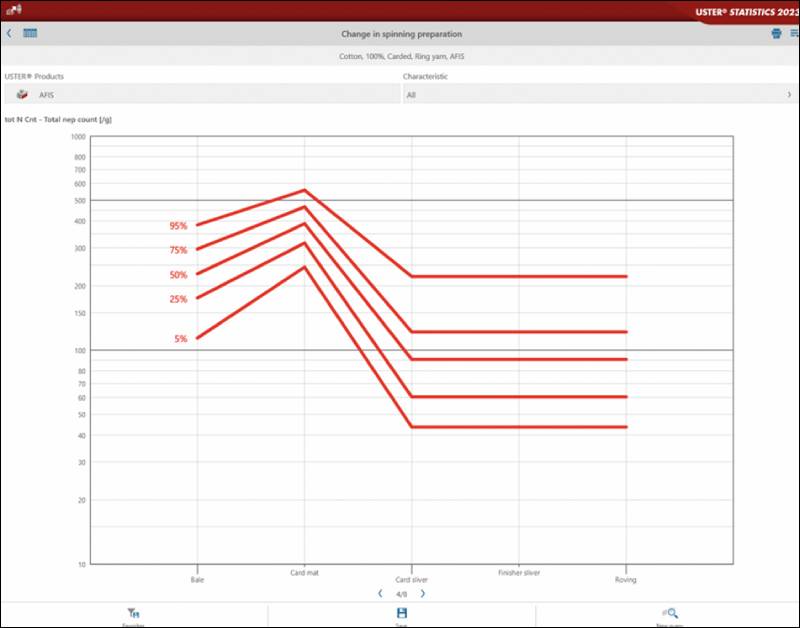
Fiber processing Uster Statistics – Total nep count (/g)
Proactive Quality Management
Uster underscores that fiber characteristics directly influence spinnability and yarn consistency. Measuring and understanding fiber quality at every stage is fundamental: what is not measured cannot be controlled.
Through Uster News Bulletin No. 52, the company shares best-practice recommendations from industry experts, offering actionable guidance to help spinning mills reduce quality claims and enhance production consistency. A range of additional application literature and the updated Uster Statistics are also available to support mills in strengthening their quality management systems.
With data-driven control and systematic monitoring, Uster aims to support spinners in achieving a new level of reliability and excellence in yarn production.
Downloads 
Uster News Bulletin No. 52 is available to download free of charge. Besides a comprehensive introduction about claims in general and in comparison, with the last fifty years, it contains eight sections on how to manage yarn irregularities claims.
Download link: www.uster.com/unb52download
 Furthermore, Uster offers a poster on causes, effects and solutions regarding fiber quality. Get your free-of-charge download!
Download link: www.uster.com/fiberqualityposter