From Fabric To Experience: How India’s Textile Industry Is Stitching A New Future
India’s textile industry is undergoing a paradigm shift. The value of textiles is now defined by the experience around the product. What talks is the design story, the convenience of discovery and delivery, the credibility of manufacturing practices, and the promise of durability and care. In this ‘experience economy,’ customers are no longer buying only a shirt or a bedsheet; they’re choosing a brand they can trust, a service they can rely on, and a smarter, more sustainable way to live with textiles.
Data, not guesswork, is shaping design
Merchandising used to lean heavily on last season’s sales and gut instinct. In this time and era, decisions are increasingly rooted in signals from store footfall, search trends, returns, and social conversation. Demand sensing is moving closer to real time, letting brands test smaller batches, refresh faster, and reduce overstock. The Open Network for Digital Commerce (ONDC) helps smaller labels reach buyers without depending entirely on a few dominant marketplaces. It’s still creativity, but it’s creativity guided by evidence.
Factories are getting faster and smarter
Experience at the storefront only works when supply can keep up. The PM MITRA Parks scheme aims to change the economics of speed and quality by clustering spinning, processing, and garmenting in plug-and-play parks. When yarn, dyeing, finishing, and stitching sit next to each other with common utilities and logistics, the time from concept to carton shrinks. Buyers can see innovation on the line, approvals happen in hours instead of days, and consistency improves because processes are standardized.

At the same time, the Production-Linked Incentive (PLI) scheme is drawing investment into advanced materials and performance fabrics, think moisture-management knits for sportswear, flame-retardant textiles for transport, or antimicrobial finishes for healthcare. These products aren’t just fabric; they deliver comfort, safety, and use-case-specific performance. The “experience” moves from the store to the body and the home: a jacket that breathes on a humid commute, upholstery that resists spills, or hospital linens that stay hygienic longer.
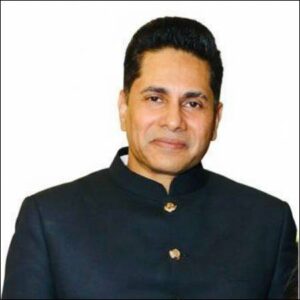
Neeraj Singh Jain, Design Director, Fashinza
When fabric becomes function
That idea is central to the National Technical Textiles Mission (NTTM), which is pushing science into everyday use. Imagine a bedsheet that inhibits bacterial growth or a curtain that helps cool a room. These are no longer distant prototypes; they are moving through pilots and early commercialization. Events like Bharat Tex 2024 showcased hundreds of such innovations, many aimed at sectors where textiles are integral to safety and productivity—healthcare, transportation, construction, filtration. Here, fabric is infrastructure: it shapes the experience of a hospital ward, a bus seat, or a worksite, not just a wardrobe.
Trust is part of the product
As products become more technical, buyers—domestic and international—want proof, not promises. Where was this made? By whom? Were people paid fairly? Traceability is turning into a competitive advantage. Brands are adding QR codes that reveal origin and certifications; cluster-based manufacturing makes compliance audits simpler and more credible; digital records travel with each lot to reduce disputes and speed customs. In exports especially, verified standards and reliable service now matter as much as a sharp price. The outcome is not just a sale—it’s a repeat buyer who trusts what’s on the label.
Experiential retail—virtual try-ons, fit guidance, and brand storytelling—works only when backed by flexible supply and responsive service. Post-purchase is part of the experience too: repair programs, resale pathways, and care guides help products last longer and keep their value. ONDC-enabled discovery, coupled with smarter manufacturing, lets even smaller brands offer premium experiences from “find” to “finish”: accurate delivery windows, consistent sizing, and options to alter, repair, or recycle. The line between product and service is fading; what remains is the relationship.
A practical roadmap for the experience economy
A practical roadmap for competing on experience starts with designing to real demand—treat data like a raw material to validate ideas early, size buys sensibly, and avoid slow movers, letting intuition be guided by evidence. Make in modern clusters so key processes sit together, lead times shrink, and standardized checkpoints keep quality steady at every handoff. Embed trust by baking traceability and compliance into the product itself—let customers scan, see, and believe the proof. And think beyond the sale with repairs, care and use guides, and resale pathways that extend product life, protect margins, and build lasting loyalty.
With strong export momentum, a pipeline of material innovation, and sustained policy support, India’s textile sector can lead on experience, not just capacity. The prize is bigger than volume. It has a reputation for products that are better designed because they are data-informed, better made because supply chains are modernized, and better trusted because proof is built in. That is how a bedsheet becomes a cooler room, a jacket becomes a better commute, and a brand becomes a promise kept.
(article by Neeraj Singh Jain, Design Director, Fashinza)