
How Vikram Turned Climate Pressure Into A Business Opportunity With Ivy Decarb
Vikram stood on the noisy, humid floor of his mid-sized dyehouse in Surat, feeling the squeeze from every direction. On his desk sat a stark reality: energy expenses were up 15% this quarter, eroding their already thin margins. In his inbox was a sharp email from a key European apparel brand, demanding a concrete decarbonization plan to keep their contracts for the upcoming year.
Vikram knew the solution. Upgrading to modern, low-liquor ratio dyeing machines would slash both water and energy use. The necessity was undeniable. Yet, every time he proposed the investment, it stalled. Caught in an endless cycle of friction between an eager technical department, a CFO bound by tight budget limitations, and hesitant local banks to finance textile projects given their limited offerings and high-interest loans, the project was paralyzed.
This high-pressure, high-stakes environment, where ambitious sustainability targets collide with harsh financial realities, is exactly why Ivy Decarb was created.

Designed specifically for the real-world operational challenges of the textile industry, Ivy Decarb recognizes that on the factory floor, meeting production targets and managing cash flow must take precedence over abstract discussions about emissions.
Moving Beyond Theoretical Frameworks
Desperate to break the deadlock, Vikram joined the Ivy Decarb Textile & Apparel Manufacturers Community, a free first step that changed his approach entirely. Instead of bogging manufacturers down in theoretical ESG frameworks, Ivy Decarb focuses on the core, tangible processes that actually sustain a plant: recycling, spinning, weaving, dyeing, finishing, printing and garment making.
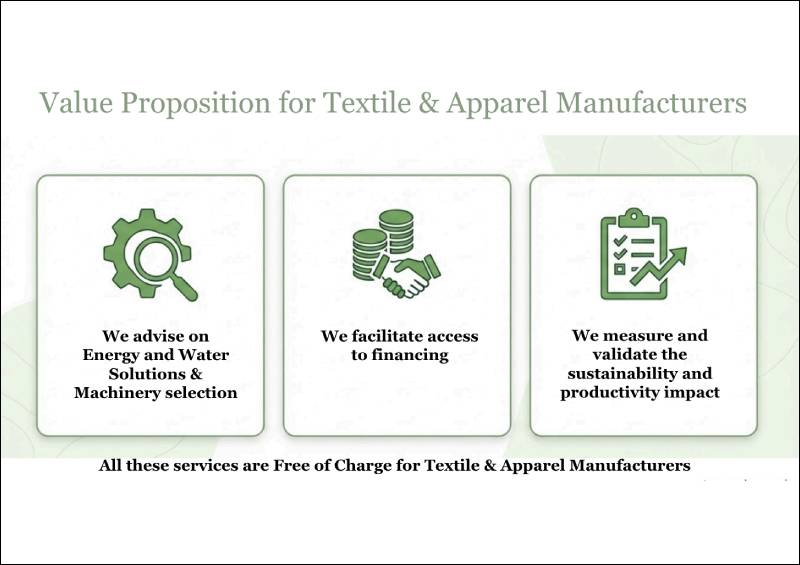
Through the platform, Vikram accessed a curated selection of high-efficiency machinery.
Using Ivy Decarb platform’s tools, he didn’t just look at brochures; he directly modeled the impact of a specific machine upgrade on his dyehouse’s energy bills, productivity metrics, and overall carbon footprint. It transformed a vague directive from his European buyer to decarbonize into a concrete, data-driven comparison, clearly detailing current performance versus future potential.
From Ambition to Financed Project
Armed with data, Vikram still faced his biggest hurdle: capital. Traditionally, this is where projects stall as paperwork multiplies and brands push for deeper savings without offering financial support.
But one of the most relevant values of Ivy Decarb’s offering is what happens after the right machinery is identified. Ivy Decarb rewrites the traditional playbook by embedding finance directly into the heart of its marketplace.
By utilizing Ivy Decarb’s network of partnered local and international banks, Vikram was able to bypass the traditional, hesitant lending routes. Because the platform provided vetted, reliable data on the machine’s projected ROI and energy savings, Vikram secured 100% funding for the decarbonization project. The biggest hurdle to modernization was cleared.
Turning Impact into Proof
Six months later, the new machinery was humming on Vikram’s factory floor. But a compelling success story requires tangible proof of delivery. For Ivy Decarb, this proof is rooted in verifiable, granular data.
Vikram’s journey followed Ivy Decarb’s rigorous impact measurement process:
- Establishing the Baseline: Before installation, Ivy Decarb collaborated with auditors to validate the sustainability and productivity performance of Vikram’s old machinery.
- Measuring the Upgrade: Once operational, Ivy and its partnering auditors performed a second measurement to validate the immediate impact of the machine replacement. Furthermore, a third measurement was scheduled three to six months later to monitor ongoing performance and validate the reliability of the machinery manufacturer—verifying the drop in energy consumption per unit, the boost in productivity, and the exact reduction in emissions.
When the European brand asked for an update, Vikram didn’t send an empty promise; he sent a measurable case study with confirmed, third-party validated results.
This robust, transparent impact measurement is highly valued across the entire value chain:
- For Textile Manufacturers (like Vikram): This transparency goes far beyond ticking ESG boxes. It helps mills become more competitive by securing existing contracts, winning new orders, negotiating better terms, and positioning themselves as preferred partners in a rapidly tightening global market.
- For Brands: They gain machine-by-machine, process-by-process evidence of their suppliers’ progress, enabling them to report on Scope 3 emissions reductions with absolute confidence.
- For Banks: It validates the manufacturer’s investment and helps evaluate the reliability of the machinery, providing the visibility needed to align portfolios with green financing requirements.
- For Machinery Manufacturers: It proves that their promises on sustainability and productivity deliver real results, reinforcing their credibility in front of the market.
A New Chapter for Textile Decarbonization
Vikram’s success is not an isolated incident. What makes Ivy Decarb particularly relevant for today’s textile industry is the geography of its work. The company focuses on the regions where global production is concentrated such as India, Bangladesh, China and Turkey.
By partnering with machinery suppliers, energy and water solutions manufacturers, and banks that share a long‑term view of the sector’s transition, Ivy Decarb utilizes an ecosystem approach. This transforms isolated pilot projects into a growing, global pipeline of credible, financeable decarbonization initiatives.
For plant managers worldwide, Ivy Decarb’s story is ultimately about turning pressure into opportunity. In a world where regulators and financiers are raising the bar every season, the mills that upgrade their machinery, secure smart financing, and prove their impact will lead the next chapter of the industry.
Ivy Decarb makes that leap faster, less risky and more rewarding, not in theory, but right on the factory floor.
Take the first essential step toward modernization today.
Decarbonize processes
Enhance productivity