
From Volume To Value: How Sitaram Spinners Is Rewiring Yarn Manufacturing
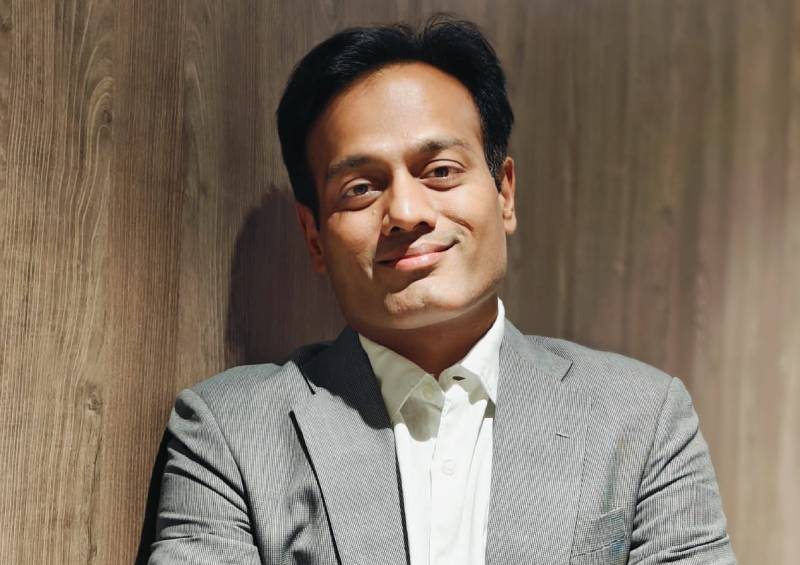
In an industry long defined by scale and cost competitiveness, a structural shift is quietly underway. Spinners are being forced to rethink their strategies as margin pressures intensify, raw material volatility rises and global demand evolves toward performance-led textiles. In an exclusive conversation with Henry Dsouza, Associate Editor of Textile Insights, Gautam Ganeriwal, explains how the company is navigating this transition not by chasing capacity, but by building a future-ready, value-driven yarn business rooted in innovation, operational discipline and product differentiation.
At a time when many players continue to expand capacity aggressively, Sitaram Spinners has adopted a more calibrated approach. “We don’t chase capacity for the sake of growth, our focus is on extracting maximum value from existing assets” says Gautam Ganeriwal, Executive Director, Sitaram Spinners. The company continues to invest in modernization and process upgrades, but every decision is guided by a clear framework, enhancing product quality, improving employee experience and delivering sustainable returns to stakeholders. Increasingly, capital allocation is being directed towards product innovation and process efficiency rather than pure expansion. “In today’s environment, the only durable edge is structurally lowering the cost of production while offering something better than competitors,” Ganeriwal adds, highlighting the need for continuous improvement across both technology and people.
Innovation, however, is not pursued in isolation. It is deeply embedded in a customer-first approach. “We have a dedicated team that constantly engages with customers to understand what they need and develop products accordingly,” Ganeriwal explains. This has enabled Sitaram Spinners to move beyond commodity yarns and build a portfolio of differentiated offerings. The company’s core strength lies in core-spun spandex yarn and their blended variants, particularly for denim. Over time, the company has built deep expertise in this niche, including dual-core and stretch denim yarns.

Reflecting on a key milestone, Ganeriwal notes, “During the cotton price spike in 2021, we introduced recycled polyester core-spun spandex yarn, which offered better structural stability and also made commercial sense.” Today, the company’s yarns contribute to nearly 15 per cent of India’s stretch denim output, with a strong presence across major textile hubs and an indirect global footprint through exports to markets such as Bangladesh, Vietnam and Latin America. “We don’t try to do everything for everyone, we focus on segments where we can create real value,” he says.
A defining pillar of this value-driven strategy has been the early adoption of dual-core yarn technology. “The biggest problem with conventional stretch yarn is fabric growth,” states Ganeriwal, and adds: “Over time, the garment loses its shape, especially at the knees or seat and that’s a complaint no brand can ignore.” Dual-core technology addresses this by combining elastane for stretch with a secondary filament such as T400 or PBT, which acts as a structural stabilizer. “You get stretch, but you also get recovery,” he says, explaining further: “The result is over 95 per cent dimensional recovery, which significantly extends the life of the garment.” What was once a premium feature is now becoming a baseline expectation across segments. “Consumers today want denim that moves like activewear but still retains its shape,” he adds. Having adopted this technology as early as 2014, Sitaram Spinners has built a strong and defensible position in high-performance yarns.
The company is now taking this further by developing next-generation technical yarns. “We are working on multiple new products based on the same platform, including some technical yarns for specialized applications,” Ganeriwal reveals. One such innovation has already been commercialized, with a patent application underway. At the same time, the company is experimenting with alternatives to traditional dual-core structures. “T400 is an expensive component and that limits scalability,” he explains. “We are developing a new approach where we can retain similar stretch and recovery without depending on it,” he adds. Trials are currently underway with several domestic and international brands. “If this works, it could significantly change the landscape,” he avers, while noting that it is still early in the development cycle.
Ensuring consistency in such complex products is no small task. “Dual-core is very unforgiving,” Ganeriwal admits, adding: “Even a slight variation in elastane or filament tension can lead to inconsistencies that only show up at the fabric stage.” To address this, the company has built a robust quality framework. “We have standardized machine settings, continuous in-process monitoring and testing systems that mirror our customers’ requirements,” he explains. What sets the company’s approach apart is discipline in scaling. “We didn’t scale first, we stabilized the process at a smaller level and then expanded within that framework,” he states. This has helped maintain consistency even as production volumes have grown.
Alongside product innovation, Sitaram Spinners is investing in future-ready manufacturing capabilities. The company is setting up a new mill focused on next-generation products, while simultaneously upgrading its existing units. “Flexibility is going to define the longevity of a spinning mill,” Ganeriwal asserts, adding: “If your production lines are rigid, they won’t survive in the coming years.” The goal is to build systems that can adapt quickly to changing product requirements while maintaining efficiency and cost competitiveness.
On sustainability, Ganeriwal is refreshingly candid: “Sustainability in India is still more aspirational than executed. We are building towards it, but we are not over-claiming”, he says. Around 25 to 30 per cent of its energy consumption is sourced from solar power, supported by an installed capacity of 14 to 16 megawatts. “Energy is one of the most controllable cost levers, so aligning sustainability with commercial viability is critical,” he notes. The company is also increasing its use of recycled raw materials and has implemented systems for water recycling, biogas generation and internal waste reuse. “Our aim is that as much waste as possible should be reused within the plant itself,” Ganeriwal says, while acknowledging that complete zero waste remains a challenge due to economic constraints.
The external environment, however, continues to pose challenges. Geopolitical tensions have disrupted supply chains and increased costs. “Freight rates have gone up and lead times have increased, especially on Red Sea routes,” Ganeriwal explains. At the same time, raw material prices have seen sharp increases. “Spandex is up more than 20 per cent, polyester by over 30 per cent and cotton by more than 10 per cent in a very short span,” he notes. These cost pressures have yet to fully pass through the value chain, creating a period of margin stress for the industry. Despite this, he remains cautiously optimistic. “Global sourcing is diversifying and India is a natural beneficiary,” he says, while adding that inflation and input costs remain key risks to watch.
On the broader competitive landscape, Ganeriwal does not shy away from hard truths. “India ranks far behind countries that actually depend on us for raw materials,” he says. “That is a structural issue we need to address.” However, he also sees a significant opportunity as China exits labour-intensive segments. “India has a complete value chain from cotton to garments and that’s a strong advantage,” he explains. To unlock this potential, he advocates structural reforms, including rationalizing cotton import duties, reducing power costs and enabling more flexible labour policies. “The best thing the government can do is remove obstacles and let the industry run competitively,” he says.
“Ultimately, the future of the industry lies in shifting from volume to value,” Ganeriwal observes. “The volume game is lost, China’s scale cannot be matched,” Ganeriwal states bluntly and adds: “The only way forward is value creation.”
At Sitaram Spinners, this philosophy is deeply embedded. “We don’t sell commodity yarn, we sell technical outcomes,” he says. By demonstrating how higher-quality yarns improve efficiency, reduce defects and lower total production costs, the company is gradually changing customer perceptions. “When customers see the downstream economics, they understand the value,” he explains.
This transition is still uneven across the industry, but Ganeriwal believes it is inevitable. “The industry will become smaller in number but stronger in capability,” he says. “Consolidation is not a failure, it’s maturation.” For Sitaram Spinners, the path forward is clear, build a disciplined, innovation-led and value-driven business. “We are not chasing growth for the sake of growth. Real growth happens when customers, employees, and stakeholders all benefit and that’s what we are working towards,” Ganeriwal concludes. “