
Fashion for Good Launches Project FAE To Scale-Up Textile Recycling In Europe
As the textile industry accelerates its transition toward circularity, one critical bottleneck continues to hold back progress feedstock. Addressing this challenge head-on, Fashion for Good has launched Project FAE (Feedstock Activation Europe), a collaborative initiative aimed at building the sorting and pre-processing infrastructure needed to unlock post-consumer textile waste for large-scale textile-to-textile (T2T) recycling.
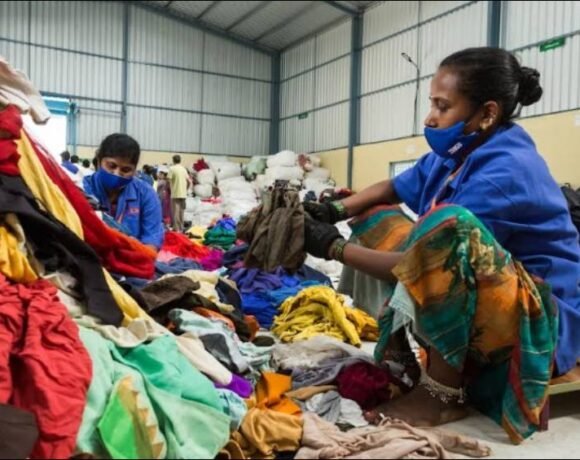
The project targets a fundamental issue: while recycling technologies are rapidly advancing, the supply of suitable post-consumer feedstock remains inconsistent, costly and difficult to process. Today, once collected, textiles are first sorted for rewearability and directed to resale markets. What remains is the non-rewearable fraction, which has limited pathways, with only a small portion entering T2T recycling. The majority is downcycled, incinerated or sent to landfill.
This imbalance is further exacerbated by the shrinking capacity of secondhand export markets. Declining material quality, tighter trade restrictions and weakening demand in destination countries are leading to stockpiles of unsold textiles, many of which ultimately end up as waste. At the same time, new recycling capacities are emerging across Europe, creating an opportunity to process significantly higher volumes, if the right feedstock systems are in place.

At the heart of the challenge lies a disconnect between sorters and recyclers. Post-consumer textiles are inherently heterogeneous, requiring extensive sorting and pre-processing to meet the strict input specifications of different recycling technologies. For sorters, preparing material at the required quality, quantity and cost remains commercially challenging. For recyclers, absorbing these costs internally is often unviable. As a result, many continue to rely on post-industrial waste, which is cleaner, more consistent and easier to process.
Yet, the integration of post-consumer textiles into recycling systems is inevitable. Growing demand for recycled fibres, coupled with tightening regulatory frameworks such as Extended Producer Responsibility (EPR) in the European Union, is making functional recycling pathways a commercial necessity.
“We have been talking about textile circularity for years, and the honest truth is that the technology is no longer the bottleneck,” said Katrin Ley. “What is holding us back is much more unglamorous—the sorting lines, pre-processing steps and supply systems that need to exist before a single fibre can be recycled. Project FAE is about tackling that challenge collaboratively.”
 To address this, Project FAE brings together key stakeholders across the value chain, including brand partners such as Adidas (lead sponsor), Bestseller and Inditex. Strategic partner ReHubs is also involved, alongside on-ground support from Rematters.
The initiative is further strengthened by a broad network of industry participants, including leading sorting organisations such as Boer Group, Humana People to People and Kringwinkel Antwerpen, as well as recycling innovators like Circ, Infinited Fiber Company and Recover.
“Circularity will not be achieved through product innovation alone,” noted Gudrun Messias. “The real challenge lies in building the infrastructure sorting, pre-processing and supply systems that enable post-consumer textiles to move toward closed-loop recycling at scale.”
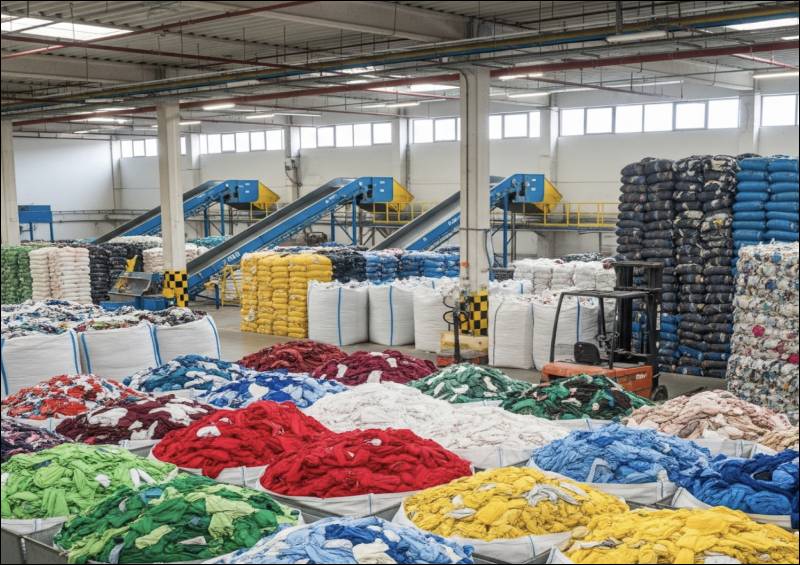
Project FAE operates on two parallel tracks. The first focuses on advancing feedstock preparation through technologies such as fibre blend separation, elastane removal and contaminant extraction. These processes are critical to improving the quality and usability of post-consumer waste for different recycling pathways. The project will assess both the technical readiness and commercial viability of these solutions.
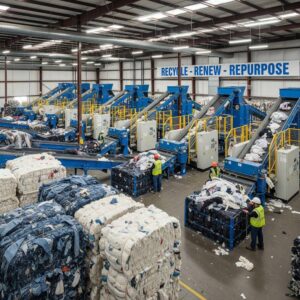
The second track addresses infrastructure development. The project aims to establish a framework for regional sorting and pre-processing hubs across Europe. These hubs would aggregate large volumes of textile waste, apply automated sorting and mechanical pre-processing, and generate feedstock streams tailored to specific recycling technologies. By operating at scale, the model seeks to reduce processing costs, improve material consistency and create a more viable business case for both sorters and recyclers.
Together, these efforts are designed to deliver more than just technical insights. Project FAE aims to create a practical, scalable and commercially viable blueprint for integrating post-consumer textiles into the recycling value chain, laying the foundation for a more circular textile economy in Europe.
As the industry moves beyond innovation toward implementation, initiatives like Project FAE highlight a critical shift in focus. The future of textile recycling will not be determined by technology alone, but by the systems that enable it.