Jindba Textiles Strengthens Textile Processing With Yamuna’s Continuous Bleaching Range
For textile manufacturers competing in today’s global market, the difference between success and stagnation often lies in what happens long before a finished product reaches the customer. Precision in processing, consistent quality and dependable machinery form the backbone of every export-oriented operation. It is this philosophy that has guided Jindba Textiles, one of India’s well-established textile manufacturers, for over five decades.
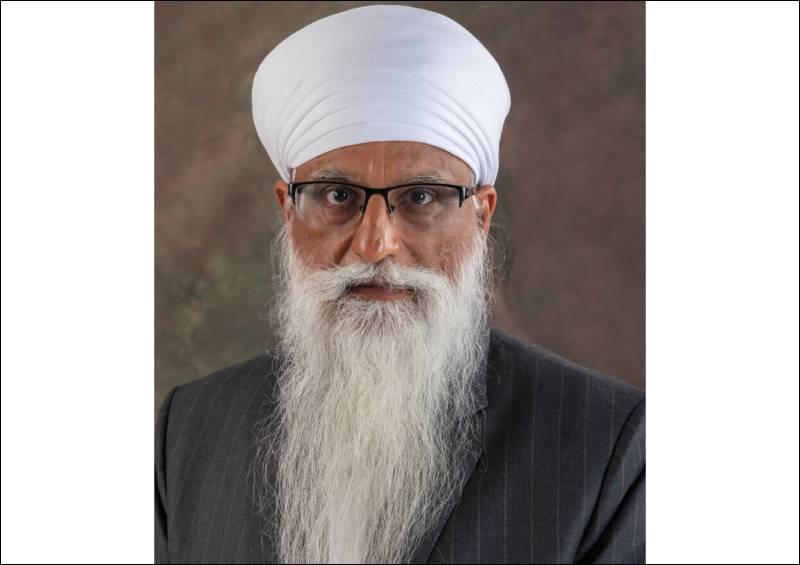
Headed by Director Gurbakshish Singh, Jindba Textiles has evolved into a fully integrated textile enterprise with more than 50 years of manufacturing experience and over 25 years in the export business. Employing nearly 2,500 people, the company manufactures premium home textiles for some of the world’s leading retail brands, including IKEA, H&M and Zara. From knitting and weaving to processing, finishing, stitching, packing and exports, every stage of production is managed under one roof, enabling complete control over quality and delivery.
Within such an integrated manufacturing environment, every processing machine plays a critical role. Even a brief interruption in the wet processing line can impact production schedules, fabric quality and delivery commitments. Recognising the importance of reliable processing technology, Jindba Textiles has maintained a close association with Yamuna Machine Works for more than two decades.

The latest addition to this long-standing partnership is Yamuna’s Continuous Bleaching Range and De-oiling Machine, a solution that has further strengthened the company’s processing capabilities.
“Our association with Yamuna is more than two decades old,” says Gurbakshish Singh. “We have installed several of their machines over the years. Recently, we added their Continuous Bleaching Range and De-oiling Machine and we are extremely satisfied with its performance.”
For an exporter catering to internationally renowned brands, maintaining consistent fabric quality is non-negotiable. Singh believes Yamuna’s technology delivers precisely what global customers demand.
“The machine is truly comparable to international standards,” he explains. “Our buyers are very happy with the quality we are able to achieve. It is a genuine example of ‘Made in India’ matching global benchmarks.”
What particularly impressed Jindba Textiles was the engineering approach adopted by Yamuna during the machine’s development and installation. Rather than supplying a standard solution, Yamuna’s engineering and R&D teams worked closely with the company’s technical staff to understand fabric behaviour, water flow, chemical application and drying requirements before finalising the configuration.
“The Yamuna team sat with our people, studied our processing requirements and designed the system accordingly,” Singh recalls. “That collaborative approach adds real value. It is truly value for money.”
For manufacturers processing man-made fibres, efficient bleaching and de-oiling are among the most critical operations. Singh notes that the machine has consistently delivered excellent results while maintaining stable processing conditions throughout production.
He is equally appreciative of the machine’s robust design and engineering quality.
“It is a beautifully designed machine,” he says. “From fabric movement to the drying system, every aspect has been thoughtfully engineered.
However, Singh believes that outstanding machinery alone is never enough. In textile processing, dependable after-sales service can be just as valuable as the machine itself.
“In a processing house, if one machine stops, the entire production chain comes to a halt,” he explains. “Wet fabric cannot simply wait. Delays can result in stains, quality issues and production losses. Yamuna understands this reality.”
He credits the company’s service team for responding quickly whenever support is required.
“If there is any issue, they resolve it immediately. Their team understands the urgency of a processing plant. Behind every good machine, there must be good people and Yamuna has that.”
Singh also points to another major advantage of partnering with an Indian machinery manufacturer. While imported equipment often involves lengthy delays and expensive spare parts, Yamuna provides faster service, local technical expertise and easy communication.
“When machines are imported, spare parts become a major challenge,” he says. “With Yamuna, we can communicate in our own language, get prompt support and avoid long waiting periods. That makes a huge difference.”
Although impressed with the machine’s current performance, Singh believes innovation must remain continuous. As global competition intensifies, he expects future developments to focus on reducing water consumption, lowering energy usage and improving processing speeds.
“The future belongs to machines that save water, energy and chemicals,” he says. “If we can reduce production costs while maintaining quality, Indian manufacturers will become even more competitive internationally.”
After working with Yamuna for more than two decades, Singh believes the company’s greatest strength lies beyond technology alone.
“Relationships are not built overnight,” he reflects. “They are built on quality, commitment and service. Money is not the biggest factor. Trust is.”
Looking ahead, he sees the partnership growing stronger as both companies continue to invest in innovation and the next generation of leadership takes the relationship forward.
“I would certainly recommend Yamuna to other textile manufacturers,” Singh concludes. “They have a strong R&D team, they listen to customers and they continue improving their technology. They are among the best machinery manufacturers in India and I believe they have the potential to set even higher international benchmarks.”
For Jindba Textiles, Yamuna’s Continuous Bleaching Range and De-oiling Machine has become more than a processing solution, it is a reliable production partner helping the company consistently deliver the quality expected by some of the world’s most demanding textile brands.
(By Henry Dsouza, Associate Editor, Textile Insights)