
‘Every Generation Of Machinery Has Been Better’: Ajay Jain Explains Why Adinath Continues To Invest In Yamuna Stenters
In textile processing, perfection is measured in the smallest details. A slight variation in temperature, inconsistent airflow or uneven fabric finishing can determine whether a batch meets customer expectations or falls short. For processors handling thousands of kilograms of fabric every day, consistency is not merely a quality parameter, it is the foundation of their reputation.
Few companies understand this better than Adinath Dyeing & Finishing Mills. Established in 1986, the company has spent nearly four decades building a strong presence in India’s textile processing industry by delivering high-quality dyeing, printing and finishing services for knitted fabrics. What began as a family-owned processing unit has steadily expanded into fabric trading and exports, catering to both domestic customers and overseas markets.
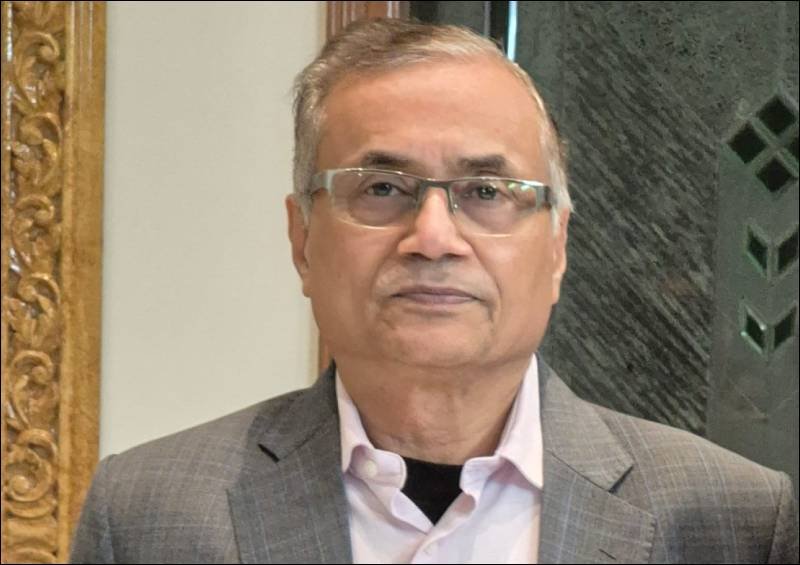
Today, under the leadership of Ajay Jain, Managing Director, Adinath Dyeing & Finishing Mills (ADFM), processes nearly 10-12 tonnes of knitted fabric every day, offering dyeing, printing and finishing solutions for cotton, polyester and blended fabrics. Such volumes demand machinery capable of delivering precise finishing, accurate GSM control and reliable performance across every production cycle.

That pursuit of consistency led the company to invest in Yamuna Machine Works’ stenters, a decision that has evolved into a long-term partnership spanning three generations of machines.
According to Ajay Jain, the biggest advantage of Yamuna’s stenters is their ability to consistently deliver the desired fabric parameters without unnecessary complications.
“We have never faced any issues with GSM control or maintaining the required fabric specifications,” he says. “Whatever the customer requires, according to the fabric and its settings, we are able to achieve it consistently.”
Having installed three Yamuna stenters over the years, Jain has witnessed the company’s continuous product evolution firsthand. Rather than simply manufacturing machines, he believes Yamuna has consistently upgraded its technology by learning from customer experiences and incorporating practical improvements into every new model.
“The first machine was good, the second was much better and the third is even better,” he explains. “There have been continuous improvements in air velocity, temperature consistency, heat transfer units and nozzle design. Every new generation has addressed the issues we observed in the previous one.”
For textile processors, these technical improvements directly influence the final fabric quality. Uniform heat distribution and stable airflow ensure better dimensional stability, improved finishing quality and repeatable production results across different fabric constructions.
“Temperature consistency and proper air velocity play a very important role,” Jain says. “With the newer machines, these aspects have improved significantly and naturally the overall fabric quality has improved as well.”
Efficiency has been another major outcome of the investment. Rather than focusing only on lower energy consumption, Jain points out that higher production efficiency itself leads to significant cost savings.
“When machine efficiency increases, cost effectiveness and energy efficiency automatically improve,” he explains. “Better production performance means better utilisation of resources and lower operating costs.”
While technology remains important, Jain believes that dependable after-sales support is equally critical for any textile manufacturer. Even the most advanced machine occasionally requires service and the speed of response often determines whether production continues uninterrupted.
“Their service support has always been very good,” he says. “Whenever we have a requirement, their team responds immediately. Sometimes they solve issues remotely, and if necessary, their engineers visit our plant without delay. Spare parts are also readily available.”
He believes this responsiveness gives Yamuna a clear advantage over many imported alternatives.
“If we purchase imported machines, getting service may take much longer. Yamuna’s team reaches us quickly and understands our requirements. That level of support is extremely valuable for a running processing plant.”
Jain also appreciates Yamuna’s willingness to accept customer feedback and continuously improve its products rather than remaining satisfied with existing designs.
“No machine is completely trouble-free,” he remarks. “The important thing is whether the manufacturer listens to customers and keeps improving the machine. Yamuna has always taken our feedback seriously and every new machine reflects those improvements.”
Being a strong supporter of Indian manufacturing, Jain believes companies should encourage domestic machinery manufacturers that are committed to innovation and quality.
“We believe in Make in India,” he says. “If an Indian manufacturer can provide world-class quality while continuously upgrading its machines, we should support them.”
Perhaps the strongest endorsement comes from the confidence with which ADFM opens its doors to prospective buyers.
“Whenever Yamuna brings customers to visit our plant, they are welcome to inspect the machines, interact with our supervisors and operators and see the actual performance themselves,” Jain shares. “The people working on our production floor have operated different stenters over the years and we have never received negative feedback regarding Yamuna’s performance.”
He goes a step further by comparing the machines with imported equipment.
“In terms of finishing quality, machine performance and the final fabric output, we have not experienced any significant difference between Yamuna and imported stenters. The quality we achieve is at par, while the service support is much faster.”
Looking ahead, ADFM remains focused on expanding its capabilities in line with market demand. And if another investment in finishing machinery becomes necessary, Jain says the company already knows where its preference lies.
“If we expand further, Yamuna will definitely be one of our first choices. They continue to innovate, they listen to customers and they keep improving every generation of their machines.”
For ADFM, the relationship with Yamuna Machine Works is not simply about purchasing machinery. It is about working with a partner that understands the evolving demands of textile processing and continuously enhances its technology to meet them. Three generations of Yamuna stenters on ADFM’s production floor stand as proof that when innovation is backed by responsiveness and trust, long-term partnerships naturally follow.
(By Henry Dsouza, Associate Editor, Textile Insights)