
From Wheat Straw To Wardrobe: Building India’s Next-Generation Fibre Economy

Shruti Singh, Country Director, Canopy, believes India has the agricultural resources, manufacturing capabilities and innovation ecosystem to become a global hub for next-generation fibres. At the heart of this opportunity is a simple but transformative idea: turning agricultural residues such as wheat straw into commercially viable textile fibres.
If someone were to place a soft, comfortable knitted garment in front of you and tell you it was made from wheat straw, the first reaction would probably be disbelief.
That disbelief, in many ways, captures the significance of Project LATVUS.

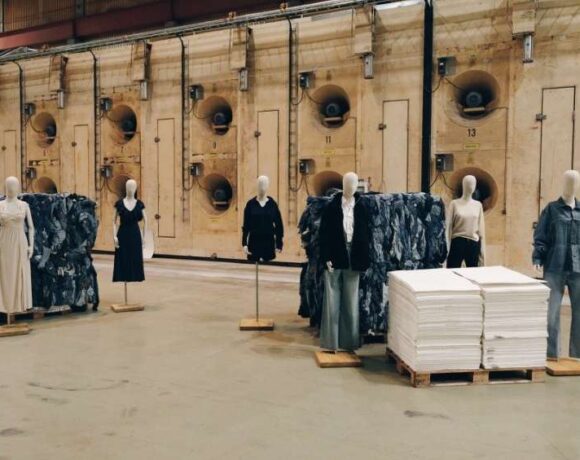
The multi-stakeholder real world demonstration project explored whether wheat straw, an abundant agricultural residue, could be transformed into man-made cellulosic fibre and successfully moved through the textile value chain. The journey involved feedstock processing, pulp production, fibre manufacturing, spinning, fabric development and ultimately, a finished garment.
“Imagine being handed a soft knitted garment and being told that its origins lie not in a forest or a petroleum refinery, but in wheat straw left behind after harvest”, says Shruti Singh, Country Director, Canopy.
The final product did not look or feel like straw. It looked and felt much closer to the textiles consumers already wear.
For Singh, however, the significance of the project goes beyond proving that wheat straw can be converted into a textile fibre. The larger question is whether agricultural residues can become part of a more diversified and resilient fibre system for the future.
Canopy’s role is to help connect the different pieces of this ecosystem — feedstock, technology, producers, manufacturers and brands — so that promising materials can be tested in real supply chains and move from pilot projects towards commercialisation. As the sector develops, the challenge is not simply proving that a new fibre can be made, but creating the partnerships and market conditions required for it to scale.
Why fibre diversification matters
Global fibre demand is expected to rise significantly in the coming years, while the textile industry remains heavily dependent on a limited number of sources — agriculture, forests and fossil fuels.
This concentration creates vulnerabilities. Geopolitical disruptions, raw-material price volatility, deforestation concerns and tightening regulations are all placing pressure on conventional supply chains.
“Fibre diversification is how the industry can hedge against supply shocks and rising raw material costs,” Singh explains.
Agricultural residues could become part of this broader fibre basket. The opportunity is not limited to wheat straw. Rice straw, bagasse, napier grass and other residues could potentially become feedstocks for next-generation fibres.
But the future, Singh believes, will not be about finding one material to replace everything else.
“The future is not going to be about finding one feedstock to replace another. It is going to be about building a more diversified fibre basket — one that draws on agricultural residues, recycled feedstocks, innovative technologies and responsibly sourced conventional materials. The opportunity for India is to build that diversity at scale.,” she says.
Conventional wood-based fibres, she adds, are not going to disappear immediately. The objective is to develop additional, commercially viable feedstocks that can diversify the industry’s raw material base.
Why India?
Canopy has spent 25 years working with brands and producers to protect ancient and endangered forests. Over time, however, the organisation began looking beyond forest protection towards the supply side of the materials equation. This led to a hub-based approach to identify regions where alternative material supply chains could be developed.
India emerged as an important focus because it brings together several critical ingredients: a large agricultural base, significant volumes of agricultural residues, a mature textile manufacturing ecosystem, domestic brands, growing innovation capacity and an established export industry.
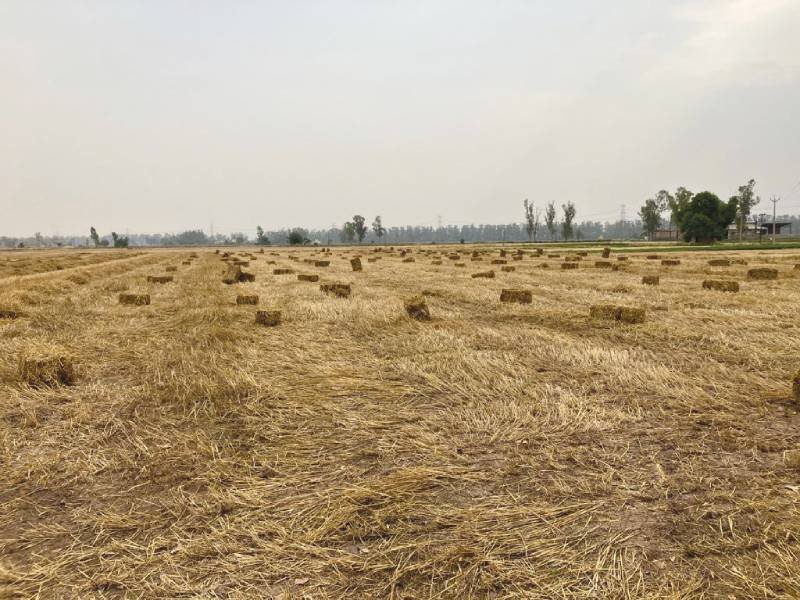
India also generates significant volumes of textile waste, while large quantities of agricultural residues are burnt or sent to landfill. At the same time, the country has a strong textile manufacturing and export base, providing a potential industrial ecosystem for developing next-generation materials.
“India has a rare combination of ingredients: enormous agricultural resources, a deep textile manufacturing base, export infrastructure, technical capabilities and a growing innovation ecosystem. The opportunity is to connect those strengths and move from being a major textile manufacturing country to becoming a global hub for next-generation materials.,” says Singh.
The opportunity also extends beyond textiles. Agricultural residues can potentially serve both the textile and packaging industries, which share a need for cellulosic materials. For Singh, the question is now how these different strengths can be connected.
Mapping the opportunity
Canopy is working to identify regional hotspots where agricultural residues, infrastructure and industrial demand come together.
Punjab and Haryana are among the regions being studied because of the density of agricultural activity. For residue-based materials, density matters. The distance between the source of the residue and the processing facility can significantly influence transportation costs and the overall economic viability of the supply chain.
The mapping exercise involves understanding where feedstock is available, in what quantities, how it is currently being used and where existing processing capacity exists. The next step is identifying the gaps between feedstock availability, technology and potential end-use markets.
“Feedstock availability alone tells you very little. The question we are answering is where feedstock, processing capacity and market access converge within an economically viable radius. That intersection, not the raw material itself, is what determines whether a region can anchor a supply chain,” Singh says. This is important because the future of agricultural residue-based fibres will not be determined simply by the availability of raw material. The material must be collected economically, transported efficiently, processed consistently and connected to a market.
What Project LATVUS proved
The LATVUS project was designed as a proof of concept, but its significance lies in the fact that it moved beyond the laboratory.
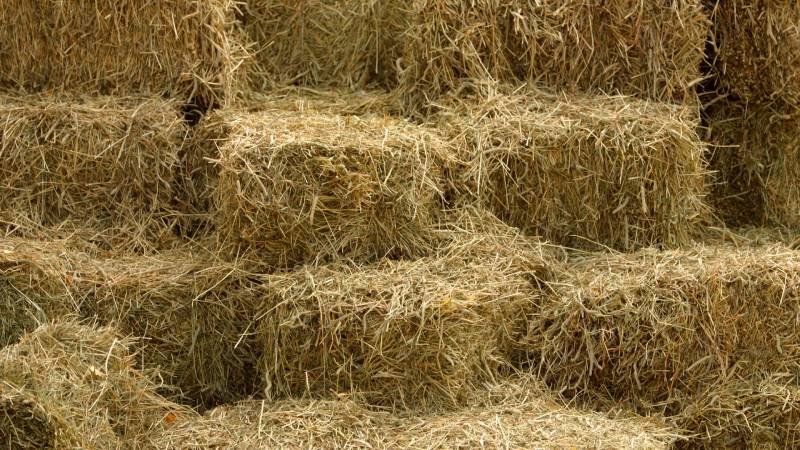
Wheat straw from Punjab was processed into pulp, converted into fibre, spun into yarn, developed into fabric and finally made into garments.
The project demonstrated that the material could move through existing textile processes and produce a finished product without major quality concerns.
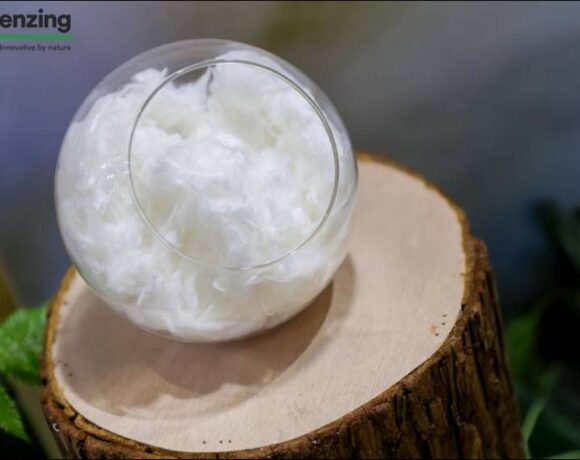
Technical validation was an important part of this process. Dr. S.S.V. Ramakumar, CTO & Executive Vice-President, AM Green, who was part of the project, highlighted the potential of converting agricultural residues into dissolving pulp suitable for lyocell production. The technology also opens the possibility of exploring other feedstocks, including rice straw, bagasse and napier grass.
For Singh, however, the most important aspect was that the material successfully completed the journey from residue to garment.
“That is what makes it exciting. You are able to take an agricultural residue, process it, create a fibre, make yarn and then create an actual garment,” she says.
The project also received important validation from the brand side. Dr. Ravinder Tuteja, Material Program Lead, H&M, who was involved in the initiative, said the fabric’s look and hand-feel were close to cotton, while the material could be taken through a global supply chain from pulp to fibre, yarn, fabric and finished garments.
H&M has also indicated plans to develop a small collection using the material. For Singh, this is an important signal.
A new fibre cannot scale simply because it has a compelling sustainability story. It must also work within existing manufacturing systems and meet the expectations of brands and consumers.
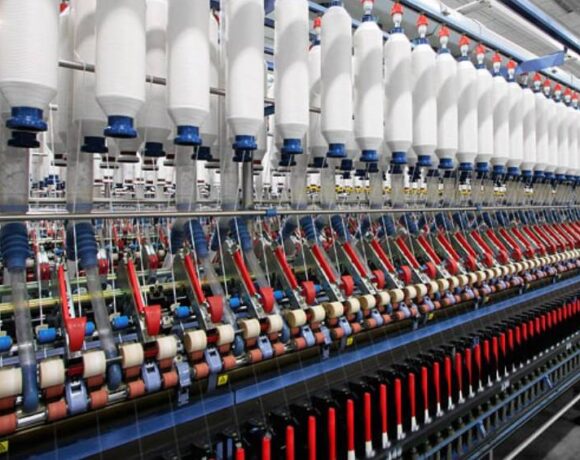
The downstream experience was equally encouraging. Francesco Costantini, Creative Yarn Developer, Filpucci, found that the new lyocell behaved similarly to standard lyocell during processing and could be integrated into existing textile systems.
These results are significant because they show that agricultural residue-based fibres may not require an entirely new textile ecosystem. Instead, they could potentially be introduced into existing manufacturing systems.
The challenge is scaling the supply chain
India has no shortage of agricultural residues. The larger question is whether they can be collected, aggregated and delivered to processing facilities at a competitive cost and with consistent quality.
The distance between the feedstock and the mill is one of the important factors being studied. Different feedstocks will also have different economics depending on their availability, current use and pricing.
During the pilot, wheat straw had to be moved across borders because the required processing technology was not available locally at the time.
While this created practical challenges, it also highlighted the opportunity. If the technology can be established closer to the source of the feedstock, transportation distances can potentially be reduced and regional supply chains developed.
The next challenge is therefore not simply producing the fibre. It is building a reliable ecosystem around it. That means understanding where feedstock is available, how it can be aggregated, how quality and consistency can be maintained, what processing infrastructure is required and how the material can be connected to textile manufacturers and brands.
Building an ecosystem for scale
Scaling agricultural residue-based fibres cannot be achieved by one company or one part of the value chain. Farmers and agricultural communities are critical to feedstock collection. Technology providers must develop scalable processing solutions. Investors must provide capital for infrastructure. Fibre producers and manufacturers must validate the material. Brands must create demand.
“Innovation does not scale in isolation. We need partners to share data, reduce costs, reduce risks and share learnings to accelerate the scaling.,” Singh says.
Policy support could also help new technologies move through the difficult transition from pilot to commercial scale.
Canopy estimates that building a next-generation economy across the textile and packaging sectors in India could require around US$ 13–15 billion. Capital will be needed not only for large processing plants but across the value chain from collection and storage infrastructure to feedstock aggregation, processing technology and new product development.
The sector is still building its knowledge base and engaging investors. The opportunity is attracting interest because it aligns with climate and green infrastructure portfolios, but the next step is converting that interest into investment.
 The role of brands
For next-generation fibres to move beyond pilot projects, brands will need to play an active role in creating market demand.
Aggregated demand can send a strong signal to the supply chain that the material is wanted and commercially viable. This can help build investor confidence and encourage the development of new infrastructure.
However, supply and demand must develop together. “If demand moves ahead but supply cannot catch up, the market will not develop. The two have to move in lockstep,” Singh explains.
This is why brand participation in projects such as LATVUS is important. Their involvement allows the material to be assessed not only technically but also commercially.
For Singh, the future will depend on the ability of brands, manufacturers, investors, technology providers and agricultural communities to move together.
From blue-sky idea to commercial reality
Perhaps the most important lesson Singh takes from the project is less technical and more human.
When new materials are discussed at the concept stage, they can seem far removed from commercial reality. The idea of converting wheat straw into a soft, comfortable textile product is not necessarily easy to imagine.
“The hardest part sometimes is the belief. When you have these blue-sky concepts, it can be difficult for people to imagine that they can become a tangible reality,” Singh says. The LATVUS project helped change that.
Wheat straw was collected. It was processed into pulp. The pulp was converted into fibre. The fibre was spun into yarn, knitted into fabric and made into garments.
The result was something that people could see, touch and wear. That is what makes the idea easier to believe.
Dr. Priya Nagaraj, Head – Green Economy & Innovation, Council on Energy, Environment and Water (CEEW), says the broader opportunity lies in creating value from materials that have traditionally been treated as waste or low-value residues. The opportunity is not only environmental. It can potentially create new economic activity across agriculture, manufacturing, technology and rural supply chains.
India’s next fibre opportunity
Singh believes India has the potential to become a global leader in next-generation fibre innovation and production. The country has the agricultural resources, manufacturing infrastructure, technical capabilities and growing policy focus required to develop the sector.
The future fibre basket is unlikely to be built around one single alternative. Instead, it will involve a combination of agricultural residues, recycled feedstocks, new technologies and responsibly sourced conventional materials.
For India, this could represent an opportunity to move beyond being simply a large textile manufacturing base and become a global centre for next-generation materials. The journey from wheat straw to wardrobe has shown that the technology can work.
The next challenge is building the infrastructure, investment, supply chains and market demand required to make it happen at scale.
And for Singh, perhaps the first step is the simplest one: Believing that it is possible.
(Article by Henry Dsouza, Associate Editor Of Textile Insights)