Textile Ministry Pushes TRAs To Make Research Industry-Driven, Outcome-Focused
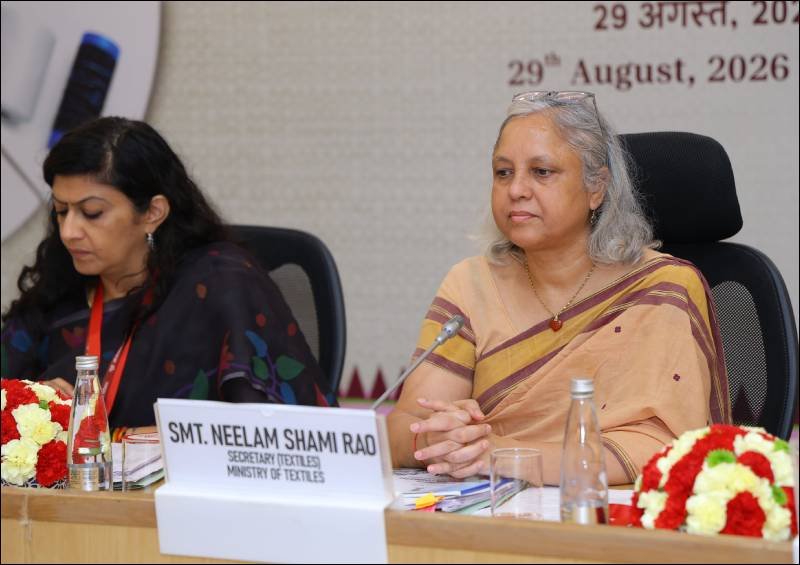
The Ministry of Textiles has called for a stronger industry focus in textile research, with greater emphasis on converting research into technologies, patents, prototypes and commercially viable solutions for the sector.
The ministry made the call at the second Coordination Committee Meeting of Textile Research Associations (TRAs), held at Vigyan Bhawan in New Delhi and chaired by Textiles Secretary Neelam Shami Rao.
The full-day brainstorming session brought together senior ministry officials, representatives of TRAs and experts from the Office of the Principal Scientific Adviser to the Government of India, Department of Science and Technology, Council of Scientific and Industrial Research (CSIR), Indian Institutes of Technology (IITs) and other institutions.

The meeting reviewed progress since the first coordination committee meeting and discussed measures to make textile research and development more effective, collaborative and aligned with the needs of the industry.
A key focus was on ensuring that research conducted by TRAs translates into measurable outcomes. The government stressed that research priorities should increasingly be driven by industry requirements, with particular attention to practical challenges faced by micro, small and medium enterprises (MSMEs).
The ministry also called for greater involvement of industry at the research conceptualisation stage so that projects are aligned with actual market and manufacturing requirements and have a higher likelihood of adoption across the textile value chain.
Several initiatives taken since the first meeting were reviewed, including strengthening equipment inventories and digital information through the i-TRAMS portal, formation of sub-committees, identification of Centres of Excellence and New Age Fibres, and consultations on emerging areas of technical textiles.
The committee also discussed global benchmarking of Centres of Excellence and adoption of a structured Technology Readiness Assessment Framework to assess the maturity and commercial potential of technologies developed through textile research.
Strengthening the startup and innovation ecosystem was another key area of discussion. The meeting explored ways to improve collaboration among TRAs, startups, academia and industry, while also encouraging greater mobilisation of external funding for research and technology development.
Projects under the National Technical Textiles Mission, development of a common e-library platform, membership expansion, skill development, governance reforms and institutional performance evaluation were also discussed.
The ministry emphasised the need for TRAs to adopt a robust key performance indicator (KPI)-based evaluation system backed by reliable data and periodic reviews. Such a framework, it said, would improve accountability, resource utilisation and the timely delivery of measurable results.
Effective use of i-TRAMS was also highlighted as an important tool for monitoring TRA activities, sharing information, mapping research capabilities and connecting industry requirements with relevant research expertise.
The Five-Year Plans and Annual Action Plans of TRAs for 2026-27 are expected to provide a strategic roadmap covering research and development, technology development, testing and standardisation, capacity building, innovation and institutional collaboration.
The government’s renewed focus comes at a time when India’s textile industry is facing growing pressure to adopt advanced technologies, improve productivity and develop higher-value products. Stronger links between research institutions and industry could help accelerate technology adoption, reduce dependence on imported technologies and address emerging requirements in technical textiles and other specialised segments.
The meeting concluded with a commitment to build a more globally competitive and innovation-driven textile research ecosystem through closer collaboration among TRAs, industry, startups, academic institutions and research organisations.
The broader objective is to ensure that textile research moves beyond laboratory-level development and delivers technologies, products and solutions that can be adopted commercially across India’s textile value chain.