
Brandix Unit-1: From India’s First Brandix Factory To A Global Leader In Intimate Apparel Manufacturing
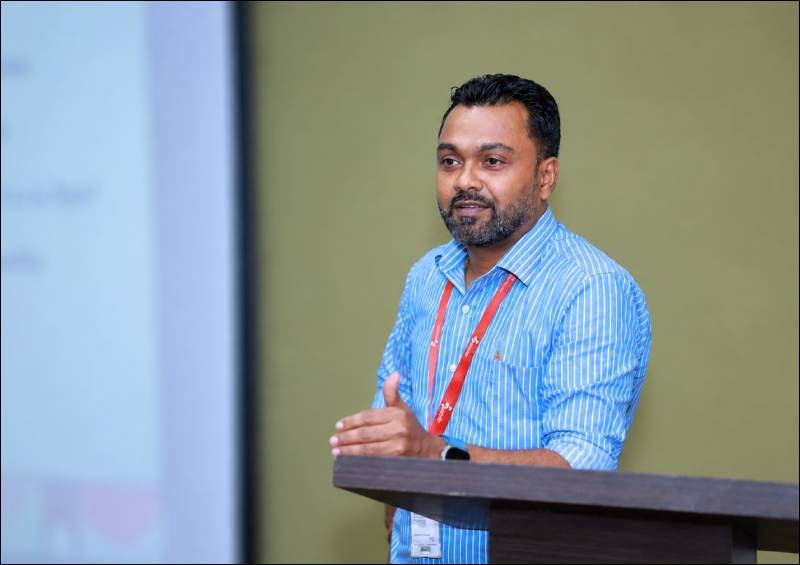
Brandix India Apparel City’s first manufacturing unit has evolved into one of the world’s largest production hubs for Victoria’s Secret panties. Sumudu Priyanga explains how operational excellence, workforce stability and an integrated manufacturing ecosystem continue to strengthen the factory’s global competitiveness.
When Brandix established its first manufacturing facility in India nearly two decades ago, it was making a strategic bet on the future of integrated apparel manufacturing.
Today, that vision has matured into one of the company’s flagship production facilities, exporting millions of intimate apparel products every year to some of the world’s most demanding fashion brands.

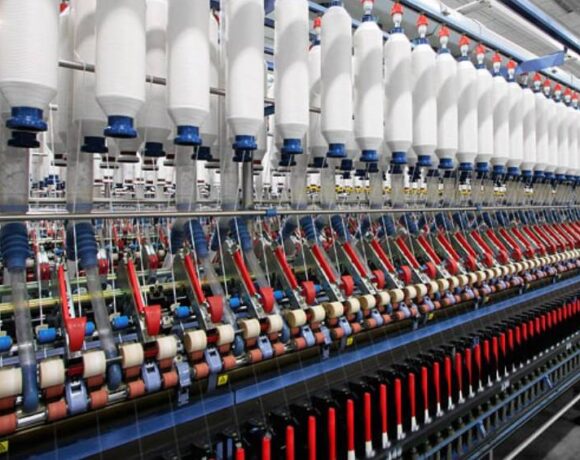
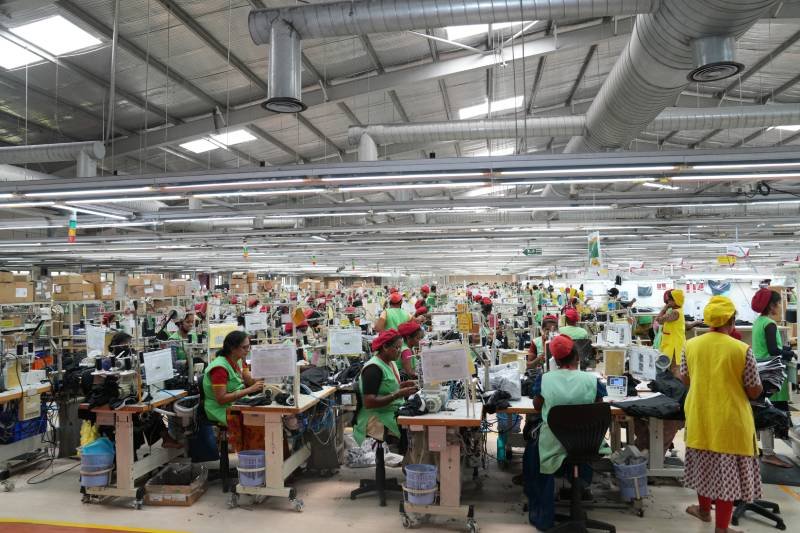
Spread across 14 acres within Brandix India Apparel City, the B-1 Unit has become a benchmark for large-scale apparel manufacturing, combining operational discipline, quality excellence and an integrated supply chain under one roof.
“This is the first manufacturing plant that Brandix established in India,” says Sumudu Priyanga, General Manager – Quality & Technical. “Today, we operate with around 1,400 sewing machines, employ nearly 4,000 people and manufacture primarily for export markets including the United States, the United Kingdom, China and Japan.”
A Factory Built Around Victoria’s Secret
Unlike many apparel factories that manufacture a wide range of products, the Brandix B-1 Unit has developed deep expertise in a highly specialised category.
Its principal customer is Victoria’s Secret, for whom the factory manufactures ladies’ panties on a massive scale.
“Our primary customer is Victoria’s Secret,” says Sumudu. “This is one of the largest single-roof production facilities for Victoria’s Secret panties.”
Alongside Victoria’s Secret, the factory also serves global brands including Calvin Klein, Walmart and H&M, although intimate apparel remains its core strength.
Such product specialisation has enabled the unit to refine manufacturing processes, improve productivity and consistently meet the demanding quality standards expected by international retailers.
How Integration Cuts Time And Cost
One of the biggest competitive advantages enjoyed by the factory lies just outside its gates. Being located inside Brandix India Apparel City means that suppliers of fabric, elastics, cartons and labels operate within the same industrial ecosystem.
Instead of waiting weeks for critical materials to arrive from distant suppliers, production teams receive many inputs within hours.
“If cartons were coming from another state, we would normally need to maintain around fifteen days of inventory,” explains Sumudu. “Today, because the supplier is next door, we maintain only about three days of stock.”
Around 80 per cent of the fabric used by the factory is supplied by Teejay India, located within the park, while elastics come from Pioneer Elastic, cartons from Econopack and labels from ITL, all operating inside the same integrated manufacturing ecosystem.
The result is lower inventory costs, faster replenishment and greater flexibility in responding to customer demand.
Recovering From The US Tariff Shock
Like many export-oriented manufacturers, the factory faced a difficult period following the increase in US import tariffs. The immediate impact was visible on the production floor.
“Our sewing capacity reduced from around 48 production lines to 32,” recalls Sumudu. However, the recovery has been equally encouraging. “Today we are back to around 42 production lines, and our plan is to return to full capacity.”
The experience highlighted the importance of manufacturing agility, allowing Brandix to adjust operations quickly while remaining ready to scale production as market conditions improved.
People Remain The Greatest Strength
Technology and infrastructure are important, but Sumudu believes people continue to make the biggest difference. The factory has maintained remarkably low absenteeism and employee attrition, helping preserve production efficiency and product quality.
“Our absenteeism is below 6 percent, while attrition is around 1.5 percent,” he says. Many operators join with little or no prior garment manufacturing experience. Rather than seeing this as a limitation, Brandix views it as an opportunity.
“We can train people according to our own quality standards and production requirements.” This structured training approach has enabled the company to develop a disciplined workforce capable of meeting the stringent expectations of global apparel brands.
The Next Challenge: Finding Skilled Talent
Ironically, one of the factory’s biggest challenges today is not technology or production capacity. It is attracting enough skilled people to support future growth.
“In the early years, one recruitment drive could easily bring in fifty or sixty applicants,” says Sumudu. “Today, even getting five or six suitable candidates has become difficult.”
To address this challenge, Brandix has gradually expanded its recruitment criteria, increasing the maximum hiring age for experienced operators while investing more heavily in training new entrants.
According to Sumudu, the apparel industry still struggles with outdated public perceptions despite offering structured career growth, modern workplaces and opportunities across different education levels.
Preparing For The Next Phase Of Manufacturing
As manufacturing costs continue to rise, improving productivity has become increasingly important. For Brandix, automation is the next logical step.
“Manufacturing costs continue to increase,” Sumudu explains. “The best way to remain competitive is through automation that improves efficiency while reducing overall production costs.”
The company has already begun introducing automation technologies in newer production facilities and plans to expand these initiatives as part of its long-term manufacturing strategy.
Rather than replacing people, automation is expected to enhance productivity, improve consistency and support sustainable growth.
Built For Global Manufacturing
The success of Brandix’s first Indian factory reflects more than just production capacity. It demonstrates how integrated infrastructure, reliable utilities, proximity to suppliers and disciplined manufacturing systems can create a globally competitive apparel ecosystem.
“The infrastructure, uninterrupted power supply and the integrated ecosystem make this an ideal place for apparel manufacturing,” says Sumudu.
Nearly twenty years after its first exports to the United States, the B-1 Unit continues to demonstrate why integrated manufacturing remains one of Brandix’s greatest competitive strengths.
For global brands demanding quality, speed and reliability, the factory represents far more than a production unit. It is proof that carefully planned industrial ecosystems can deliver lasting competitive advantage.
(Article by Henry Dsouza, Associate Editor Of Textile Insights)