
Factories Become World-Class When They Create Systems That Allow People To Succeed: Rasika Amarakoon
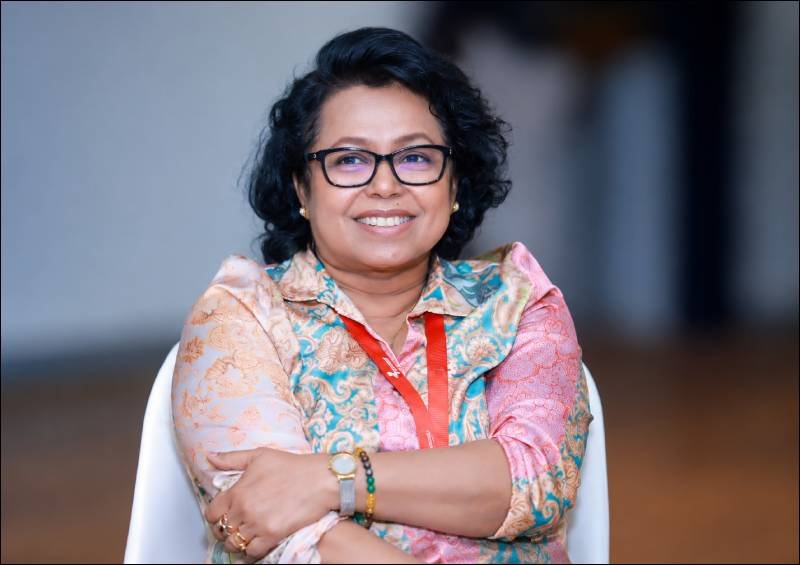
When Rasika Amarakoon took charge of Brandix India Apparel City’s largest manufacturing unit four years ago, she inherited a factory operating at nearly 40 per cent efficiency. Today, it consistently delivers close to 80 per cent. Henry Dsouza visits Brandix’s Unit B2 and speaks with Rasika Amarakoon to understand how she transformed a complex operation, not by changing people, but by changing the systems around them.
The first thing that strikes you at Brandix India Apparel City’s Unit B-2 is not the scale, although it is impossible to ignore it.
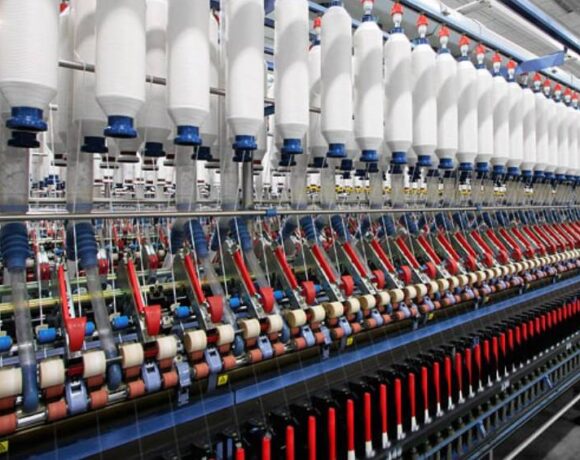
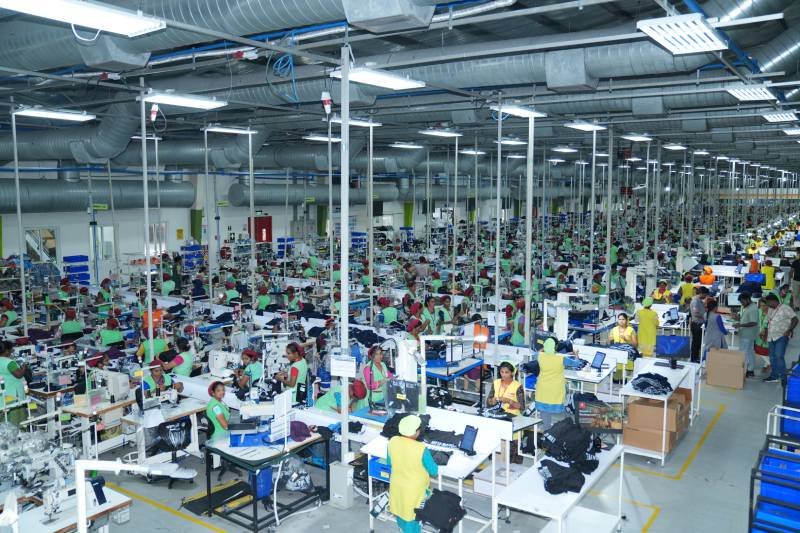
Across an expansive production floor, thousands of operators work with quiet precision as hundreds of sewing machines run in perfect rhythm. Automated cutting systems prepare fabric with remarkable accuracy while digital dashboards monitor production in real time. Every process appears measured, organised and purposeful.
But what stands out even more is something less tangible.

There is no sense of urgency bordering on chaos, no frantic movement that often accompanies large-scale apparel manufacturing. Instead, there is a calm confidence in the way the factory functions.
That confidence, it soon becomes clear, has been built over the past four years.
Standing in the middle of Brandix’s largest manufacturing facility globally, Rasika Amarakoon speaks less about machines and production targets than about systems, discipline and people.
She smiles when asked about the transformation of the factory. “People often ask me what I changed after coming here,” she says. “My answer is simple; the people were never the problem. The opportunity was to improve the system.”
It is a statement that perfectly summarises both her leadership philosophy and the remarkable turnaround of Unit B-2.
A Factory Built For The World
Unit B-2 is not just another garment manufacturing unit. It is the largest factory within the Brandix Group, exceeding even the company’s facilities in Sri Lanka and Bangladesh. Every month, between 4.5 and 5 million garments are produced here for global fashion brands including Calvin Klein, Tommy Hilfiger and Nike. More than 70 per cent of the production is exported to the United States, while the remainder goes to Europe, Australia, Hong Kong, China and the Middle East.
Behind those numbers is a workforce of over 4,200 employees, nearly 90 per cent of whom are women.
Managing a factory of this scale requires far more than manufacturing expertise. It demands operational discipline, meticulous planning and the ability to coordinate thousands of moving parts every single day. Yet Rasika is quick to shift the conversation away from size. “Scale only becomes an advantage if the system supports it,” she says. “Otherwise, a larger factory simply creates larger problems.”
The Factory Didn’t Need New People, It Needed A New Way Of Working.
When Rasika arrived in India from Sri Lanka four years ago, she found a capable workforce and a modern facility. What she also found was an operation that was not reaching its potential. The factory was operating at roughly 40 per cent efficiency. Many managers might have responded by tightening supervision or increasing production pressure.
Rasika chose a different path. “We didn’t need to ask people to work harder,” she explains. “We needed to remove everything that prevented them from doing their work efficiently.”
The transformation began with fundamentals.
- Production lines were redesigned to reduce unnecessary movement.
- Departments were re-organised to improve material flow.
- Planning systems were strengthened to ensure smoother production loading.
- Operators were trained to perform multiple operations instead of specialising in just one process.
- Supervisors were encouraged to think proactively rather than react to problems. Every change was aimed at eliminating wastage of time rather than increasing workload.
The results speak for themselves.
Today, Unit B-2 operates at close to 80 per cent efficiency, doubling performance without fundamentally changing its workforce. “Operational excellence isn’t about asking people to work faster,” Rasika says. “It is about designing a system where people can perform at their best.”
Leadership Begins With Learning
Listening to Rasika discuss manufacturing, one quickly realises she approaches apparel production less like a garment maker and more like an industrial engineer. That perspective has been shaped by a career spanning more than 30 years. She entered the apparel industry as a Management Trainee in Sri Lanka with little knowledge of manufacturing.
Rather than relying solely on experience, she invested heavily in education, earning qualifications in Industrial Engineering, Fashion Design and an MBA while working across merchandising, planning, quality, supply chain and manufacturing.
“Many people think apparel manufacturing is just stitching garments,” she says. “It is much more than that. Behind every garment is engineering, planning, data, quality systems and people management.”
Those experiences eventually took her to China before bringing her to India, where she now oversees one of Brandix’s most important manufacturing operations.
Her message to young professionals entering manufacturing is straightforward: “Never stop learning. Experience alone is not enough.”
A Workplace Powered By Women
Nearly nine out of every ten employees at Unit B-2 are women. For Rasika, this is not simply a diversity milestone. It reflects the strength of the apparel industry’s workforce.
The factory continuously recruits both experienced operators and young school leavers, providing structured training programmes that develop technical skills while preparing employees for long-term careers.
Employee attrition remains below 2 per cent, considerably lower than industry norms. Interestingly, many employees who leave eventually return.
“We see many women coming back after marriage or family commitments,” Rasika says. “When people return to an organisation, it tells you something about the environment you’ve created.”
Brandix also supports employees through childcare initiatives, health programmes and welfare measures that encourage long-term engagement.
Automation Is About Better Quality, Not Fewer People
As apparel manufacturing embraces automation, concerns around job displacement continue to grow.
Rasika views technology differently. “Automation is not about reducing people,” she says. “It is about improving consistency, improving quality and helping people work more effectively.”
Unit B-2 has been designated one of Brandix’s ‘Smart Factories’, where automation, digitalisation and real-time data systems are being introduced across production.
Automated cutting systems now process nearly 65,000 yards of fabric every day, while digital dashboards provide live production visibility. The factory has also significantly reduced paper consumption through digital reporting systems.
Technology, Rasika believes, should support people, not replace them.
Why Vertical Integration Matters
If there is one advantage Rasika believes defines Brandix India Apparel City, it is vertical integration.
Nearly 60 to 70 per cent of the factory’s fabric requirements are sourced from suppliers located within the park itself, alongside trims, packaging materials and other critical inputs.
For a business serving global brands with demanding delivery schedules, reducing logistics delays directly improves competitiveness.
“Our biggest advantage is speed,” she says. “When suppliers are close to the factory, we shorten lead times and become far more responsive to customer needs.”
Looking Beyond The Factory
As India’s Free Trade Agreements continue to expand, Rasika sees fresh opportunities for export-oriented manufacturers.
She believes integrated manufacturing ecosystems like Brandix India Apparel City are well-positioned to attract new international customers and strengthen India’s role in global apparel sourcing.
But even as she speaks about the future, she returns repeatedly to one idea. Manufacturing excellence is never achieved by machines alone. It is built through leadership, discipline and a willingness to keep improving every day.
Walking through Unit B-2, that philosophy is visible everywhere, not in motivational slogans or corporate branding, but in the quiet confidence of a factory that has learned to work smarter.
Perhaps that is why Rasika’s most memorable observation comes at the very end of our conversation.
“Factories become world-class not because they have the latest machines, but because they create systems that allow people to succeed.”
For a leader who transformed Brandix’s largest apparel factory by redesigning processes instead of replacing people, it is more than a closing remark.
It is the philosophy that defines her career.
(Article by Henry Dsouza, Associate Editor Of Textile Insights)