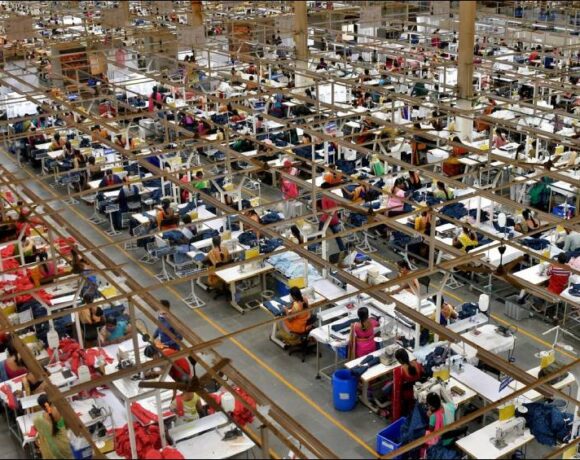
Beyond The Factory: Building An Integrated Apparel Ecosystem For The Future
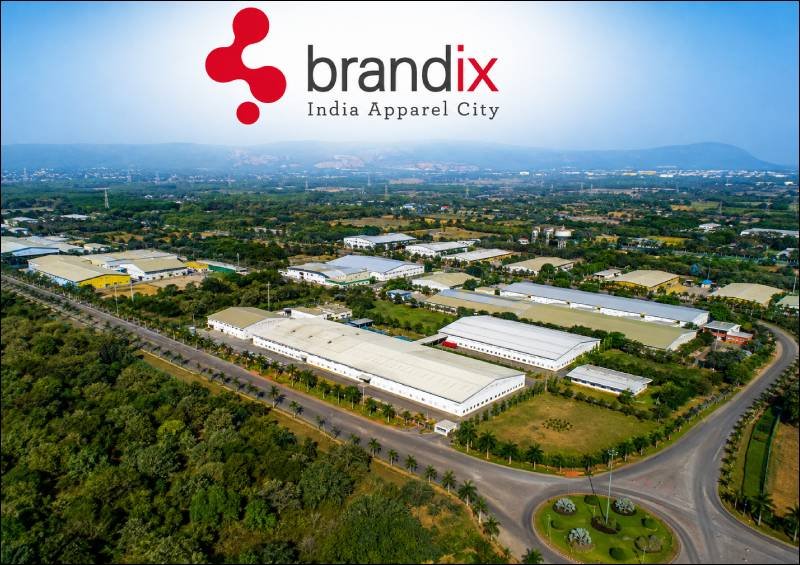
At a time when global apparel manufacturing is being reshaped by geopolitics, shifting trade policies, supply-chain disruptions and rising sustainability expectations, Brandix Apparel City offers a distinctive model of integrated manufacturing and long-term industrial development.
The future of apparel manufacturing is increasingly moving beyond the traditional factory model.
As global brands reconsider sourcing strategies and seek greater resilience, speed, transparency and flexibility, the ability to manufacture competitively is no longer determined by production capacity alone. Access to infrastructure, utilities, suppliers, skilled workforce, technology and sustainable systems is becoming equally important.

This is where integrated manufacturing ecosystems are gaining significance.
In India, Brandix Apparel City in Andhra Pradesh represents one of the most comprehensive examples of this approach. Developed as a large-scale, integrated apparel manufacturing ecosystem, the facility brings together textile production, apparel manufacturing, utilities, infrastructure and supporting services within a coordinated industrial environment.
The objective is simple but ambitious: to allow manufacturers to focus on their core business while the ecosystem provides the infrastructure and support required to operate efficiently.
From Manufacturing Facility to Integrated Ecosystem
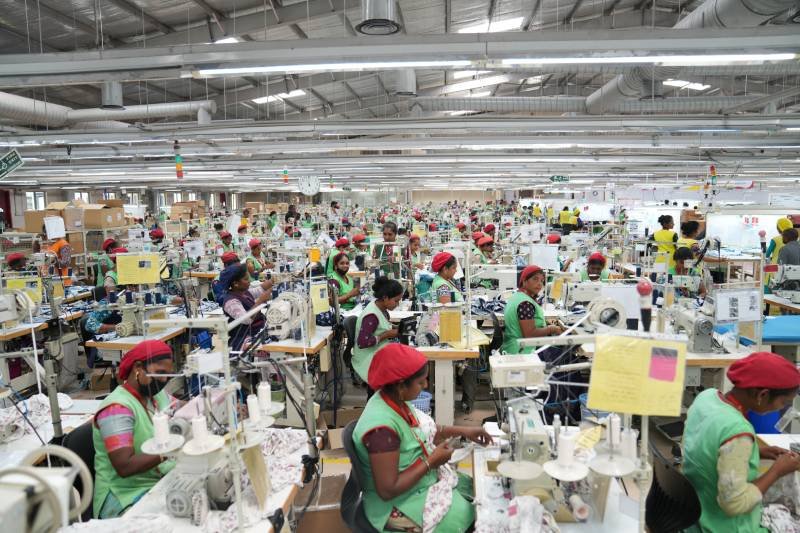
Established in 2006, Brandix Apparel City has developed significantly over the years. What began as a major apparel manufacturing investment has gradually evolved into a broader industrial ecosystem supporting multiple stages of the textile and apparel value chain.
The model is built around integration. From yarn and fabric production to knitting, processing, printing, garment manufacturing and supporting services, the ecosystem is designed to bring critical activities closer together. The presence of common infrastructure, utilities and treatment facilities further strengthens the model.
This approach has a direct impact on supply-chain efficiency. When key processes and suppliers are located within the same ecosystem, the movement of materials becomes faster, logistics become more efficient and lead times can be reduced.
For global apparel brands operating in a highly competitive market, these advantages can be significant.
The integrated model also creates the possibility of developing a deeper supplier ecosystem. As production volumes increase and the park reaches greater scale, more ancillary manufacturers and input suppliers can be attracted to the facility. This, in turn, strengthens the entire manufacturing network. The result is a cycle of integration and growth.
Infrastructure Designed for Scale
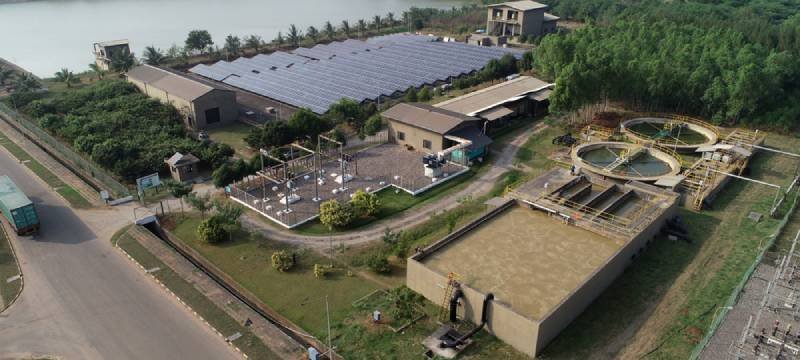
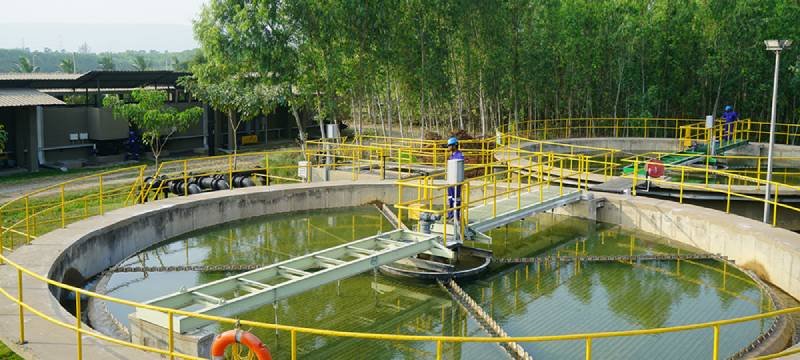
One of the defining features of Brandix Apparel City is the scale of its infrastructure. The park has been developed with a strong focus on industrial connectivity and common utilities. Its internal road network, water infrastructure and effluent treatment systems are designed to support long-term industrial expansion.
The water and effluent treatment infrastructure has been developed with significant future capacity. While the current requirements are considerably lower than the ultimate planned capacity, the infrastructure has been designed to expand as manufacturing activity grows.
This long-term approach is important.
Instead of building infrastructure only to meet current demand, the ecosystem has been designed with future industrial expansion in mind. This allows new manufacturing units to enter an environment where key infrastructure is already available.
It is this plug-and-play approach that makes the model particularly relevant for future textile and apparel investments.
Sustainability at the Core
Sustainability is not treated as an additional feature of the Brandix model. It is integrated into the way the park operates.
Rainwater harvesting contributes significantly to the water requirements of the facility, while solar power is becoming an increasingly important part of the energy mix. The park currently has approximately 2.3 MW of solar capacity, with plans to significantly expand this capacity in the future.
The broader Brandix sustainability approach is built around the principles of Earth, Water and People.
The company has also developed a zero-landfill approach. Sludge generated from effluent treatment is processed using solar sludge-drying technology. The process increases the calorific value of the material, allowing it to be used for co-processing in cement manufacturing rather than being sent to landfill.
Such systems demonstrate how sustainability can be integrated into industrial operations through technology, infrastructure and long-term planning.
For global brands, which are increasingly demanding greater transparency and measurable environmental performance from their suppliers, these capabilities are becoming increasingly important.
A Manufacturing Ecosystem Built Around People
The scale of Brandix Apparel City is not measured only in terms of factories, production capacity or infrastructure.
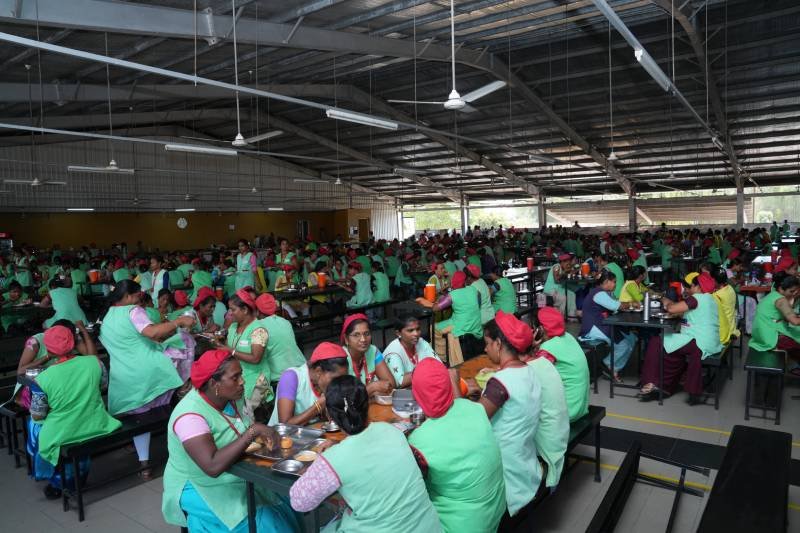
The ecosystem has also played an important role in employment generation and the development of the surrounding community.
Since Brandix began operations in the region, the local community has evolved alongside the development of the industrial park. Employment opportunities have increased and the surrounding area has gradually developed into an important manufacturing centre.
The workforce is central to the future of the ecosystem.
The apparel industry is undergoing rapid transformation, with new products, technologies and manufacturing processes emerging continuously. The ability to train and adapt the workforce is therefore becoming increasingly important.
The experience of the COVID-19 pandemic demonstrated the flexibility of the workforce. Employees were trained to manufacture products such as masks and personal protective equipment within a short period, demonstrating that the workforce could adapt to products outside its traditional manufacturing experience.
As the ecosystem expands into new products, including man-made fibre products and potentially technical textiles, this adaptability will become even more important.
From Cotton to a More Diverse Product Portfolio
Brandix Apparel City has traditionally been strongly associated with cotton and cotton-blended products. However, the ecosystem is gradually diversifying.
Teejay has expanded its portfolio into specialised man-made fibre fabrics, including products developed in collaboration with international technology partners. Such developments reflect the wider transformation taking place within the Indian textile industry.
The future of textile manufacturing will not be limited to cotton.
Man-made fibres, technical textiles, medical textiles, automotive textiles and other specialised products are expected to play a growing role in global textile markets. India has the potential to benefit from this shift, provided it continues to invest in technology, skills, product development and supporting infrastructure.
For Brandix Apparel City, diversification will be an important part of the next phase of development.
A Strategic Location in a Changing Global Supply Chain
The global apparel supply chain is undergoing a major transformation.
The China+1 strategy, geopolitical uncertainty, tariff changes and the search for greater supply-chain resilience are encouraging global brands to diversify their manufacturing networks.
India is increasingly being considered as part of this diversification.
The country’s large workforce, expanding manufacturing capabilities and growing technical expertise provide significant advantages. However, competition is also increasing. Countries such as Bangladesh, Vietnam, Cambodia, Sri Lanka and emerging manufacturing locations in Africa and elsewhere are all competing for a greater share of global apparel production.
In this environment, integrated ecosystems can offer an advantage.
The ability to combine manufacturing, infrastructure, utilities, suppliers and skilled workforce in one location can help reduce complexity and improve responsiveness.
Brandix Apparel City is positioned within this changing global environment.
Its broader global network also provides the company with flexibility. Manufacturing locations in different countries allow the organisation to respond to changing tariffs, trade agreements, geopolitical conditions and customer requirements.
Business can be balanced across locations, allowing the company to retain business within its wider manufacturing network.
This flexibility is becoming increasingly important in an industry where market conditions can change rapidly.
The Next Phase of Growth
The next stage of development for Brandix Apparel City will be focused on both expansion and sustainability.
The long-term vision includes attracting additional manufacturing investments, expanding the product portfolio and increasing employment.
The park is looking to add approximately 10,000 more employees over the next few years, potentially taking total employment to around 30,000. This expansion is expected to be supported by the development of additional factories and the entry of new investors.
The objective, however, is not growth at any cost.
The vision is to create what Brandix describes as sustainable monetisation—developing the industrial ecosystem while preserving its focus on sustainability, environmental responsibility and the safety and well-being of its workforce.
This balance will be increasingly important as manufacturing expands.
Creating a Model for the Future
The significance of Brandix Apparel City extends beyond the individual companies operating within it.
It represents a broader question for the future of Indian textile and apparel manufacturing: can the industry move from fragmented production networks towards more integrated ecosystems?
India has many of the ingredients required to become a stronger global apparel manufacturing hub. It has raw materials, a large workforce, technical expertise, a growing domestic market and a strong industrial base.
The challenge is to bring these strengths together more effectively.
Integrated ecosystems such as Brandix Apparel City demonstrate one possible path forward.
By combining infrastructure, manufacturing, utilities, sustainability, workforce development and global market access, the model offers a framework for a more efficient and resilient apparel industry.
As the global textile and apparel industry enters a new era defined by supply-chain diversification, sustainability and technological transformation, the importance of such ecosystems is likely to grow.
The future may not belong simply to the largest factory.
It may belong to the most connected, adaptable and sustainable ecosystem.
And that is the larger story emerging from Brandix Apparel City.
(Article by Henry Dsouza, Associate Editor Of Textile Insights)