
India, Jordan Explore Textile Trade, Sourcing And Investment Opportunities
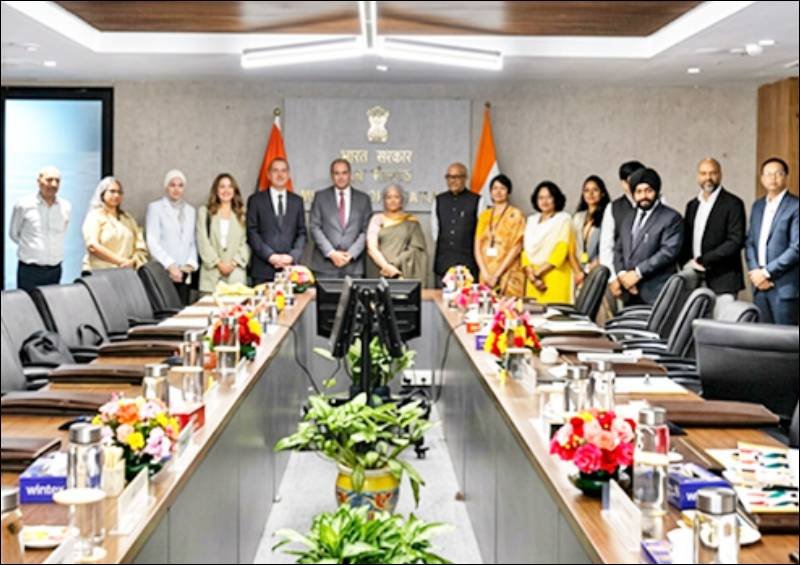
India and Jordan are looking to deepen cooperation in textiles and apparel, with both sides exploring opportunities in trade, sourcing, investment, joint ventures and institutional partnerships.
A high-level Jordanian delegation led by Zaher Al Qatarneh, Secretary-General, Ministry of Investment, Jordan, met Neelam Shami Rao, Secretary (Textiles), Government of India, in New Delhi on October 1 to discuss ways to expand bilateral engagement in the sector.
Jordan’s textile and apparel imports from global markets were valued at around US$2 billion in 2025, while India’s exports to Jordan stood at only about US$48 million, giving India a 2.4% share of the Jordanian market and making it the country’s fourth-largest supplier.

The figures point to significant headroom for Indian textile and apparel exporters to increase their presence in the Jordanian market.
The discussions covered opportunities across apparel, fabrics, technical textiles, cotton textiles and made-ups, with both sides examining possibilities for greater sourcing from India as well as investments and industry-to-industry partnerships.
The two countries also discussed the potential for joint ventures and closer business-to-business engagement to strengthen the textile and apparel value chain.
The Jordanian delegation included Yousef Abdelghani, Ambassador of Jordan to India; Haya Iman, Director of Investment Promotion; and Noor Murad, Investment Promotion Officer. Senior officials from India’s Ministry of Textiles and Ministry of External Affairs, along with representatives of the textile industry, participated in the meeting.
Beyond trade and investment, India and Jordan also explored cooperation between leading fashion, design and textile institutions in the two countries. Areas identified included student and faculty exchanges, design innovation and AI-enabled fashion forecasting.
The proposed institutional collaboration is aimed at strengthening knowledge-sharing and developing new capabilities in design, technology and fashion.
Both sides also discussed the possibility of reviving an established institutional mechanism for structured engagement and follow-up on areas identified for bilateral cooperation in textiles and apparel.
The meeting concluded with both countries agreeing to continue bilateral engagement and take forward the opportunities identified during the discussions.