Textile Council Sets Roadmap To Boost Production, Exports And Industry Competitiveness
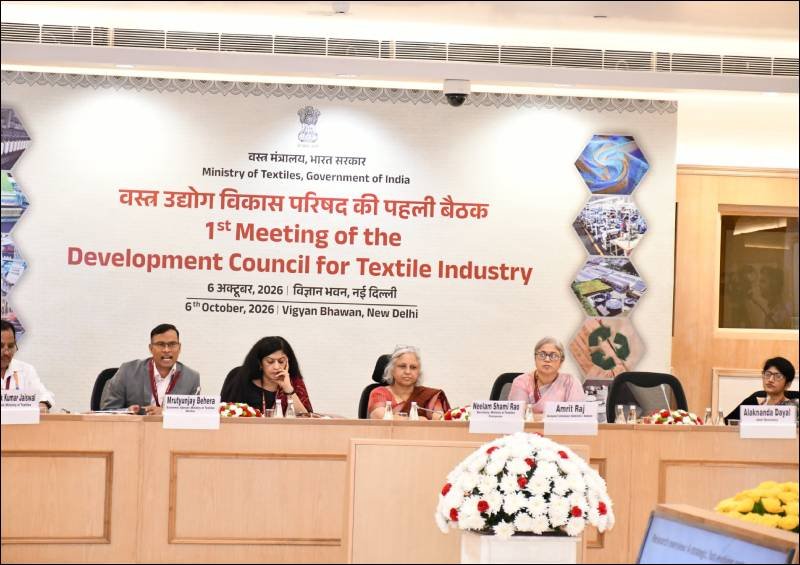
The newly constituted Development Council for Textile Industry (DCTI) has called for a coordinated, whole-of-value-chain strategy to strengthen India’s textile industry, with production, productivity, R&D, exports, raw material availability, investment and sustainability identified as key priorities.
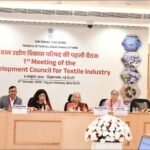
At its first meeting held in New Delhi on October 6, the Council decided to constitute working groups and sub-committees on priority areas and meet regularly to review progress and develop recommendations for the government.
Chaired by Neelam Shami Rao, Secretary, Ministry of Textiles, the DCTI is positioned as an apex consultative platform bringing together the government, industry associations, export promotion councils, research organisations, state governments and sector experts.

The Council discussed the need to address gaps across the entire textile value chain from fibre and yarn to fabric, processing and apparel, while improving scale, modernisation, productivity and cost competitiveness.
A major focus was on strengthening India’s manufacturing base and encouraging capacity addition and technology upgrades across different segments of the industry. The Council also emphasised the need for a more integrated and scale-oriented value chain to improve India’s competitiveness in global markets.
Research and development emerged as another key priority, particularly in new-age fibres and technical textiles. The Council called for stronger industry-research linkages and faster commercialisation of technologies developed by research associations and institutions.
On exports, the DCTI discussed the need to diversify both products and markets, leverage trade agreements and address quality, compliance and logistics-related challenges faced by exporters.
The Council also highlighted the importance of ensuring stable and competitive availability of key raw materials and inputs, including cotton, man-made fibres, yarn, dyes and chemicals. Better market intelligence was identified as an important tool to support industry decision-making and improve input availability.
Investment, skilling and sustainability were also included in the Council’s agenda. Discussions covered ease of doing business, stronger support for MSMEs, workforce development and greater adoption of sustainable and circular production practices.
Industry representatives and other members shared sector-specific recommendations across these areas and welcomed the institutionalised platform for regular engagement between the government and the textile industry.
The recommendations emerging from the DCTI are expected to inform the Ministry of Textiles’ policy and programme interventions, with the broader objective of increasing domestic production and productivity, accelerating the commercialisation of research, expanding textile and apparel exports and attracting greater investment.
The Council is also expected to play a role in strengthening employment generation and building a more sustainable and integrated domestic textile ecosystem as India seeks to enhance its position in global textile and apparel markets.