
Steady Acreage, Uncertain Harvest: Cotton Faces The Monsoon Test
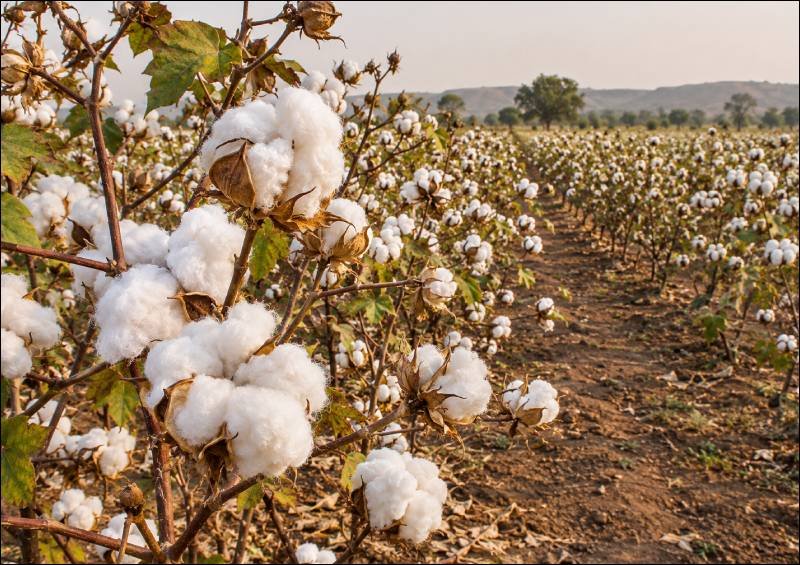
India’s cotton planting has held close to last year’s level, but deficient rainfall and depleted soil moisture are shifting attention towards crop performance and water availability.
For India’s cotton-to-textile value chain, the area planted tells only part of the story. With the 2026 southwest monsoon ending below normal, the more pressing question is how effectively that acreage will translate into fibre production.
A USDA report puts India’s cotton area at 11.05 million hectares as of October 2, compared with 11.11 million hectares a year earlier. While planting has remained broadly stable, it stands approximately 12% below the five-year normal of 12.55 million hectares.

That leaves the industry watching a crop grown on an already reduced acreage base, with moisture stress adding uncertainty to its performance.
Rainfall Deficit Clouds The Outlook
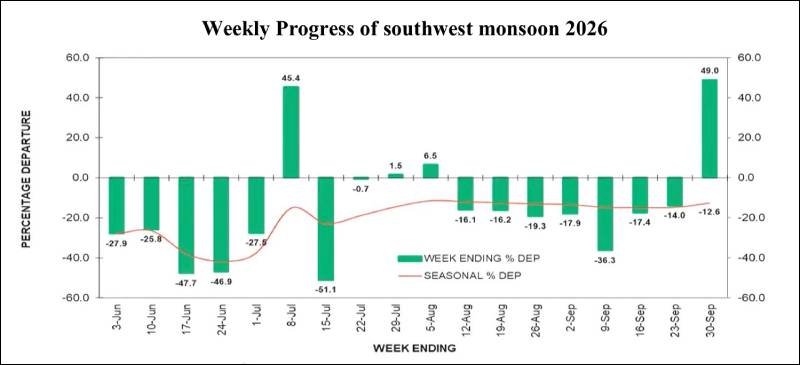
According to the report, India received 759.4 mm of rainfall during June–September, against a long-period average of 868.6 mm, a shortfall of 13%. It ranks the season as the fourth-lowest southwest monsoon rainfall since 2001.
The national figure, however, conceals considerable regional variation. East and northeast India recorded a 26% deficit, while the South peninsula received 24% less rainfall than normal. Central India finished 3% below normal and northwest India 6% below normal, both within the normal category.
For the cotton industry, this uneven distribution matters. A seasonal regional average cannot fully capture the timing of rainfall, prolonged dry spells or conditions in individual growing districts.
The report identifies below-normal soil moisture across parts of Maharashtra, Gujarat, Telangana, Karnataka, Andhra Pradesh, Rajasthan and western Madhya Pradesh, among other areas. Several of these states form an important part of India’s cotton-growing base.
The concern therefore extends beyond how much rain fell to whether moisture remained available when crops needed it.
Acreage Stability Offers Limited Reassurance
Cotton’s relatively unchanged planting area provides some reassurance about the extent of cultivation. It does not, by itself, establish the size or quality of the eventual harvest.
The report does not provide a revised cotton production or yield estimate. Its findings nevertheless highlight why textile businesses need to assess acreage alongside crop condition, district-level rainfall and subsequent arrivals.
For ginners and spinners, these indicators will help clarify how the season develops. Any implications for fibre availability, quality and procurement costs will depend on actual harvest outcomes, rather than the rainfall deficit alone.
The distinction is particularly relevant this season: planting has held near last year’s level, while the moisture conditions supporting that crop have weakened in several regions.
Reservoirs Add To Water Concerns
The pressure is also visible in India’s water storage position. Across 178 major reservoirs monitored by the Central Water Commission, live storage stood at 132.73 billion cubic metres on October 1, equivalent to 71.84% of capacity.
This was approximately 20.45% below the corresponding level a year earlier and 12.17% below normal storage for the period.
Southern India recorded the lowest regional capacity utilisation at 49.15%, compared with 60.51% in the northern region. Western and central reservoirs were relatively better placed at 84.04% and 87.99%, respectively.
These figures describe regional water availability; they do not directly measure irrigation access for individual cotton farms. They nonetheless reinforce the report’s concern about constrained water supplies as agriculture moves into the winter planting season.
A Season To Watch Beyond Sowing
The report expects moisture-stressed areas to favour drought-resilient, less water-intensive crops during rabi planting. It also flags El Niño-related risks to temperatures, rainfall and water availability.
For cotton, the immediate focus remains on the standing kharif crop. Winter sowing decisions provide the wider agricultural context, while cotton’s commercial outlook will become clearer through harvest progress and market arrivals.
For the textile industry, the season calls for close attention to regional developments. The acreage figure offers a starting point; the decisive evidence will come from how much usable fibre reaches the market.