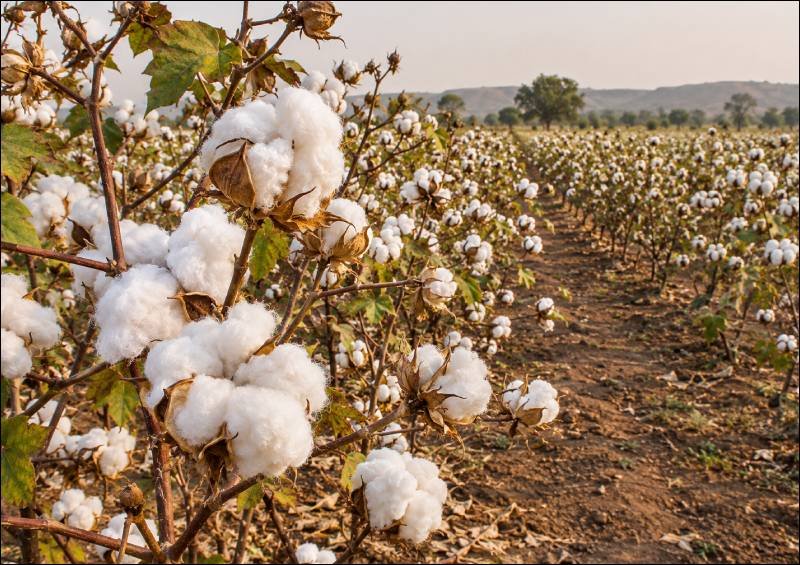
India’s cotton planting has held close to last year’s level, but deficient rainfall and depleted soil moisture are shifting attention towards crop performance and water availability. For India’s cotton-to-textile value chain, the area planted tells only part of the story. With the 2026
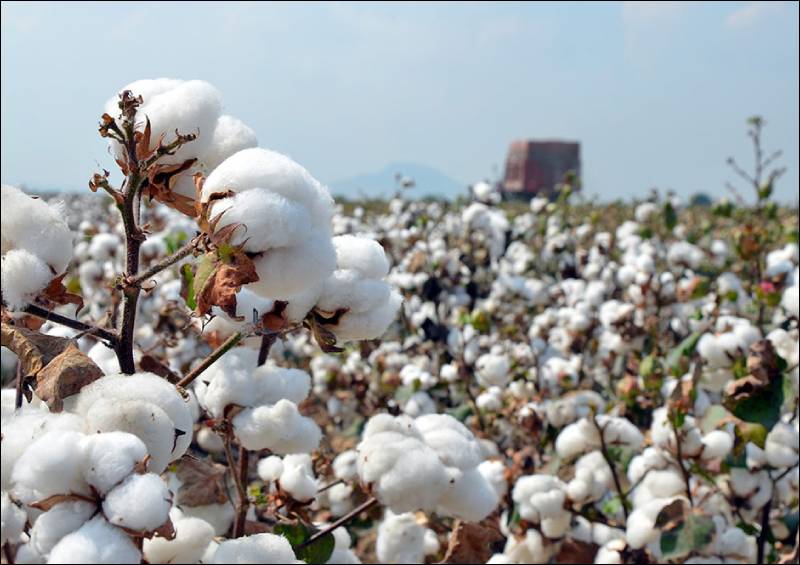
Global cotton production is projected to reach 118 million bales in 2026–27, with larger harvests in Brazil and the United States lifting the outlook despite a reduction in Argentina, according to the US Department of Agriculture’s latest World Agricultural Supply and Demand Estimates (WASDE). The forecast is 600,000 bales higher than the September estimate. Brazil’s […]
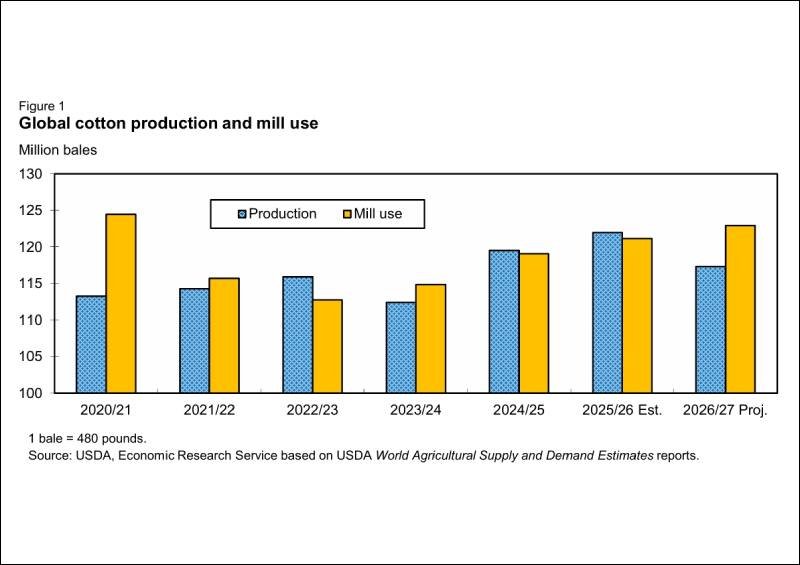
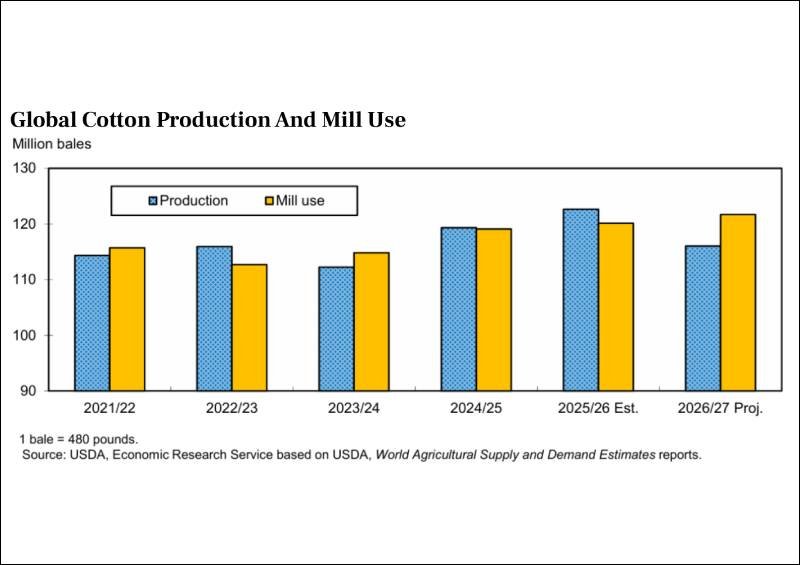
Global cotton markets are heading towards a tighter supply situation in 2026/27, with world cotton ending stocks projected to decline by nearly 5.5 million bales, or 7%, to 69.9 million bales, according to the latest Cotton and Wool Outlook report from the US Department of Agriculture (USDA). The projected stock level would be the lowest […]
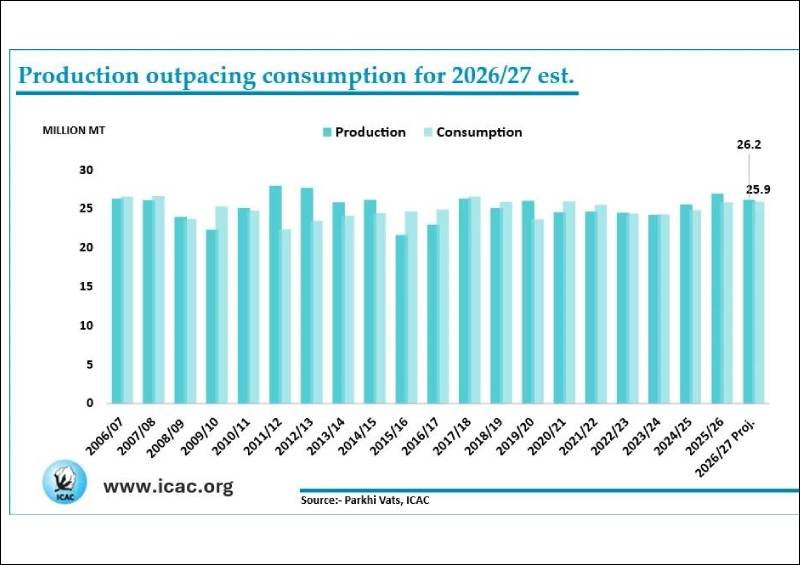
Global cotton production is expected to marginally exceed consumption in the 2026-27 season, but the projected surplus could narrow as weather, pest and crop-related risks emerge, according to the International Cotton Advisory Committee (ICAC). Global cotton output is projected at 26.2 million tonnes against consumption of 25.9 million tonnes, leaving a surplus of around
The global cotton industry is heading into a tighter supply cycle for the 2026-27 season, with lower production forecasts and steady improvement in mill consumption expected to reshape pricing dynamics across major cotton producing and consuming regions. According to the latest Cotton and Wool Outlook: May 2026 released by the U.S. Department of Agriculture (USDA), […]
India, the second-largest producer and consumer of cotton globally, cultivates cotton across 11 major states with about 6.5 million farmers, including 40% women and numerous migrant labourers on leased land. Given the sector’s vulnerabilities, CITI and ILO are partnering to promote Fundamental Principles and Rights at Work (FPRW) among cotton farmers, particularly