Kyoto Researchers Develop PFAS And Tio₂ Free Technology For White, Water-Repellent Materials
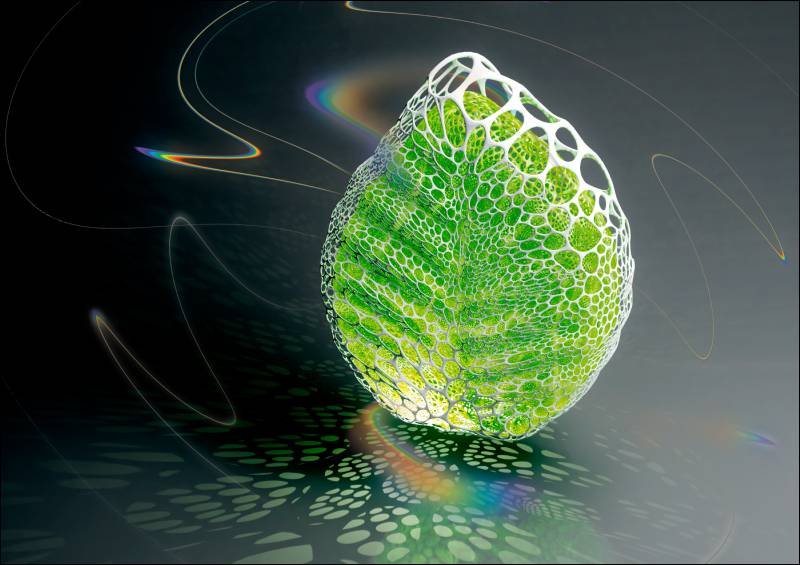
Researchers at Kyoto University’s Institute for Integrated Cell-Material Sciences (iCeMS) have developed a foam-based technology that can produce brilliant white materials and water-repellent surfaces without using titanium dioxide (TiO₂) pigments or fluorinated chemicals known as PFAS.
Published in Nature, the research introduces a materials platform that could have applications in packaging, printed materials and textiles, offering an alternative approach to achieving whiteness and water repellency through material structure rather than conventional chemical additives.
The technology draws inspiration from nature, where brilliant white surfaces are often created without pigments. Snow, clouds and sea spray, for example, appear white because their porous structures scatter light. Similar structural effects can be found in plant tissues and other natural materials.

The researchers applied this principle to polymer materials by creating precisely engineered porous structures that efficiently scatter light. The resulting structural whiteness can deliver high brightness and opacity without adding white pigments.
The development also addresses concerns surrounding conventional materials used to create white and water-repellent products. Titanium dioxide has traditionally been widely used to provide whiteness and opacity in packaging, films and coatings. Meanwhile, PFAS have been used extensively to impart water and oil repellency. Growing environmental and health concerns around persistent fluorinated chemicals have increased demand for alternatives.
The research team was led by Professor Easan Sivaniah of Kyoto University, with collaborators from Tokyo Metropolitan University and Donghua University in China.
The new process, called Deep Foam Photolithography (DFP), uses light and a mild solvent to transform polymers into porous structures. Light first breaks the polymer into smaller molecular fragments. When these fragments interact with the solvent, the material swells and develops an open foam-like structure.
This structure performs two functions simultaneously. Inside the material, the pores scatter light and generate intense whiteness without the need for TiO₂. At the surface, the process creates an extremely rough texture that produces strong water-repellent properties, similar to the effect observed on lotus leaves.
“A key challenge faced by biomimetic science is realizing environmentally friendly material designs inspired by nature at the scale and cost of existing materials,” said Associate Professor Taiki Yanagishima of Tokyo Metropolitan University.
The researchers demonstrated that DFP can be used with commercially available polymers, potentially reducing the need to develop entirely new specialty materials. In collaboration with textile researchers at Donghua University, they also demonstrated the technology on fabrics, extending its potential beyond printable polymer films.
According to the researchers, the platform can achieve printing resolutions of up to 20,000 DPI while combining structural whiteness with water-management functionality.
The approach could also help reduce material weight and dependence on mined mineral pigments and persistent fluorinated chemicals. Instead of adding pigments or chemical coatings to achieve specific properties, DFP uses the physical architecture of the material to generate optical and surface functions.
The researchers believe this structure-driven approach could offer a new pathway for developing more sustainable materials for packaging, printing and textiles, particularly where whiteness, high-resolution printing and water repellency are required.
The development reflects a broader shift towards biomimetic materials, in which structures and functions observed in nature are replicated using scalable manufacturing processes. In this case, the researchers have used the way natural foams and surfaces interact with light and water to create a potential alternative to conventional pigment- and fluorochemical-based technologies.