Wove Launches App To Detect PFAS And Microplastic Risks In Clothing
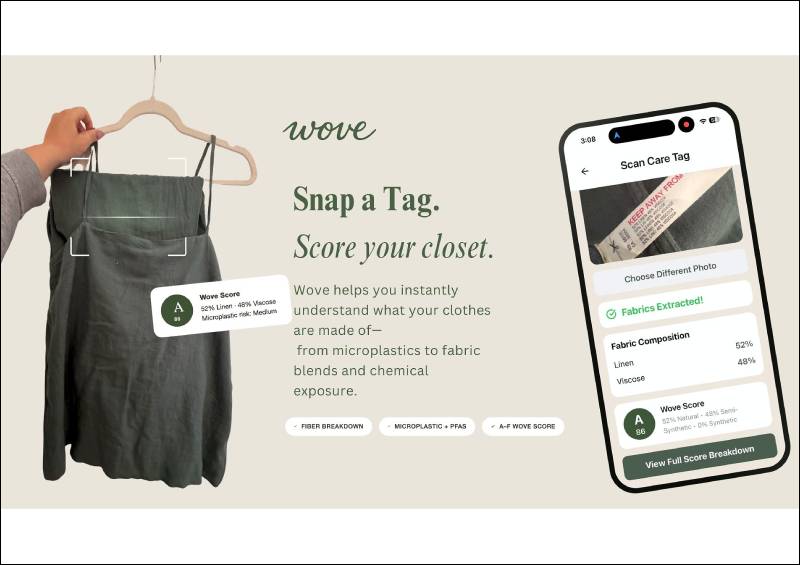
Wove has launched a new digital platform aimed at helping consumers identify potential chemical and microplastic risks hidden in everyday clothing, as awareness around textile safety and synthetic fibre exposure continues to grow globally.
The Charlotte-based startup said the app enables users to analyze garments by uploading a product link, screenshot, clothing label or fabric photo. Using fibre composition and product information, the platform generates a simplified rating system focused on synthetic fibre content, PFAS exposure concerns and microplastic shedding potential. The app also recommends lower-tox alternatives that align with the user’s preferred style and price range.
The launch comes amid increasing consumer demand for ingredient transparency across categories such as food, beauty and household products, while apparel remains one of the least transparent consumer sectors despite the widespread use of synthetic materials and chemical treatments in textile manufacturing.

According to data cited by the company, synthetic fibres accounted for approximately 73% of global fibre production in 2023, compared with around 45% in 1996. Polyester alone now represents more than half of total global fibre production. At the same time, concerns surrounding microplastics, hormone-disrupting chemicals and long-term environmental and health impacts linked to synthetic textiles have gained significant public attention.
The company noted that recent media coverage and documentaries focused on plastic pollution and chemical exposure have contributed to growing consumer awareness. However, many consumers still do not associate clothing with microplastic exposure. Wove referenced a 2025 consumer survey showing that only 42% of respondents connected microplastic pollution with clothing materials.
Emily Hemphill said the platform was developed to simplify clothing transparency for consumers already seeking healthier lifestyle choices in other product categories.
“People are finally starting to ask what is actually in their clothes, not just whether something is trendy or marketed as sustainable,” Hemphill said. “Most people have already changed products such as food containers, skincare and household items, but clothing has remained a major blind spot.”
The platform positions itself as a “scan-and-score” tool for apparel, similar to ingredient-analysis apps widely used in the food and beauty industries. Users can upload products such as polyester activewear, synthetic dresses or blended-fabric garments and receive recommendations for comparable alternatives made from more natural or lower-impact materials.
Unlike many fashion recommendation platforms, Wove said it does not rely on sponsored product placements or paid brand partnerships. Recommendations are instead based on fabric composition and material analysis.
Industry observers note that the launch reflects a broader shift within the fashion industry toward material transparency, sustainability and informed consumer purchasing. Growing scrutiny around PFAS chemicals, synthetic fibres and textile waste is expected to increase demand for platforms that help consumers better understand fabric composition and environmental impact.
The company said its long-term goal is to make clothing ingredient transparency as accessible and understandable as nutrition labels in food and ingredient disclosures in beauty products, while helping shoppers make practical and informed apparel choices.