

Bangladesh Sets Reform Roadmap Following LDC Graduation Extension
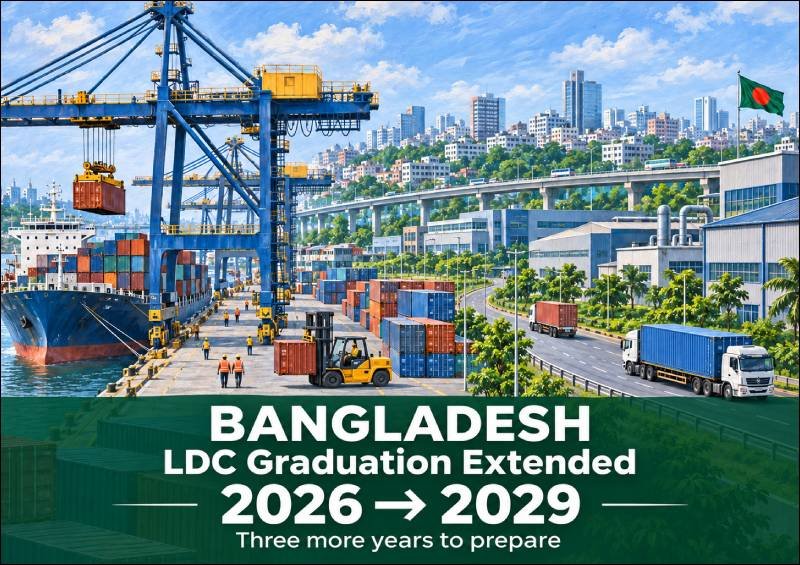
Bangladesh has submitted a three-year reform roadmap to its development partners to strengthen banking, revenue collection and the business environment after securing an extension of its graduation from the United Nations’ least developed country (LDC) category.
The revised graduation date of November 24, 2029, gives Bangladesh three additional years to prepare for the transition. The European Union and the UN will monitor implementation of the roadmap annually.
The 2026–2029 plan prioritises economic stability, banking discipline, investment and industrial competitiveness. It targets real GDP growth of 7% and inflation of 6% by 2029, alongside foreign exchange reserves sufficient to cover six months of imports.

Banking reforms aim to reduce non-performing loans to below 20% through stronger supervision, asset-quality reviews, regular stress tests and action against wilful defaulters.
To improve the business environment, the government plans an integrated one-stop service, business start-up licences within 14 days, fewer documentation requirements and a digital platform for approvals and renewals. Commercial and intellectual property courts are also proposed to expedite dispute resolution.
Trade facilitation measures include integrating customs, ports, bonded warehouses, banks and trade bodies through the National Single Window. The roadmap also seeks to reduce container dwell time at ports to three to four days from 9.44 days.
Other priorities include uninterrupted energy supplies for export-oriented factories, technology modernisation, automation incentives and support for export diversification.
Revenue reforms will focus on tax automation, expanding the taxpayer base, strengthening VAT compliance and rationalising exemptions. The Finance Division, Bangladesh Bank and other regulators will jointly implement the programme.