
Better Cotton Partners Uzbekistan Standards Agency
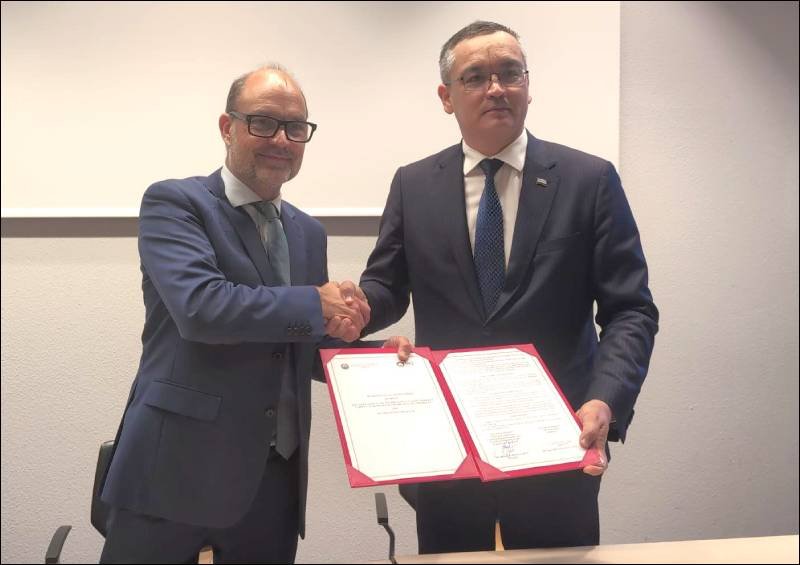
Better Cotton (formerly BCI) has signed a cooperation agreement with Uzbekistan’s Uzstandard Agency to strengthen sustainability standards, certification systems and quality infrastructure across the country’s cotton sector.
The partnership aims to support Uzbekistan’s ongoing efforts to modernise its cotton industry by aligning national standards with internationally recognised sustainability frameworks and best practices.
Under the agreement, Better Cotton will provide technical expertise to help inform national initiatives and policies related to cotton production, quality assurance and sustainability. The collaboration will focus on supporting technical working group discussions, sharing methodologies on field-level best practices and certification systems, and integrating Better Cotton’s Principles and Criteria (P&C) into relevant national standards.

Katerina Gorbunova, Head of Better Cotton’s Uzbekistan Programme, said the organisation is well positioned to support the country’s sustainability ambitions.
“As a leading sustainability standards system and certification scheme working with farming communities around the world, Better Cotton is uniquely positioned to support the agency in its mission. We are excited to share our knowledge and experience and learn from the organisation to collaboratively strengthen Uzbekistan’s infrastructure,” she said.
A key element of the partnership will be exploring the development of a nationally owned cotton sustainability standard for Uzbekistan. Such a standard could be benchmarked against the Better Cotton Standard, enabling the country to promote sustainable cotton production while maintaining alignment with globally recognised requirements.
The initiative is expected to support greater transparency, environmental stewardship and social responsibility throughout Uzbekistan’s cotton value chain.
Akmal Jumanazarov, Director General of the Uzstandard Agency, said the cooperation aligns with the country’s broader programme of quality infrastructure reform and international harmonisation.
“Uzbekistan is undertaking one of the most comprehensive reforms of its national quality infrastructure, with the harmonisation of standards and the adoption of international best practices serving as key priorities of our modernisation agenda,” he said.
Jumanazarov noted that the cotton and textile sectors remain strategically important to the country’s economy, contributing significantly to employment, industrial development and export earnings.
“Our cooperation with Better Cotton represents an important step towards integrating internationally recognised sustainability and social standards into Uzbekistan’s standardisation system. Beyond improving product quality and environmental performance, this partnership will support the promotion of decent work, responsible agricultural practices and greater transparency throughout the cotton value chain—principles that are increasingly valued by international markets,” he added.