DITF Develops Smart Textiles That Change Shape With Temperature
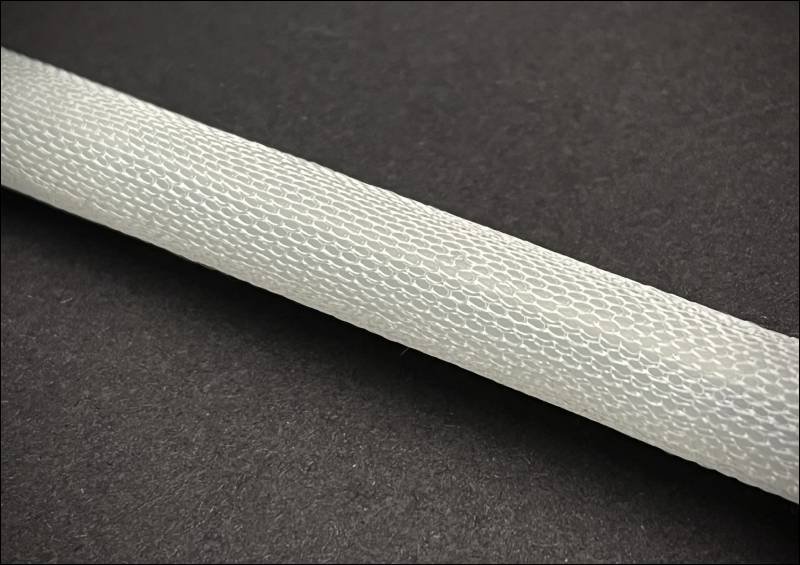
Researchers at the German Institutes of Textile and Fiber Research Denkendorf, in collaboration with the Fraunhofer Institute for Applied Polymer Research, have developed smart textile yarns capable of reversibly changing shape in response to temperature, paving the way for energy-efficient textile actuators.
The innovation is based on thermoplastic two-way shape-memory polymers (2W-SMPs), which can repeatedly expand and contract without the need for external mechanical systems such as motors. The yarns shorten when heated and return to their original length when cooled, enabling automatic and reversible shape changes.
To support applications at room temperature, researchers developed spinnable fibres with transition temperatures of approximately 30°C and 60°C. Through optimisation of spinning parameters, the team successfully produced multifilament yarns with dimensional stability exceeding 99% and a reversible elongation change of 16%.

The technology could find applications across sectors including agriculture, medical technology, automation, architecture and apparel. One potential use is in agricultural textiles that automatically adjust air and light permeability in response to changing weather conditions, helping create optimal environments for crop growth.
The next phase of the project will focus on processing the yarns into textile structures and evaluating their recyclability, with the aim of assessing their suitability for large-scale industrial production.