
Hohenstein And DuPont Develop Innovative Testing Methods For Soft Ballistic Inserts
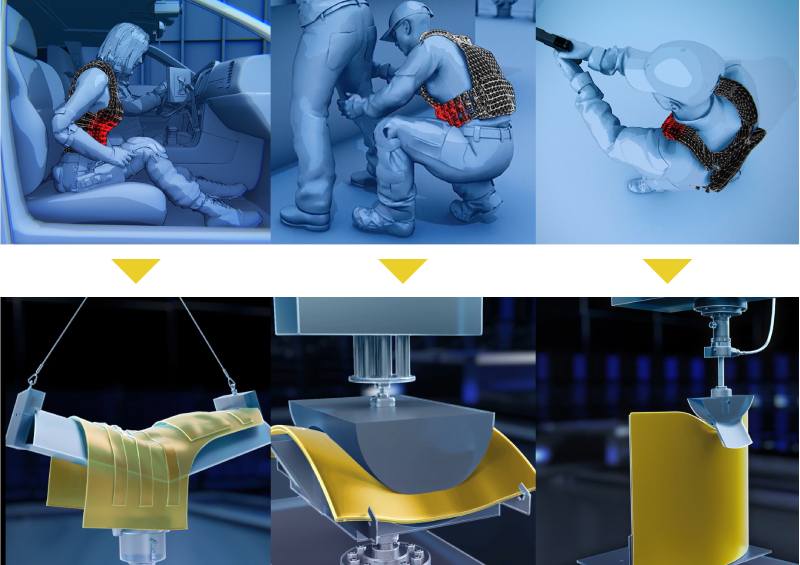
Testing laboratory Hohenstein and DuPont have joined forces to create three innovative and reliable test methods for soft ballistic inserts. Maximizing the comfort and mobility of body armor, such as bulletproof vests, is critical for the performance and endurance of law enforcement and military personnel. The new methods bridge the gap between traditional testing and real-life body movements and positions.
An interdisciplinary team from both companies developed these test methods to reliably assess ergonomic comfort characteristics. “It is in the DNA of Hohenstein to get as close as possible to the user’s reality,” said Dr. Jan Beringer, Senior Scientific Expert at Hohenstein. “Through dedicated wear trials, we identified potential discomfort and movement restrictions. Then, leveraging decades of expertise, we designed tests and equipment to simulate the wearer’s experience, in close collaboration with DuPont.”
Christophe Djololian, Global Market Development Leader at DuPont, added, “To meet the critical needs of law enforcement and military personnel, maximizing comfort and flexibility in soft ballistic solutions is essential. Developing test methods to evaluate pain and mobility constraints is an important first step. By leveraging Hohenstein’s recognized expertise in textile and wearability, we can advance these solutions in the industry and enhance wearer comfort, allowing personnel to perform their duties with greater efficiency.”
Three Comfort and Mobility Tests
- Lower Costal Bending (LCB) Test
- Double Curvature Compression (DCC) Test
- Edge Pressure (EP) Test
Hohenstein offers these three test methods to characterize comfort and mobility constraints for soft ballistic applications. “Depending on the requirements, we offer different solutions,” explained Dr Jan Beringer. “Certified third-party and independent testing can be conducted by experts in Hohenstein’s PPE labs using specially designed equipment.”