How GST 2.0 Rate Cuts Will Strengthen India’s Textile And Apparel Value Chain

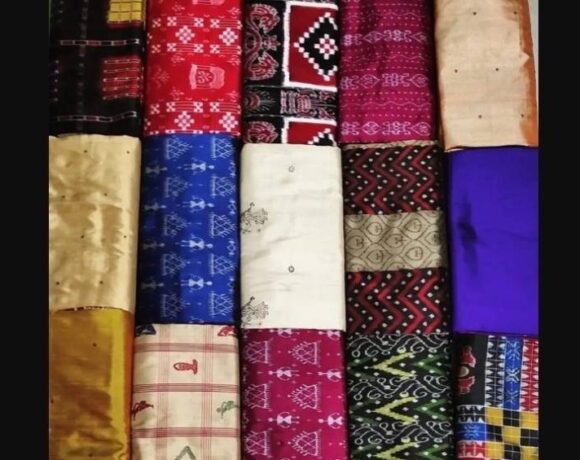
For the economy and the textile industry, GST 2.0 reforms are undoubtedly a landmark step. The reduction in manmade fibres from 18% to 5% and synthetic yarn from 12% to 5% will substantially strengthen the country’s textile industry while enhancing its competitiveness and stimulating consumption. Handloom, handicraft goods, yarns and carpets have also been shifted to the uniform 5% GST slab.
This will improve working capital cycles and increase affordability. Enhancing the apparel slab from Rs 1,000 to Rs 2,500 with uniform 5% GST will provide a big fillip to the demand for garments and apparel. In turn, it will create new opportunities across the entire textile value chain. As a result, GST 2.0 reforms represent a truly transformative step for the textile industry.
However, harmonising GST on recycled polyester fibre (that is now 5%) and its raw material, PET bottles (18%), is a crucial area needed to uncover the full potential of circular textiles. This will support sustainable innovation, boost domestic production and facilitate the country’s journey towards Viksit Bharat by 2047, considering the key role of textiles in the economic ecosystem.

Current Challenges and Some Solutions
To support the textile industry’s growth, it’s important to remove the Rs 2,500 ceiling on textile and apparel and ensure higher-priced items are taxed uniformly at 5%. A higher GST slab will burden consumers since textiles and apparel are basic needs for Indian families that should not be classified as luxury products. Whether it is festivals, celebratory occasions like weddings or seasonal needs, good clothing is essential. The higher GST will impact not just wedding apparel but ethnic wear and woollens too.
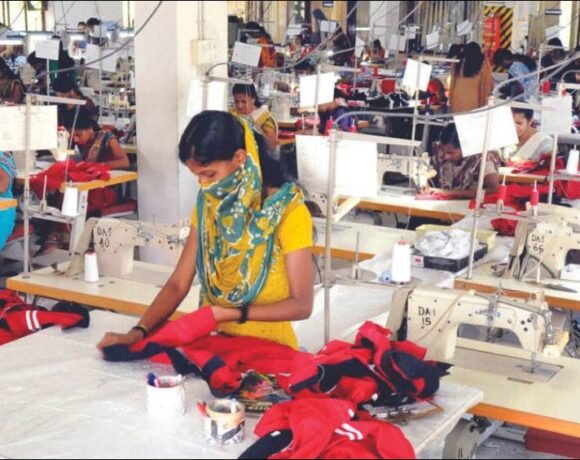
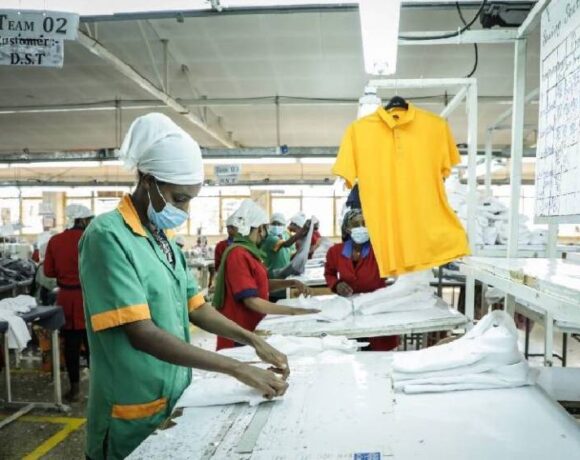
Clothing must be kept affordable for the masses since this means stability for traders. It will also help protect the livelihood of millions of workers dependent on textiles. Rationalising GST rates under the 5% slab can help curb costs while stimulating greater demand, as apparel will become more competitive and affordable. Rationalised GST slabs will also benefit the ‘Make in India’ mission, creating more employment opportunities, especially for women workers.
But since apparel priced more than Rs 2,500 now attracts 18% GST – compared to 12% earlier for garments above Rs 1,000 – the above benefits won’t be available in this range. Therefore, the implications for apparel in the mid to higher segment range are clear demand is bound to fall. It must be noted that the domestic textile segment is India’s second-largest employment generator after agriculture. Millions of weavers, artisans, tailors, traders and other workers rely on the industry for their livelihood. Any sales slowdown due to a drop in demand caused by the higher tax burden will jeopardise millions of jobs.
Reasons for Rate Rationalisation
Further, frequent revisions together with multiple rates create confusion for both vendors and customers, while increasing the compliance burden and hindering business operations. Accordingly, a simplified, standard and minimal GST rate will benefit the entire textile industry. One must emphasise that this rate rationalisation must be seen against the backdrop of the textile sector’s social and economic importance, rather than in isolation.
Another aspect that should be looked into is the inverted duty structure, which poses its own challenges for the textile sector. The issue arises when a manufacturer has bought goods or raw material at a higher GST slab, such as 18%, but then has to sell the finished products at a lower rate, e.g., 12%. This leads to a 6% shortfall in GST. Earlier, this difference was reimbursed by the government in some sectors, which included textiles. Now, this practice has been restricted.
Keeping this anomaly in mind, it would be most helpful if the GST rates were rationalised so that input and output slabs are aligned, for example, 12% on both sides. This will eliminate any build-up of input tax credits. Rate rationalisations with a uniform tax slab across the value chain will help the textile sector by lowering the financial burden on manufacturers.
Given the overall role of the textile industry in the economy and its steady transition towards sustainability in keeping with the government’s objective to meet its commitment for the 2030 UN SDGs (Sustainable Development Goals) as well as net zero by 2070, GST rates should be rationalised. By supporting the sustainability shift, the government would also be enabling a circular economy in textiles, which remains critical to curbing waste in the textile industry.
There is no denying that the Central Government has done a lot for the textile industry and the economy at large. Nonetheless, some anomalies have crept in that can slow the overall momentum of reforms. As highlighted above, if these anomalies are addressed at the earliest, it will benefit both the textile industry and the economy. Rationalised GST rates would then allow all stakeholders to put in their best efforts as the nation moves steadily forward towards the Viksit Bharat by 2047 vision.