
Industry Leaders Discuss The Impact Of Automation On Textiles At TAI Conference
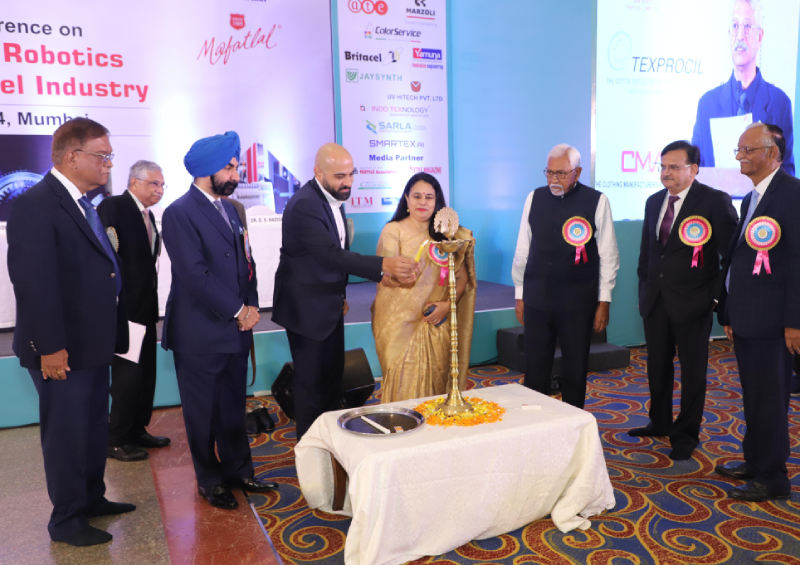
The Textile Association (India), Mumbai Unit, organized an International Conference on “Automation and Robotics in the Textile & Apparel Industry” on November 15, 2024, at Hotel The Lalit, Mumbai. The event was attended by over 350 delegates from the textile industry, including professionals, business leaders, and experts, who gathered to discuss the role of automation in transforming the industry.
The conference kicked off with an opening address by V. C. Gupte, Chairman of the TAI Mumbai Unit, who welcomed the delegates and set the tone for the discussions. He emphasized the growing importance of automation in improving productivity, quality, and efficiency within the textile sector.
Rajiv Ranjan, President of TAI Mumbai Unit, also delivered a speech focusing on the crucial need for MSMEs (Micro, Small, and Medium Enterprises) to adopt advanced technologies. According to Ranjan, embracing automation can significantly enhance productivity and streamline operations, ultimately leading to more competitive businesses.

The event’s Conference Chairman, G. V. Aras, highlighted the ongoing developments in automation within the industry. He highlighted the continuous progress being made in adopting innovation technologies to address the challenges faced by the textile and apparel sectors. Aras also noted that automation is not just about technology, but about reshaping the entire operational approach of the industry to keep pace with global demands.
A major highlight of the conference was the keynote address delivered by Navdeep S. Sodhi, a leading expert from Gherzi Textil Organization, Zurich. Sodhi presented insights on global trends in automation and robotics, emphasizing how India has the potential to emerge as a major manufacturing hub. He explained that automation plays a critical role in making Indian textile companies more competitive in the global market, as it can help increase production capacity, reduce labor costs, and improve overall quality control.
The conference also recognized industry leaders for their contributions. One of the most significant awards was the “Industrial Excellence Award,” which was presented to Pradeep Dodhia, Managing Director of Dodhia Synthetics, for his outstanding work in the textile industry. His commitment to advancing manufacturing processes and fostering innovation was acknowledged with the prestigious award.
Roop Rashi, the Textile Commissioner from the Government of India, addressed the delegates during the event and emphasized the importance of a holistic approach to developing the textile sector. She stressed that automation should be viewed as a tool for sustainable growth and innovation within the industry. She also highlighted the government’s efforts to provide support for the adoption of automation and robotics in the textile sector, but also noted the need for more collaboration between industry stakeholders and the government to ensure the continued growth and development of the sector.
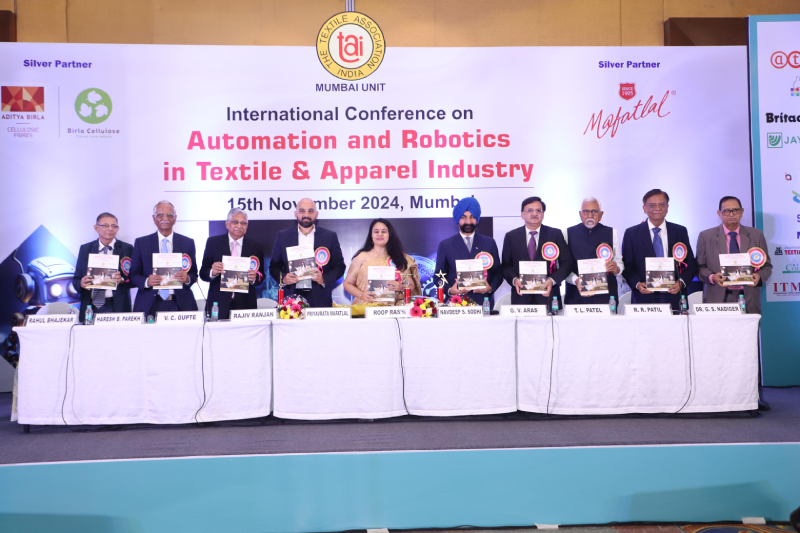
The conference featured two technical sessions that provided deeper insights into the practical applications of automation and robotics. The first technical session focused on Artificial Intelligence (AI), predictive maintenance, waste management, fabric inspection, and dosing systems. Experts in these fields discussed how AI and machine learning can be leveraged to predict equipment failures, optimize production schedules, and reduce textile waste, ultimately improving the efficiency of manufacturing processes. The session also covered advancements in fabric inspection systems, which use automation to detect defects more accurately and swiftly than traditional methods.
Second Session addressed the practical aspects of automation in areas like storage automation, material inspection, machine upgradation, digital printing, and Enterprise Resource Planning (ERP) software solutions. The session explored how storage automation systems can streamline inventory management, reduce human error, and enhance the efficiency of supply chains. It also discussed the growing importance of digital printing technology, which enables companies to achieve higher precision and reduced waste in the design and printing of fabrics.
A key part of the conference was the panel discussion moderated by Rajiv Ranjan. The panelists discussed the various challenges and opportunities that arise with the adoption of automation and robotics in the textile industry. Topics such as improving efficiency, enhancing product quality, addressing skill gaps, and the role of the government in supporting technological advancements were debated. Panelists agreed on the need for more investment in skill development to ensure that the workforce can adapt to the evolving technological landscape.
The event proved to be a significant step forward in promoting the adoption of automation and robotics within the textile and apparel sector. With a focus on innovation, technology, and collaboration, the conference underlined the importance of embracing automation to achieve sustainable growth and stay competitive in a rapidly evolving global market. The discussions and insights provided will no doubt play a pivotal role in shaping the future of the industry in India and beyond.