Longer Garment Life Can Cut Fast Fashion Emissions: Study
A new study led by Concordia University has found that extending the lifespan of garments and replacing air freight with sea transport could significantly reduce the environmental impact of fast fashion.
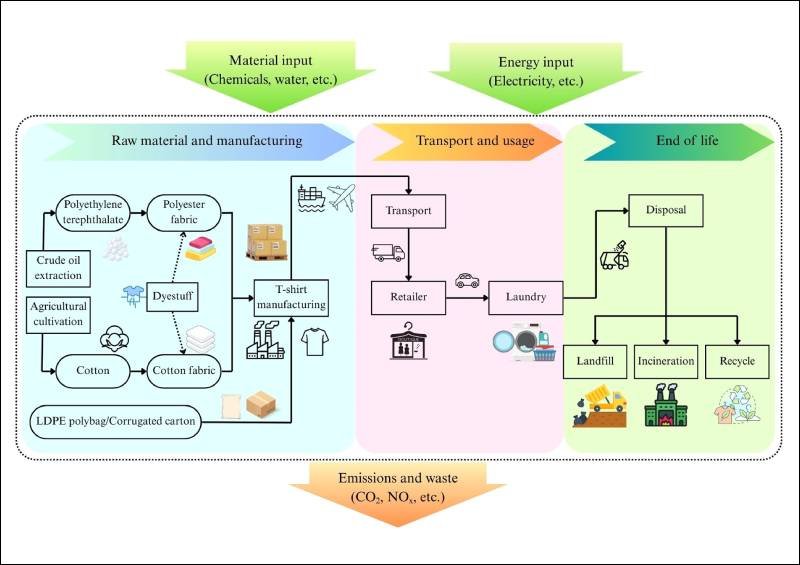
The study examined the full life cycle of cotton and polyester T-shirts, assessing environmental impacts at various stages, including fibre production, garment manufacturing, transportation, consumer use and end-of-life disposal. Researchers also evaluated alternative scenarios involving shipping methods, disposal practices and longer garment lifespans to identify the measures that could deliver the greatest reductions.
The analysis covered the fast fashion supply chain from raw material production and garment manufacturing in China to transportation, consumer use in Montreal and final disposal.

Under the baseline scenario, polyester T-shirts generated considerably higher greenhouse gas emissions than cotton T-shirts, largely because synthetic fibre production is energy-intensive and relies heavily on fossil fuels. Cotton, however, had a significantly higher impact on land and water resources due to the requirements of cotton cultivation.
The researchers found that transportation and garment lifespan could have a greater influence on overall environmental performance than the choice between cotton and polyester alone. Air freight emerged as a major contributor to greenhouse gas emissions, while switching to sea freight reduced a T-shirt’s carbon footprint by approximately 30% to 60%, depending on the material.
Extending the useful life of garments also had a substantial impact. Doubling the lifespan of a T-shirt could reduce associated emissions by around half, as fewer new garments would need to be produced to provide the same amount of clothing use.
The findings indicate that the fashion industry could achieve significant environmental gains by reducing production volumes, designing garments for longer use and limiting reliance on air freight. For consumers, wearing clothes for longer could provide a greater climate benefit than focusing solely on whether a garment is made from cotton or polyester.
The study was led by PhD candidate Xinyu Xu and Chunjiang An, Associate Professor in the Department of Building, Civil and Environmental Engineering at Concordia University’s Gina Cody School of Engineering and Computer Science. Zhi Chen, Professor in the same department, and Linxiang Lyu of the Shanghai Institute of Technology also contributed to the research.
The study was funded by the Natural Sciences and Engineering Research Council of Canada.