
Philippine Textiles Poised To Carve EU Market Niche Through Sustainability
The Philippine textile industry could establish a strong foothold in the European Union (EU) market by embracing sustainability and complying with emerging environmental regulations, according to the Department of Science and Technology (DoST).
“We noticed that in some countries, their textile processing uses more chemicals and is therefore harmful to the environment,” said Science and Technology Secretary Renato U. Solidum Jr. at the 2025 Philippine Textile Congress.
“The DoST-Philippine Textile Research Institute (PTRI) is promoting sustainable practices and the use of natural dyes. This kind of material is better appreciated when exported to Europe.”

Solidum emphasized that the Philippines should not compete on price alone but instead highlight the environmental value of its products. “We have to have a niche. Sometimes it’s not just about being cheap, we need to market our products through the environmental lens,” he said.
The EU market has become increasingly stringent under its Green Deal, which includes regulations such as the EU Deforestation Regulation, the Carbon Border Adjustment Mechanism, and the Ecodesign for Sustainable Products Regulation. These policies require exporters to adopt traceable, low-carbon, and sustainable production practices.
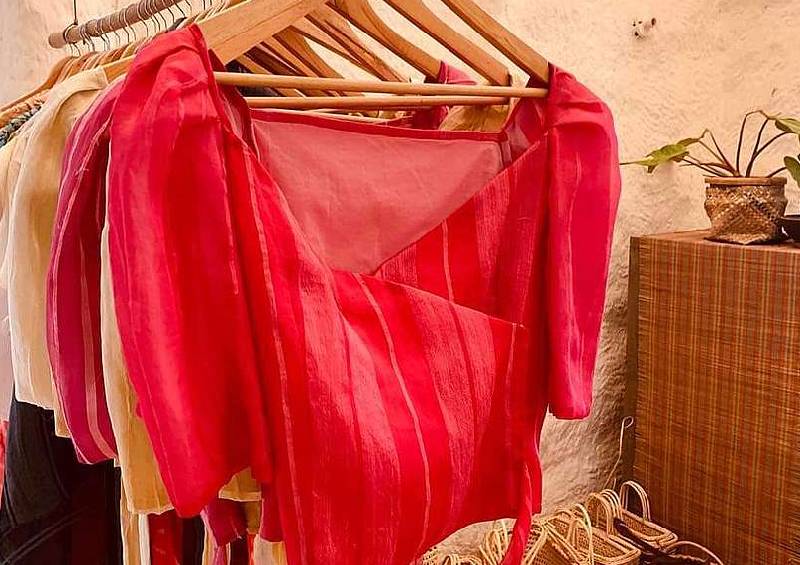
Solidum noted that while the global textile market is dominated by large-scale producers, the Philippines has an advantage in tropical fabrics, which align with both sustainability goals and local traditions. “This will be our edge,” he said. “We need more investment in the Philippines’ tropical fabric sector because, by law, government employees are required to wear Philippine tropical fabrics.”
He added that production remains limited, making tropical fabrics relatively expensive. “If more people use it, it will become cheaper and more competitive,” he explained. “But scaling up requires private sector investment, otherwise development will stall.”