
Resource vs Resourcefulness: A Lesson That Transformed Our Mill

“So, you believe you can produce these super fine counts only if I simply hand you the latest machine?”
The Chairman’s words weren’t loud, but they landed like a thunderclap. His gaze—piercing over the rim of his spectacles—locked onto mine with unsettling precision. Whether it was sarcasm or scepticism, I couldn’t tell. But I felt exposed.
I sat there, silent. Not because I lacked an answer, but because the noise inside me was deafening. I had come to request approval for a new machine to process ultra-fine counts—240s and above.
Summoning my courage, I responded, “Our machines can’t manage higher drafts, sir. To reach their maximum draft, we’d need much finer roving, which also isn’t possible with our current simplex setup.”
Again, there was the same deafening silence!
After a pause, he cleared his throat and offered a half-smile. “It’s not that we don’t have the funds,” he said. “But for this small order, I can’t justify the investment. Let me give you one piece of advice: Don’t always look for resources. Try to be resourceful.”
His reply gave me great disappointment.
I left his office empty-handed—but not empty-minded.
Those two words—resource and resourceful—echoed in my thoughts. Weren’t they just grammatical variations of the same idea?
Turns out, they weren’t.
A quick search on the internet revealed the difference:
Resources are the tools we have.

Resourcefulness is how creatively and effectively we use them.
And then came the insight that changed everything: For every person who failed due to lack of resources, there’s someone who succeeded with the same limitations—because they were resourceful.
I mentally thanked the Chairman. His words had sparked a fire.
Turning Constraints into Ingenuity
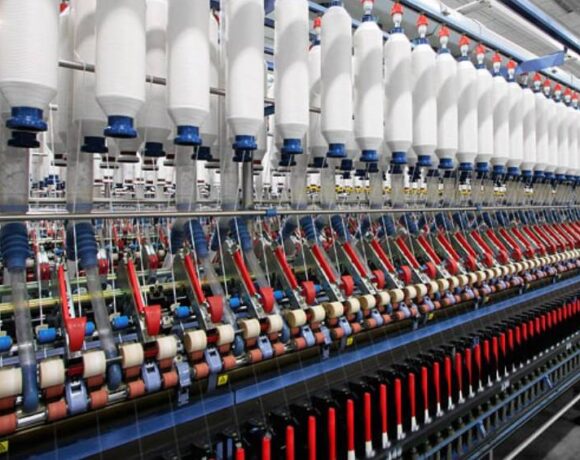
Over the next few days, our team dove into brainstorming sessions. We dissected every step of the process, challenged assumptions, and explored unconventional tweaks. The goal: process super fine counts using what we already had.
The Challenges:
Simplex Machine: How to produce ultra-fine roving without disturbing other counts?
Spinning Machine: Could we spin fine counts with 38 mm rings and 7-inch lift spindles?
The Breakthroughs:
We reconfigured one simplex machine to perform both Intermediate and Roving processes.
First, we created intermediate hank bobbins (Inter-roving).
Then, we creeled these inter-roving bobbins in the creel of the same simplex after fixing the spinning bobbin holders in the creel. The inter-roving was again processed in the same simplex machine to produce the desired finer roving.
The lift of the simplex machine was halved to avoid stretch at the simplex and spinning processes.
At the spinning stage, we reprogrammed the PLC so the ring rail started from a point one-third from the cop bottom—reducing the effective lift to around 4 inches. This allowed smooth spinning of super fine counts with the required quality without changing any accessories like rings.
The results? Success. Morale soared. And our belief in resourcefulness deepened.
More Sparks of Ingenuity
Our team went further, applying resourcefulness throughout the mill. There were many resourceful discoveries, and each one has a unique back story that would take too long to detail here. So, I explain them in a nutshell.
Blow Room:
Post bale-plucker installation, contamination picking (which is important, especially for Japanese customers) and water spraying became difficult.
Solution: A movable bin was fabricated to lay treated cotton along the plucker’s length—restoring quality for Japanese buyers.
Carding:
Coilers were modified to fit 24-inch sliver cans (up from 18-inch), boosting efficiency.
Simplex Machine:
- In the indigenous machine, the main drafting zone of the SKF PK series was at the front. It was repositioned to the middle, like in the other improved PK drafting system. With this modification, the front zone would have a condensing draft, which stabilises the fibres emerging from the main drafting zone, resulting in the improvement of the evenness of the roving.
- An extra creel roller was added for the last two rows of sliver cans, which would run slightly faster than the front rollers to reduce remnants and soft waste in the last two rows of cans compared to the front ones.
- Provided extensions to the false twisters in the back row of flyers, which ensured uniform twist levels to both front and back row bobbins.
Winding:
Lycra yarn cops were steamed using a custom setup, eliminating the need for costly Lycra splicing attachments.
The Takeaway
That day in the Chairman’s office, I thought I needed more machines. What I really needed was a change in mindset.
Being resourceful isn’t about having everything—it’s about making everything you have work smarter.
And once you unlock that mindset, limitations become launchpads.