
S&P Global Raises India’s FY27 Growth Outlook To 7.1%, Flags Geopolitical Risks
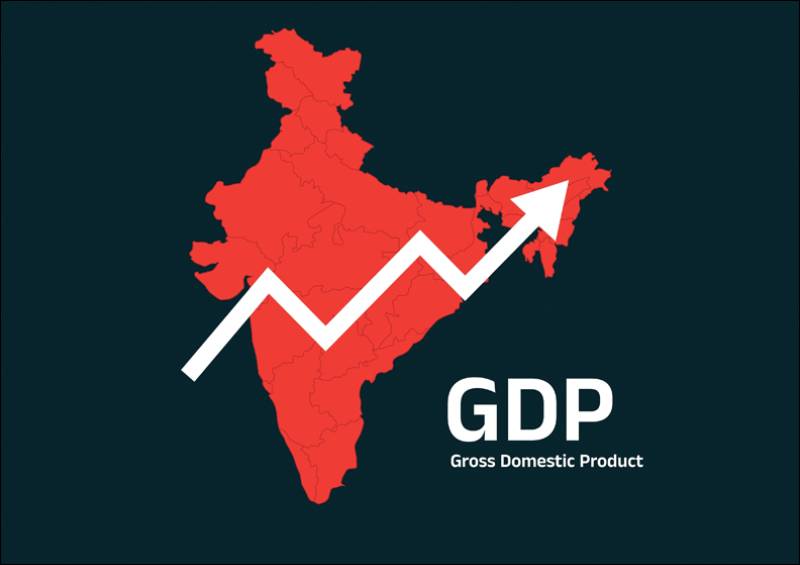
S&P Global has revised India’s economic growth forecast upward for FY2026–27, projecting GDP expansion at 7.1 percent, an increase of 40 basis points from its earlier estimate. Despite the upgrade, the agency expects growth to moderate from the estimated 7.6 per cent in the current fiscal year (FY2025–26).
In its latest Asia-Pacific economic outlook, the ratings and analytics firm attributed India’s resilience to strong private consumption, a gradual revival in private investment, and steady export performance. However, it cautioned that downside risks remain significant, particularly due to escalating geopolitical tensions and ongoing trade uncertainties, which could impact commodity prices, trade flows and capital movements.
The report highlighted concerns around energy markets, noting that sustained high crude oil prices could push fuel costs higher in import-dependent economies such as India. While a complete pass-through to consumers is unlikely, governments may be compelled to increase subsidies to cushion the impact, potentially straining fiscal balances. The situation is further complicated by instability in the Middle East, a key energy supplier to the region.
Rising energy costs are expected to weigh on domestic demand by eroding purchasing power. At the same time, higher subsidy burdens could limit fiscal flexibility across several Asian economies, including India, Indonesia, Japan, Malaysia and Thailand.
On inflation, S&P Global projects a moderate uptick to 4.3 percent in FY27 as price levels normalise. Elevated crude prices could widen India’s trade deficit, although a robust services surplus is likely to help contain the current account gap. The agency expects the Reserve Bank of India to maintain a neutral policy stance, with the possibility of a single 25 basis point rate hike in the latter half of the fiscal year.
Assessing the broader regional impact of geopolitical tensions, the report estimates that GDP growth across major Asia-Pacific economies including India, China and Japan, could be reduced by 0.3 to 0.4 percentage points in 2026, with the drag potentially widening to 0.5–0.7 percentage points by year-end. Supply chain disruptions, particularly in fuel and petroleum-based products, are also flagged as a key risk under a worsening energy scenario.
At a regional level, S&P Global has raised its 2026 growth forecast for Asia-Pacific (excluding China) to 4.5 percent, up from 4.2 percent earlier, supported by stronger outlooks for economies such as Hong Kong, India, Malaysia, Singapore and Taiwan. Growth for 2027 is projected at 4.4 percent.