
‘Sustainability And Energy Efficiency Will Be Crucial Focus Areas For Future Growth Of Fabric Processing’
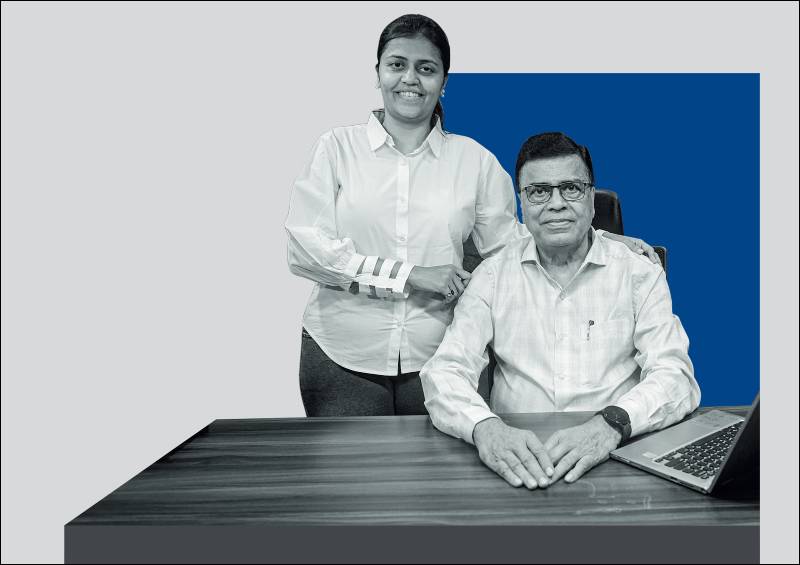
In this exclusive tete-e-tete with Textile Insights, Mukesh Pachauri, Chairman & Managing Director and Akkshitta Pachauri, Vice Chairman of Texfab Engineers (India) Pvt. Ltd., provide insights into the future growth prospects and the key challenges faced by the fabric processing industry and how Texfab’s innovative solutions are driving growth for their clients.
How do you assess the current state of the fabric processing industry in India, and what key trends are shaping its growth?
Compared to spinning and weaving, the textile processing industry in India offers significant growth opportunities. Currently, the processing sector generates around US$ 33 billion in business, which is approximately one-third the size of the spinning segment. By 2034, it is projected to reach US$ 54 billion, clearly indicating strong growth potential in the coming years.
However, the industry is also facing several challenges due to the current geopolitical and economic environment. To overcome these, resilience and innovation will be key drivers of progress.
Looking ahead, the success of the fabric processing industry will largely depend on the adoption of innovative technologies and optimized processing sequences that minimize energy consumption. This includes reducing the use of chemicals, electricity, water and steam.
As the sector is known for generating significant effluents and relying heavily on fossil fuels for steam generation, sustainability and energy efficiency will be crucial focus areas for its future growth.
What are the biggest challenges fabric processors face today whether in terms of costs, sustainability or technology adoption?
Margins in the fabric processing industry are extremely thin. Achieving cost-effective and environmentally sustainable processing while meeting industry norms remains a major challenge. The sector also faces increasing regulatory pressures related to environmental compliance, alongside volatility in raw material prices and shortages of skilled labour, all of which add to the operational difficulties of processors.
These challenges can be effectively addressed through the adoption of advanced technologies that enable the production of higher quality fabrics with lower utility costs and reduced manpower requirements.
What recent solutions or technologies have you introduced for fabric processing?
At Texfab, we are committed to delivering innovative and reliable fabric processing solutions that stand on par with leading European manufacturers. The success of our loop steamer is a proof of our strong engineering capabilities and deep process understanding. We have achieved the highest number of installations globally, with a strong international presence. We also offer a complete range of pre- and post-printing machines, providing end-to-end solutions for printed fabrics.
Our soft flow dyeing machines are gaining wide recognition for their unique nozzle design and advanced automation, which enhance efficiency and fabric quality. In addition, we provide comprehensive solutions for both knitted and woven fabrics through open-width processing machines for dyeing, bleaching, mercerizing and washing of dyed and printed materials.
Recently we have expanded our product portfolio with an open-width scouring and bleaching range and our first installation of a continuous bleaching range has delivered excellent results from day one. This system features a unique design for steam generation in the saturator, precise chemical dosing and an innovative conveyor system for fabric plaiting.
To date, Texfab has successfully designed and launched 25 advanced processing machines, highlighting our combined expertise in process technology and engineering. All our machines are designed and manufactured at our Surat facility, proudly representing ‘Made in India’ excellence.
How is Texfab integrating automated solutions into processing equipment?
Before talking about our products, let us share a brief insight into our thought process on automation. At Texfab, we place strong emphasis on continuously modernizing our manufacturing setup and upgrading our shop floor with the latest equipment to produce world-class machines.
Our manufacturing facility in Surat is among the most advanced in the industry, equipped with five laser cutting machines. From raw material unloading and testing to cutting, bending and welding, every stage of production is supported by automated systems to ensure precision and consistency.
When it comes to our processing machines, we integrate the latest automation technologies as a standard feature. We use high-performance PLCs and drives from Mitsubishi, supported by in-house developed programmes and logic. We also have our own panel manufacturing setup within the facility.
Our engineering team has developed proprietary control logic for tension regulation, closed-loop dosing and temperature management, resulting in reduced power, chemical and utility consumption. These automation-driven efficiencies help our customers achieve higher productivity with lower operational costs and improved process consistency.
How do your machines help Indian processors reduce water, energy and chemical consumption?
At Texfab, we have successfully developed and implemented a range of innovative technologies that significantly reduce water, energy and chemical consumption. These solutions have been tested and validated under actual production conditions by our valued customers. While it’s not possible to list every innovation in detail, here are a few key examples:
- Loop Steamer: Our loop steamer features unique concepts such as steam-based loop generation and adjustable loop rod pitch, which can be customized according to the type of printed fabric. These design advancements ensure efficient processing with optimal energy use.
- Various Types of Dyeing like Soft Flow, U-Jet, Long Jet (Top/Bottom Tube): We incorporate advanced automation and PLC-based control systems that automatically adjust liquor flow, ensuring optimal dyeing performance with minimal water and chemical usage.
- Aqua Washers: Our uniquely designed nozzles create higher turbulence, resulting in more effective washing with reduced water and energy consumption.
- Open-Width Washing ‘Turbo Wash’: This system uses specialized liquor circulation and a pulsation drum mechanism that provides vigorous washing without causing fabric distortion or uneven tension.
- Open-Width Mercerizing: Equipped with heavy-duty squeezers, our machines minimize residual caustic on fabric, while efficient washing ensures reduced consumption of caustic soda, water and steam.
- Solvent Scouring/De-Oiling: For cleaning of dust, dirt and paraffin from the oiled fabric during knitting high pressure spraying. Thus, it helps the fabric to become suitable for the fixation process.
- Open-Width Bleaching: Our steamers are equipped with top-mounted steam entry and individual steam generators instead of sump heating, resulting in lower steam consumption. The unique horizontal tight-strand entry design enables high chemical pickup without dripping, ensuring even bleach penetration across the fabric width. In addition, our closed-loop dosing system maintains consistent concentrations of peroxide and caustic throughout the process, reducing chemical usage while achieving uniform whiteness. The innovative conveyor belt design for fabric plaiting further minimizes moving parts, reducing maintenance needs and downtime.
- De-Oiling Machine for Lycra and Polyester: Our indigenously designed open-width de-oiling machine is compact and highly efficient, delivering superior oil removal performance.
Across all our machines, we emphasize automation, efficiency and repeatability, which not only reduce manpower requirements but also ensure consistent fabric quality. Furthermore, we use the latest energy-efficient geared motors and design every concept to minimize maintenance and power consumption, ensuring sustainable and cost-effective operation for our customers.
Could you share how Texfab Engineers has performed in the past year and which markets or customer segments are driving growth?
Texfab Engineers has recorded exceptional growth over the past year, achieving a 25% year-on-year increase. This consistent performance reflects our strong focus on capacity enhancement, technological advancement and customer satisfaction.
Before expanding production, we prioritized strengthening our manufacturing infrastructure. We recently inaugurated a new shop floor, adding 2,500 square metres of assembly space and introducing a dust-free assembly line to ensure precision and quality in assembling our state-of-the-art machines. This expansion has significantly improved our production efficiency and ability to meet rising market demand.
In terms of market trends, we see rapid developments in digital printing technology as a key driver of growth. The increasing production capacities of digital printing machines, coupled with advancements in pigment-based printing dyes, are transforming the fabric processing landscape. These innovations will play a pivotal role in shaping the future of textile processing and Texfab is well positioned to serve this evolving segment with our advanced machinery solutions.
Looking ahead, what are Texfab’s future plans in terms of product innovation, market expansion and contribution to India’s textile industry’s competitiveness?
Looking ahead, we are strongly positioned in the pre- and post-printing segment, offering advanced technologies such as loop steamers and high-efficiency aqua washers. We have also expanded our footprint in fabric dyeing machinery with the development of soft flow machines for both polyester and cotton fabrics.
Our recent installations of open-width bleaching, mercerizing, and washing ranges have validated that we are on the right path of innovation, consistently delivering the best technologies to our Indian customers.
Our mission is to design and manufacture flawless machines that deliver economical, ecological and excellent fabric results, helping the Indian textile industry enhance its productivity, quality and global competitiveness.