
Sustainable Textile Practices: Measuring And Reducing The Carbon Footprint Of Textile Industry

A Paper by Dr. Muralidhara K. S. (Left), Jt. Director and Samuel J. (Right), Quality Assurance Officer, Textiles Committee, Mumbai
The textile and garment industry occupies a central place in India’s economic and industrial landscape. It provides employment to millions, drives exports and supports regional development across large and small clusters. Yet alongside its economic significance, the industry is increasingly confronted by the realities of climate change and environmental sustainability. Rising global temperatures, stricter environmental regulations and growing consumer awareness have placed the textile sector under intense scrutiny, compelling manufacturers to understand and reduce their carbon footprint in a systematic and measurable way.
Globally, the textile industry is estimated to account for nearly 10 per cent of greenhouse gas emissions, a figure that highlights the scale of its environmental impact. Emissions occur at virtually every stage of the textile value chain. Fibre production requires energy, water and chemicals, spinning and weaving demand electricity, wet processing operations such as bleaching, dyeing and finishing rely heavily on thermal energy, and transportation adds further emissions as raw materials and finished goods move across supply chains. Among these processes, wet processing stands out as one of the most energy-intensive stages, with emissions ranging from roughly three to nine kilogrammes of carbon dioxide equivalent for every kilogramme of fabric processed, depending on the technology and energy sources used.
In India, the challenge of reducing emissions is closely tied to the structure of the industry itself. A large proportion of textile manufacturing is carried out by micro, small and medium enterprises (MSMEs), many of which operate with older machinery and conventional energy sources. These enterprises often function in highly competitive, cost-sensitive environments where investments in modernization can be difficult. At the same time, MSMEs represent one of the greatest opportunities for meaningful emission reduction. Even modest efficiency improvements, when replicated across thousands of units, can lead to significant cumulative gains in energy savings and carbon reduction.
Understanding the carbon footprint of textiles requires looking beyond individual processes to the entire lifecycle of a garment. The concept of embodied energy captures the total energy used in producing a textile product, from raw material extraction to final assembly and distribution. The carbon footprint of a single cotton T-shirt, for example, has been estimated at approximately 3.1 kilogrammes of carbon dioxide equivalent, with emissions distributed across fibre production, yarn manufacturing, fabric production, dyeing and finishing and garment assembly.
Such estimates illustrate how emissions accumulate gradually across multiple stages, reinforcing the need for a holistic approach to sustainability.
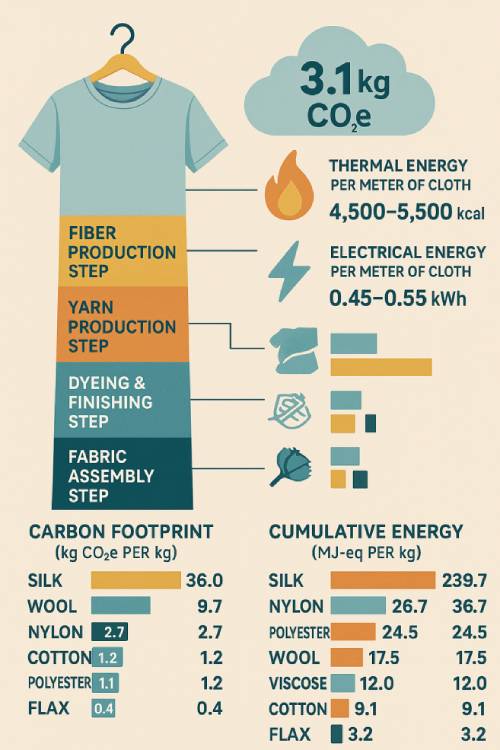 Different fibres also vary significantly in their environmental impact. Natural fibres such as silk and wool can have relatively high carbon footprints due to energy-intensive production processes, while synthetic fibres such as polyester and nylon require significant energy during polymerization and extrusion. Cotton, although widely used and comparatively moderate in terms of carbon emissions per kilogramme, has other environmental implications, particularly in water consumption and pesticide use. These variations highlight the importance of material selection, not only from a cost or performance perspective but also from a sustainability standpoint.
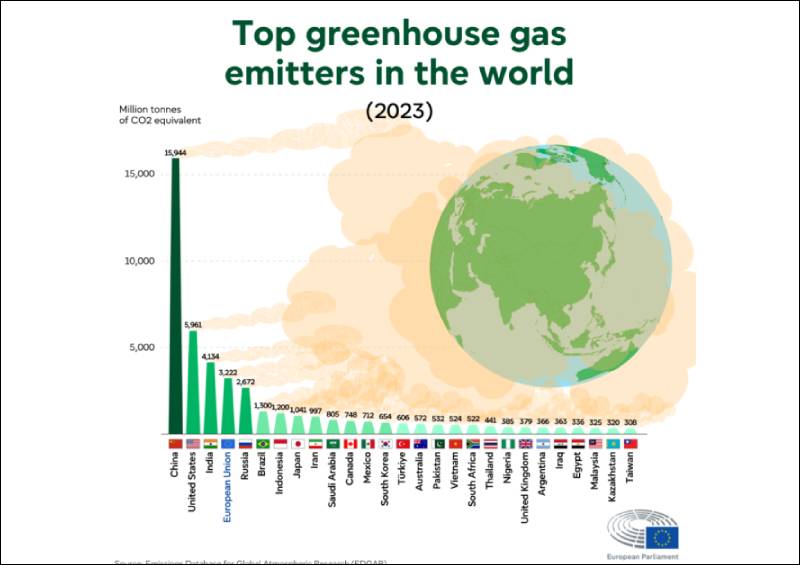
India’s broader emissions profile further contextualizes the textile sector’s sustainability challenge. While the country’s per capita emissions remain lower than those of many developed economies, overall emissions continue to grow alongside economic expansion, urbanization and rising energy demand. India has committed, under its Nationally Determined Contributions, to reducing the emissions intensity of its GDP and increasing the share of non-fossil fuel energy sources. Achieving these goals will require significant participation from energy-intensive sectors such as textiles, where improvements in efficiency and fuel substitution can yield measurable benefits.
Accurate measurement of emissions is a critical first step toward reduction. Internationally recognized frameworks such as the Greenhouse Gas Protocol, ISO standards and Life Cycle Assessment methodologies provide structured approaches for calculating carbon footprints. In practice, factory-level assessments typically adopt a cradle-to-gate perspective, capturing emissions from raw material procurement to product dispatch. Detailed data on electricity consumption, fuel usage, water consumption, raw materials, chemical inputs and logistics are combined with standardized emission factors to estimate total emissions.
Increasingly, digital traceability tools are enabling manufacturers to monitor emissions across supply chains with greater precision, enhancing transparency and supporting compliance with evolving regulatory requirements.
Regulation and market expectations are also reshaping the industry’s approach to sustainability. Major export markets are introducing stricter rules on recycling, supply chain transparency and environmental declarations. Such measures are not merely regulatory hurdles, they are signals of a structural shift in the global textile trade. Buyers and brands are placing greater emphasis on verified sustainability credentials and suppliers who fail to adapt risk losing competitiveness in international markets.
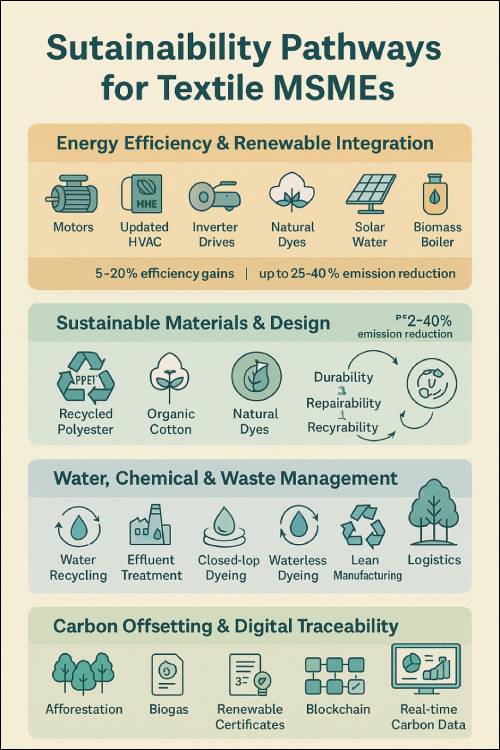
Despite these pressures, a wide range of practical solutions is already available to reduce emissions in textile production. Energy efficiency improvements, such as replacing outdated motors, improving insulation and optimizing compressed air systems, can deliver immediate reductions in electricity consumption. The adoption of renewable energy sources, including rooftop solar installations and biomass-based steam generation, offers further potential to reduce dependence on fossil fuels. In many cases, a combination of efficiency measures and renewable energy integration has been shown to cut facility emissions substantially, demonstrating that sustainability and cost savings can go hand-in-hand.
Equally important are innovations in materials and product design. The use of recycled fibres, certified sustainable cotton and low-impact dyes can significantly lower the embodied carbon of textile products. At the same time, designing garments for durability, repairability and recyclability contributes to the broader transition toward a circular textile economy. Such approaches not only reduce environmental impact but also align with emerging consumer preferences for longer-lasting and responsibly produced products.
Water and chemical management also play a vital role in reducing emissions and environmental damage. Technologies such as water recycling systems, effluent treatment plants and closed-loop dyeing processes are helping manufacturers reduce both resource consumption and pollution. Waste reduction strategies, including lean manufacturing and improved inventory management, further contribute to lowering the overall carbon footprint while enhancing operational efficiency.
For many companies, carbon offsetting represents a complementary strategy once direct emission reductions have been maximized. Investments in afforestation, renewable energy projects and community-based sustainability initiatives can help balance residual emissions, provided they are implemented according to recognized standards that ensure credibility and long-term impact. At the same time, digital platforms for carbon tracking and reporting are making it easier for manufacturers to document their progress and communicate sustainability performance to buyers and stakeholders.
 The role of MSMEs in this transformation cannot be overstated. These enterprises form the backbone of the textile industry but often lack access to technical expertise, financing and structured sustainability programmes. Targeted training, knowledge-sharing initiatives and supportive policy measures can help bridge this gap, enabling smaller units to adopt modern technologies and internationally recognized sustainability standards. Capacity building is particularly important, as awareness and technical knowledge often determine whether efficiency improvements are successfully implemented.
Ultimately, the transition toward low-carbon textile production is not merely an environmental imperative, it is also an economic opportunity. Companies that invest in energy efficiency, renewable energy and sustainable materials often benefit from lower operating costs, improved market access and stronger relationships with environmentally conscious buyers. In a global marketplace increasingly shaped by sustainability criteria, such advantages can be decisive.
The path to decarbonizing the textile value chain will require sustained collaboration among manufacturers, policymakers, researchers and consumers. Technological innovation, supportive regulation and industry-wide commitment will all play essential roles. While the challenge is complex, the direction is clear: the future of textiles lies in balancing productivity with responsibility, growth with sustainability and innovation with environmental stewardship.
As the industry moves forward, the goal of carbon-neutral textiles is gradually shifting from aspiration to possibility. With the right combination of measurement, investment and collective action, the textile sector can not only reduce its environmental footprint but also set a powerful example of how traditional industries can adapt to the demands of a low-carbon future.
(Curated for publication by Textile Insights)