September 26, 2026
Home Posts tagged Textile industry growth
Corporates

Inthing Expands Global Footprint With Integrated Manufacturing And Supply-Chain Capabilities

Homegrown fashion and apparel company Inthing is expanding into global markets as it enters the next phase of its growth, leveraging more than six decades of experience in textile manufacturing, supply chain and distribution. Founded in 1958, Inthing has evolved from a fabric trading and textile manufacturing business into an integrated fashion and apparel enterprise. […]
Tete-A-Tete

We Try To Create That Bond, That Trust And The Feeling That We Are A Part Of The Fair: Rajeev Gupta

Rajeev Gupta on Bharat Tex becoming India’s signature textile exhibition, the company’s transformation journey, India’s need to strengthen garmenting, and the next phase of growth. For Rajeev Gupta, Joint Managing Director, RSWM Ltd., Bharat Tex 2026 has evolved into far more than an industry exhibition. It has become a meeting point for India’s
Tete-A-Tete

Bharat Tex Has Maintained The Bharat Flavour While Creating A Global Platform: Samir Joshipura

Samir Joshipura, Group CEO, Trident Group, speaks on the overwhelming response at Bharat Tex 2026, evolving consumer preferences, global market challenges, India’s growing competitiveness and Trident’s sustainability journey. Trident Group’s booth at Bharat Tex 2026 has been witnessing a steady stream of visitors, reflecting the growing interest in the company’s diverse
Corporates

Sangam India: A Journey Of Continuous Evolution!

From modest beginnings to becoming one of India’s leading integrated textile players, Sangam (India) Ltd stands as a compelling example of vision, disciplined execution and continuous evolution. Over the last four decades, the company has transformed from a small textile venture into one of India’s most respected integrated textile enterprises, with a strong presence
Machinery

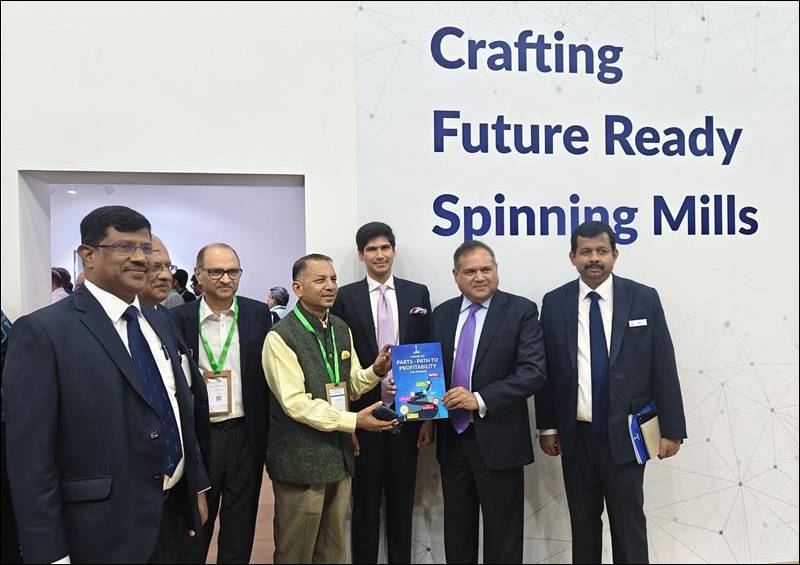
Turning Challenges Into Opportunities: The Path To Profitability In Spinning

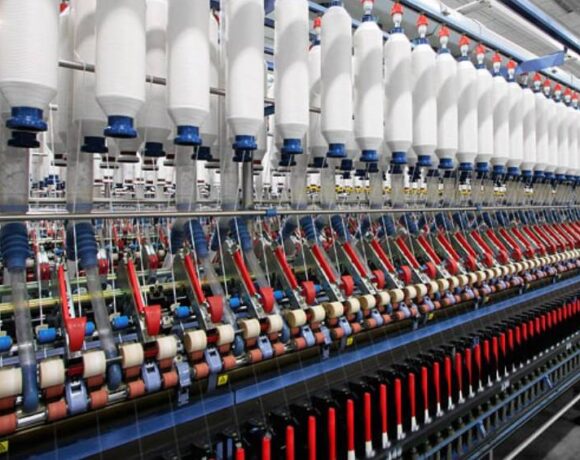
Across the spinning industry, mill owners are facing unprecedented pressures — EBITDA margins are under strain, energy costs continue to rise, skilled manpower is in short supply, and maintaining consistent yarn quality is becoming increasingly complex. In such a scenario, sustaining profitability is no longer about running harder — it’s about running smarter. That very