
Turkmenistan Under Fire Over Forced Labor In Cotton Sector
The global coalition Cotton Campaign has accused the government of Turkmenistan of reversing earlier efforts to reduce forced labor in its cotton sector, following the release of a new monitoring report on the 2025 cotton harvest.
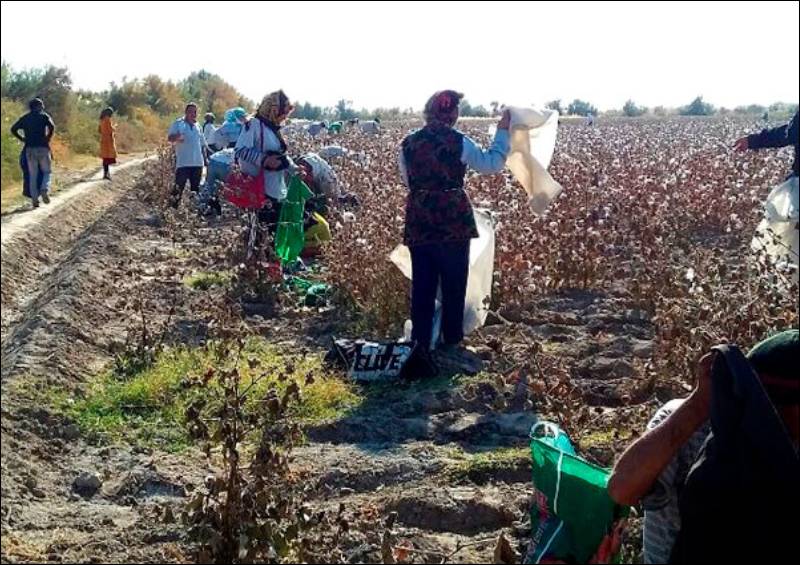
The report, prepared by independent groups Turkmen.News and Turkmen Initiative for Human Rights, states that state-imposed forced labor remains “widespread and systematic” across the country’s cotton industry. According to the findings, authorities once again mobilized public sector workers including teachers, doctors, utility staff and military conscripts, to participate in cotton picking or forced them to pay for replacement laborers.
The coalition warned that cotton harvested under coercive conditions continues to enter global supply chains through textile manufacturing hubs in Türkiye and Pakistan, while also reaching suppliers in parts of Europe, including Portugal and Italy.

Ruslan Myatiev, director of Turkmen.News, said the practice continues to worsen the country’s social and economic conditions. He noted that the deployment of teachers and kindergarten staff to cotton fields disrupted education services and created workforce shortages in schools.
The report further claims that despite signing another cooperation roadmap with the International Labour Organization (ILO), Turkmenistan rolled back preliminary measures introduced during the previous harvest season to reduce the mobilization of teachers and healthcare workers.
Monitoring groups also documented cases of child labor during the 2025 harvest. Children were reportedly involved in cotton picking alongside family members to help meet state quotas or were hired as replacement workers.
Raluca Dumitrescu of the Cotton Campaign said forced labor in Turkmenistan is enforced through state structures at every level, making it difficult for brands to ensure clean sourcing from the country. The coalition urged governments to strengthen import restrictions on Turkmen cotton and related products, particularly as new forced labor regulations begin to take effect in the European Union. The United States has already prohibited imports of Turkmen cotton products since 2018.
The report also highlighted continuing pressure on farmers, citing corruption, limited autonomy and worsening climate challenges. Farmers reportedly faced restricted access to irrigation water and were often required to pay bribes to local officials to irrigate their fields. Rising temperatures, soil salinity and water scarcity have further intensified difficulties in meeting state-imposed production targets.
Aynabat Yaylymova of Progres Foundation called for greater transparency and reforms in the agricultural sector, including improved farmer participation in policymaking and fair access to water resources.
The coalition additionally urged international institutions such as the European Bank for Reconstruction and Development and the EU to link future investments and financial support to concrete labor reforms and the elimination of forced labor practices in Turkmenistan’s cotton production system.ch