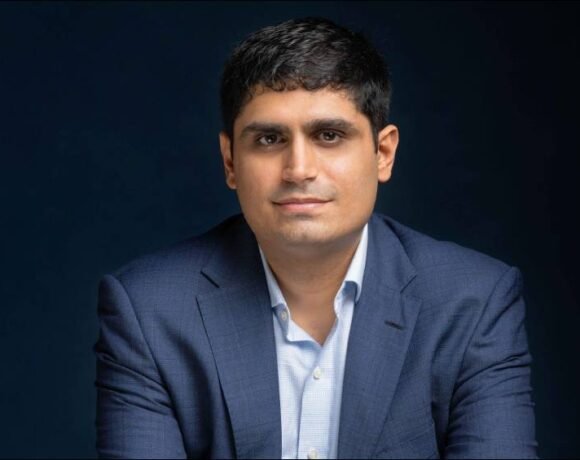
A.T.E.’S Businesses Help Reduce, Reuse And Recycle Material, Energy And Water: Anuj Bhagwati
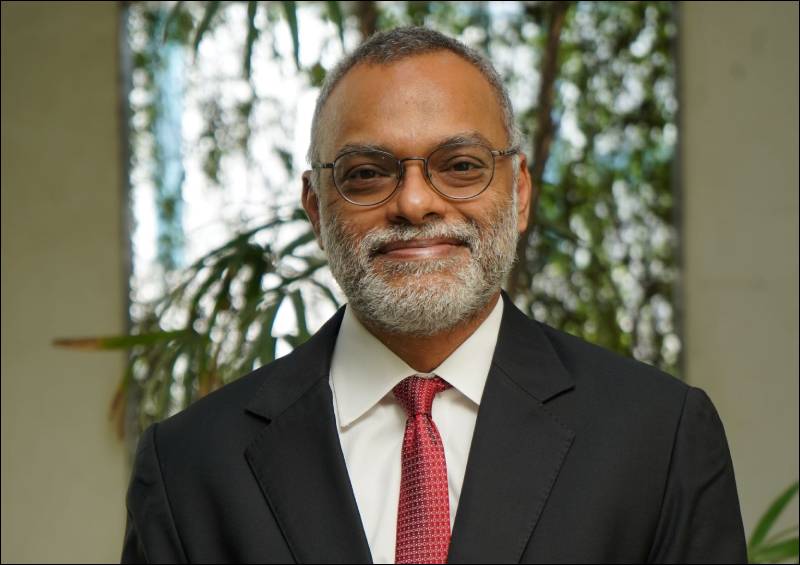
Social impact through business is the common thread binding our diverse business areas, says Anuj Bhagwati.
A.T.E. Group has evolved from a textile engineering company into a multi-business sustainability-driven enterprise. What core philosophy has guided this transformation over the decades?
The core philosophy that has always guided A.T.E. since its inception more than 85 years ago has been of driving social impact through business. In the early years, we focused on selling German machines in India to compete with the British as that aligned with India’s freedom movement. In later years, A.T.E. grew this business and tried to build the country’s manufacturing base through its own efforts as well as through technical collaborations to create jobs and help industrialise India. My father and uncle steered A.T.E. into areas that they thought were important to the country’s development – textile engineering, printing and packaging equipment, electronics, pumps, etc. In the last few years, we have come to realise that the most important challenge that we face today not only in India but in the world is the challenge of our environmental footprint. That is why A.T.E. has stepped into the business of sustainability. So, you can see that social impact through business is the common thread binding our diverse business areas.
Sustainability is deeply ingrained into A.T.E.’s identity, encompassing energy-efficient machinery, sustainable cooling solutions, and effective wastewater management. How do you articulate A.T.E.’s vision of a sustainable industrial ecosystem for India?
Our vision for a sustainable industrial ecosystem in India is best expressed by our tagline: “Partnering People and the Planet.” Industry – and consumers too – need to balance the planet’s needs with human needs and desires. Otherwise, life will not be sustainable. I also believe that the well-used dictum “reduce – reuse – recycle” applies to industry and people and also captures extremely succinctly the path we need to take.

Technologies like intelligent wastewater treatment, low-energy dyeing, and real-time monitoring systems are becoming essential for factories. Which sustainability technologies do you believe will have the biggest impact on Indian industry over the next five years?
I believe that the biggest impact on India’s industry over the next five years from sustainability-driven technologies will be the more widespread adoption of recycled material, the production and use of green energy, the recycling of water and the use of the Internet of Things (IoT) to optimise asset use and reduce our environmental footprint, whether it is for energy, water, land or material.
A.T.E. has been vocal about reducing the environmental footprint of textiles. How are you helping mills transition toward circularity, resource-efficiency and water-positive operations?
A.T.E. has many businesses that help reduce, reuse and recycle material, energy and water. We support textile mills in their transition toward circularity, resource-efficiency and water-positive operations through solutions offered by our group companies and principals. Our solutions from the Textile Engineering group for textile processes are always energy efficient and water efficient; TeraSpin provides energy-efficient spinning components; HMX delivers sustainable cooling technologies; A.T.E. HUBER Envirotech specialises in advanced wastewater treatment and reuse systems; and EcoAxis offers digital platforms for real-time resource monitoring and optimisation. We have solutions for recycling and waste reduction as well, whether it’s from the textile engineering group with our recycling solutions for material or whether it’s for recycling heat and reducing production waste from AxisValence. This helps our clients reduce their material intensity. Our digital and automation solutions also help mills address skilled labour shortages by streamlining operations and making resource management more efficient. By integrating these solutions, we enable mills to reduce, reuse and recycle materials, energy and water—helping them move toward sustainable, circular models of operation and a lower environmental footprint.
Many of your solutions focus on helping manufacturers reduce energy, water and emissions. How receptive is Indian industry today to investing in clean-tech and green manufacturing? Are you seeing a fundamental shift in mindset?
I’m not seeing a big shift in mindset in Indian industry when taken as a whole, though there are of course several firms that are different. In the large part right now I’m perceiving incremental changes that are driven mostly by cost savings that new technologies bring, by government regulations and social or customer pressure.
Given that textiles remain A.T.E.’s founding and flagship domain, how do you see the textile machinery landscape evolving in India? Which of the segments—spinning, processing, finishing, weaving, digital printing, technical textiles—are driving the next wave of investments?
If we look at the global textile market and analyse its material use and technology base, we can see that India has much lower penetration of synthetics, knitting, technical textiles and nonwovens than the rest of the world. I think it’s logical to assume that growth in these sectors will be higher in India than in other sectors because Indian consumers and their needs are not so different from international consumers and global needs. Digital printing growth will remain strong.
A.T.E. has always championed engineering excellence backed by deep R&D and partnerships. Are there new collaborations, technologies or product categories in the pipeline that you believe will redefine the company’s next chapter?
Our R&D efforts and those of our principals are continuously throwing up new products. At TeraSpin, we believe that we have crafted the most energy-efficient ring spinning spindle and that we will show that our drafting systems will allow us to spin yarn with higher recycled content than current products. Our cooling brand HMX is working on the next generation of evaporative cooling technologies. We have already found widespread application across many steps in the textile manufacturing process. Our AxisValence unit has many interesting use cases for static control in the textile chain, and we also have some new vision system products. Our water treatment company, A.T.E. HUBER Envirotech is pushing the use and efficacy of bio-reactors and membrane processes.
India is pushing strongly toward becoming a global manufacturing hub. What strategic gaps in infrastructure, technology or skill development do you believe must be addressed for industry-wide sustainable growth?
I don’t think we need to do anything very special. It’s a hard job to do it, but I think if we have the basics taken care of, with social, physical and institutional infrastructure in place, Indian entrepreneurship can really accelerate our people’s human and economic development. By social infrastructure, I mean housing, education, healthcare, urban planning, environmental stewardship and such; by physical infrastructure, I mean sanitation, water, roads, airports, ports and public transport, etc; and by institutional infrastructure, I mean that we have enough capacity in the legislature, government, law and order and defence, legal system and regulators.
Finally, looking ahead to the next decade, what is your long-term vision for A.T.E. Group? How do you see the company shaping the future of sustainable industrial solutions in India and globally?
I think we are in the right businesses. We have spent the last many years building up technology platforms – in textile engineering as an industry knowledge and sourcing resource, and with our developments in spinning, wastewater treatment, heat exchange, cooling, static control and vision systems. In the next decade, we aspire to grow manifold in India of course but also across the world.