Sanathan Textiles: Rooted In Integration, Adaptability And Responsibility

For Sanathan Textiles, sustainability is not just about ESG reporting. It’s about reducing waste, lowering risk and minimising the environmental footprint of the product itself, says Sammir Dattani.
Sanathan Textiles’ story is not one of sudden scale or overnight success, but of a patient, generational transformation that mirrors the evolution of India’s textile industry itself. Although the company made its stock market debut only a year ago, its foundations were laid decades earlier, long before its formal incorporation in 2005. Sanathan’s origins lie in trading, with the business initially operating as merchants before relocating to Mumbai in search of broader opportunities. The move marked a decisive shift from trading to deeper participation in the value chain beginning with polyester yarn trading. Over time, this progressed into the manufacturing of polyester yarn, followed by the addition of cotton yarn production and, subsequently, technical textile yarn manufacturing.
What began as a modest enterprise, with a capacity of just 4,500 metric tonnes per annum, has today matured into one of the country’s most diversified and integrated yarn manufacturers. At its Silvassa facility alone, Sanathan Textiles now produces close to 2,00,000 metric tonnes of polyester yarn, 14,000 metric tonnes of cotton yarn and 9,000 metric tonnes of technical textile yarns annually, a scale achieved not through acceleration, but through continuity. “This growth has not happened in one year or one phase,” says Sammir Dattani, Executive Director at Sanathan Textiles. “It has been built over twenty years of consistent capital movement, learning and reinvestment.”

Operating in a sector often perceived as functional rather than aspirational, Sanathan has quietly focused on fundamentals that matter global fibre consumption trends, evolving end-use applications and structural shift from cotton to man-made fibres. The company’s leadership recognised early that the future of textiles lay in versatility. As industries such as sportswear, automotive, home textiles, travel, leisure and infrastructure expanded, yarn was no longer a commodity input, but a performance material. This understanding has allowed Sanathan to position itself not just as a supplier, but as a solution provider, aligned with long-term consumption patterns rather than short-term cycles.
What sets Sanathan apart in the Indian textile landscape is the rare coexistence of three distinct yarn verticals, viz. polyester, cotton and technical textiles, within a single manufacturing ecosystem. The Silvassa plant exercises end-to-end control from polymerisation to packaging, supported by in-house research and development that has enabled the creation of value-added yarns. These innovations not only reflect the company’s philosophy of functional relevance, but they are also underpinned by a deeply embedded culture of safety and operational discipline. Every process, from polymer handling to high-speed texturising, is governed by detailed standard operating procedures designed to minimise risk and ensure consistency. “We often say one yarn can do many things,” Dattani explains, adding, “From the moment you wake up to the pillow you rest on, the towel you use, the seatbelt you fasten or the billboard you see on the road, our yarns are present everywhere, even if unnoticed.”
That omnipresence is strengthened by a vast and loyal customer base of over 14,000 clients across 29 countries, with a customer retention rate of 92 per cent. Such stickiness is not accidental it is the result of consistency, quality control and the ability to customise yarns for highly specific applications. Sanathan’s yarns find their way into innerwear, athleisure, denim, luggage fabrics, automobile interiors, geogrids for road construction, safety slings, fishing nets and coated outdoor fabrics, each demanding different performance attributes from strength and stretch to durability and moisture management. Ensuring that such diverse applications are delivered without compromise requires not only technical expertise, but also a workplace environment where safety and health are treated as non-negotiable.
At Sanathan, safety is not positioned as a compliance requirement but as a belief system. The company’s guiding principle is that all injuries and work-related illnesses can and must be prevented. Every employee, contractor and visitor undergoes mandatory safety induction before entering the plant, ensuring familiarity with safety protocols, personal protective equipment and emergency procedures. “Safety and health of all people who work in and with Sanathan is our number one priority,” notes the company’s safety leadership, a philosophy reinforced through continuous training, daily briefings and regular risk assessments. Employees are actively engaged in identifying potential hazards through structured programmes, creating a participative safety culture rather than a top-down enforcement mechanism.
This approach has translated into measurable outcomes. Sanathan conducts regular fire, evacuation and emergency response mock drills, often in collaboration with district authorities and neighbouring industrial units as part of mutual aid associations. The company’s internal fire brigade and emergency response teams are recognised for their preparedness and professionalism, with Sanathan frequently invited by government bodies and large public sector undertakings to participate in large-scale emergency simulations. Such credibility was formally acknowledged when Sanathan was selected among the top 20 industries from a pool of nearly 2,000 units and awarded the Basic Fire and Life Safety Measures recognition by the Department of Fire and Emergency Services.
The emphasis on safety extends beyond people to processes and infrastructure. Mandatory use of safety helmets, shoes, ear protection, harnesses and high-visibility jackets is strictly enforced based on job-specific risk profiles. Clearly marked emergency exits, assembly points and visual signage ensure that response during unforeseen events is instinctive rather than improvised. “Accidents in health and safety drive accidents in business,” Dattani reflects, and elaborates, “Which is why safety is integrated into our business management systems, not treated as a parallel function.”
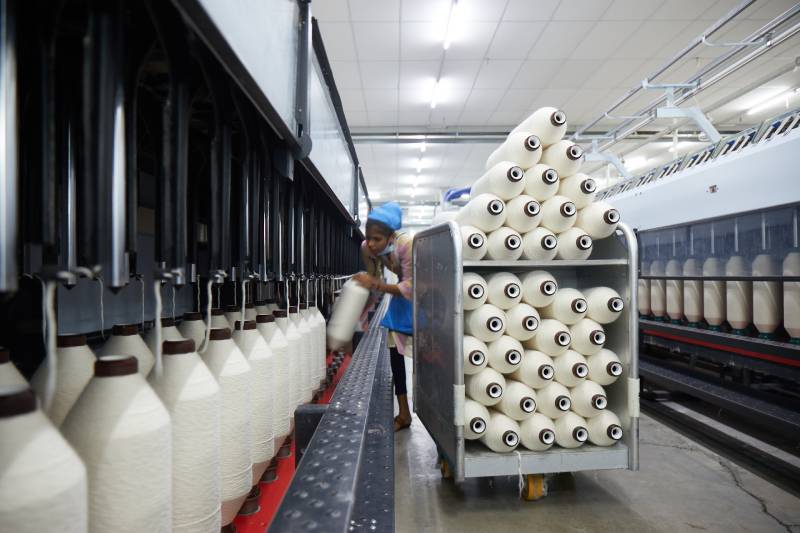
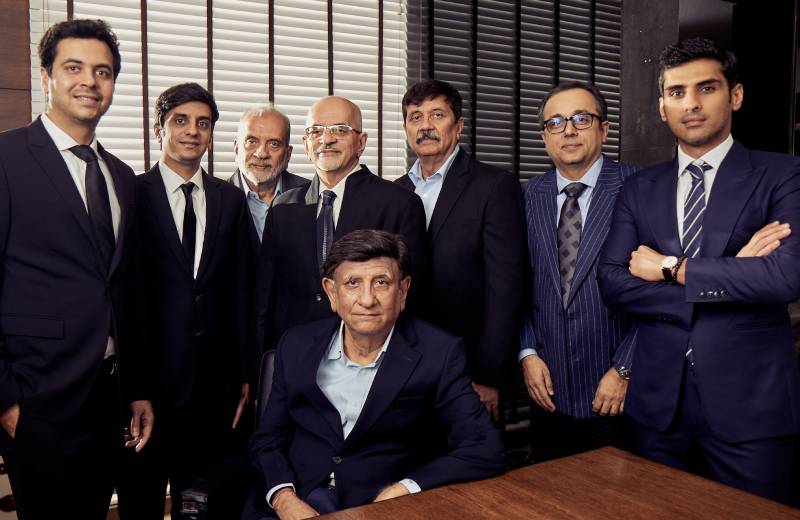
The company’s trajectory is inseparable from the evolution of the Dattani family itself. The first generation operated as yarn traders in Kolkata, the second generation moved westward to establish manufacturing and the second and third generations together have driven expansion while institutionalising governance. “When we joined the business full-time, we were very clear that if we wanted to grow, we needed systems, processes and people,” says Dattani. “The IPO journey accelerated that transformation from a family business to a family-owned, professionally managed enterprise.” That transition is reflected not only in governance structures but also in the formalisation of safety, quality and environmental management systems across all operations.
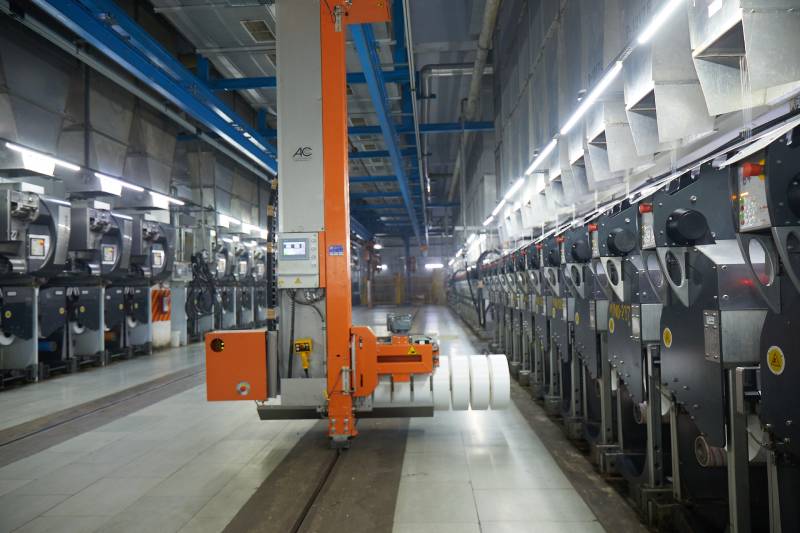
Sanathan’s board brings together promoter leadership and independent directors with deep expertise in banking, finance, textile engineering and law, enabling informed decision-making at scale. Financially, the company reported revenues of approximately Rs 3,000 crore in FY25 with an EBITDA margin of 8.8 per cent, reflecting resilience even amid large capacity expansions. Operational excellence remains one of Sanathan’s defining strengths. While textile plants typically operate at around 70 per cent efficiency, Sanathan’s Silvassa facility consistently runs at nearly 96 per cent. This performance is driven by deliberate factory design, preventive maintenance, automation and production fungibility, all of which also reduce operational risk and enhance workplace safety. This operational robustness is underpinned by Sanathan’s investments in advanced machinery from some of the world’s most respected textile equipment manufacturers. Its spinning and preparatory lines are supported by technology from LMW, Rieter, Trützschler and Saurer. While winding and finishing operations draw on solutions from Aalidhra. Polymerisation and texturising processes are equipped with systems from Oerlikon Barmag, enabling high-speed production, consistency and flexibility across polyester, cotton and technical yarn applications. Together, these investments have enhanced productivity, improved energy efficiency and reinforced process safety across Sanathan’s manufacturing ecosystem. “We design our factories to adapt,” Dattani notes, explaining further, “Different customers peak at different times. Our strength lies in understanding those cycles and planning production accordingly.”
The commissioning of Sanathan’s Punjab facility marks a strategic inflection point rather than mere geographic expansion. Spread across 80 acres of freehold land in Wazirabad, the fully integrated polyester filament yarn plant has been conceived as a circular manufacturing ecosystem where safety, sustainability and efficiency intersect. Raw materials are sourced locally, production occurs close to customers and deliveries are executed within hours instead of days. “Earlier, raw materials travelled over a thousand kilometres to the west, and finished yarn travelled back to the north,” says Dattani, and explains the benefits of expansion, stating “By manufacturing in Punjab, we have cut that entire movement, reducing logistics costs, delivery times, carbon emissions and associated handling risks.”
Phase One of the Punjab facility operates at 700 tonnes per day and is expected to reach full capacity shortly, while Phase Two will add another 250 tonnes per day. Once fully operational alongside Silvassa, Sanathan’s total production capacity will rise to approximately 5,70,000 metric tonnes annually, a 155 per cent increase achieved through phased execution rather than aggressive scale-up. Although margins saw a temporary dip due to commissioning costs, management views this as a transitional phase that will normalise as utilisation improves, supported by stable operations and disciplined risk management.
Sustainability and safety converge strongly in Sanathan’s operational philosophy. Both Silvassa and Punjab operate on zero-liquid-discharge systems, ensuring complete water treatment and reuse. Packaging has evolved from recycled GRS-certified cartons to reusable pallet systems at Punjab, reducing paper waste, while improving material handling safety. Most notably, the Punjab facility uses agricultural waste as fuel for heating, replacing fossil fuels while addressing stubble burning in North India. “This is not just about ESG reporting,” says Dattani, “It’s about reducing waste, lowering risk and minimising the environmental footprint of the product itself.” The company’s certifications, including ISO 9001, ISO 14001 and ISO 45001, reinforce this integrated approach to quality, environment and occupational health and safety.
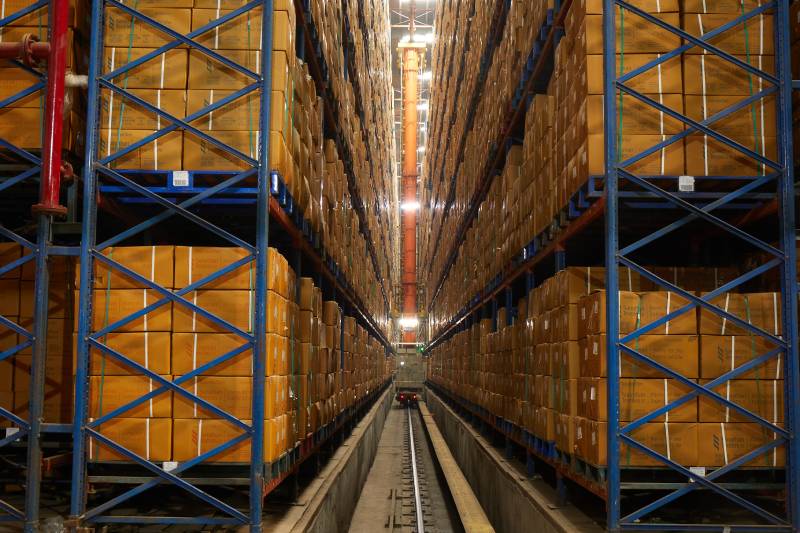
Technology underpins this ecosystem. Sanathan was an early adopter of SAP and has since migrated to cloud-based platforms, enabling real-time integration across locations. Automation has reduced manpower intensity in high-risk zones while improving consistency, traceability and safety. The company is now exploring AI-driven data analytics to better understand demand patterns, predictive maintenance and process optimisation. “Data has become a strategic asset,” Dattani observes, adding, “It helps us plan better, respond faster and create clarity for the future.”
Looking ahead, Sanathan’s ambitions remain anchored in value creation rather than scale for its own sake. Plans include doubling capacity in technical textile yarns, setting up a new cotton yarn facility in Madhya Pradesh and continuing to enhance product value through innovation, all while maintaining the same rigour around safety and sustainability. “We have never chased being the largest,” Dattani concludes, “Our focus has always been on adding value to the product, to the customer and to the ecosystem. Growth is a consequence of that approach.”
In an industry often defined by volume and price, Sanathan Textiles offers a different narrative: one rooted in integration, adaptability and responsibility. By embedding safety into its operational DNA and aligning manufacturing strategy with consumption realities and environmental stewardship, the company has woven itself seamlessly into the fabric of modern life, proving that even in the most elemental of industries, thoughtful evolution can create enduring distinction.
(Interview by Henry Dsouza, Associate Editor of Textile Insights)