USDA Sees Higher Cotton Output In India For 2026–27 Season
India’s cotton sector is poised for growth in the 2026–27 marketing year, driven by improving demand and favourable trade dynamics, according to a report by the USDA Foreign Agricultural Service.
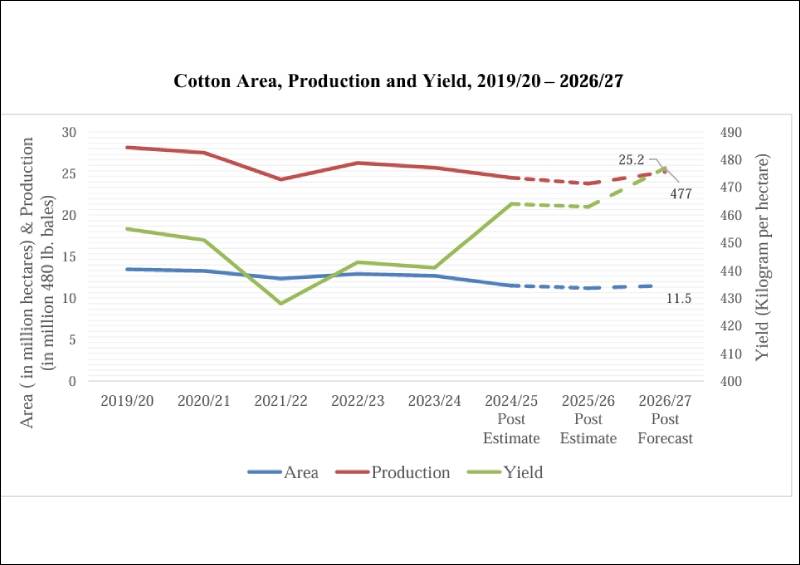
The report projects cotton acreage to increase by around 3% to 11.5 million hectares, with production expected to rise 7% to 25.2 million bales, supported by better yields and a recovery from last year’s weather-related disruptions. A normal monsoon assumption is factored into the outlook, though potential El Niño conditions later in 2026 could pose risks to rainfall and yields.
Domestic consumption is also expected to grow, reaching 25.8 million bales, backed by rising textile and apparel exports as new trade agreements begin to take effect. Strong global demand, particularly from the US market, is likely to support export growth for value-added textile products, even as raw cotton and yarn exports decline.

The report highlights a structural shift in India’s cotton trade, with mills increasingly relying on imports to meet higher-quality fibre requirements. Imports are expected to remain significant, particularly as domestic quality issues persist and global sourcing remains competitive.
Despite the positive outlook, the sector continues to face multiple challenges, including high production costs, pest-related risks, labour shortages and limited mechanisation. Regulatory delays in approving new seed technologies and gaps in testing infrastructure are also constraining productivity and global positioning.
On the domestic front, government procurement under the minimum support price (MSP) mechanism remains robust, with cotton purchases in the 2025–26 season crossing 13.4 million bales, one of the highest levels in recent years.
Overall, while favourable demand conditions and policy support are expected to drive growth, weather uncertainties and structural inefficiencies continue to pose risks to the sector’s long-term competitiveness.