India–GCC FTA Talks Open New Opportunities For Textile Trade
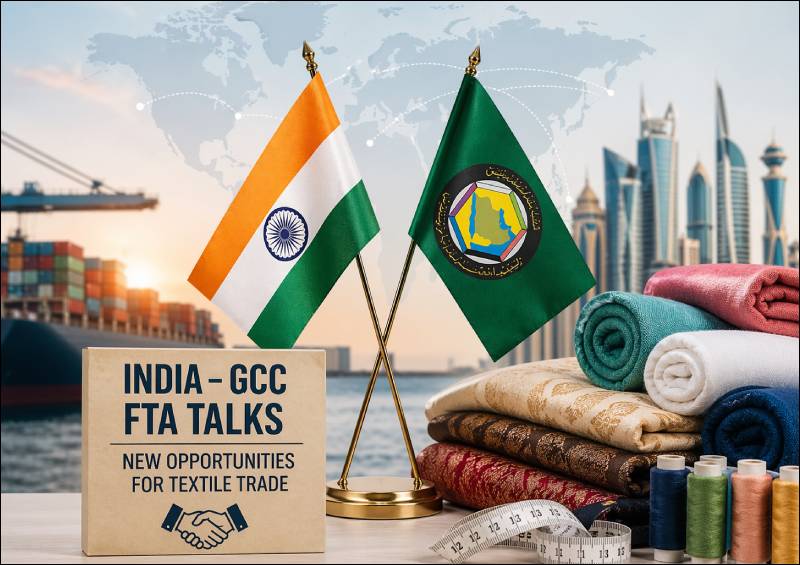
India and the Gulf Cooperation Council (GCC) have formally launched negotiations for a comprehensive Free Trade Agreement (FTA), a move expected to significantly enhance prospects for India’s textile and apparel sector.
The negotiations were initiated following the signing of a joint statement in New Delhi by Union Commerce and Industry Minister Piyush Goyal and GCC Secretary General Jasem Mohamed Albudaiwi, marking a key step toward a comprehensive and mutually beneficial trade pact.
For India’s textile industry, the proposed FTA holds strategic importance. The GCC is already a major export destination for Indian textiles, including fabrics, home textiles and garments. A tariff-reducing agreement is expected to improve price competitiveness, streamline market access, and support higher volumes of value-added exports.

India’s overall trade with the GCC reached US$ 178.56 billion in FY 2024–25, with textiles forming a significant component of non-oil exports. Key shipments to the region include cotton and man-made fabrics, ready-made garments and home textile products, catering to both retail consumption and re-export markets.
With a combined population of over 61 million and a GDP of approximately US$ 2.3 trillion, GCC countries represent a high-potential market for premium and value-added textile products. The region’s strong retail sector, growing demand for fashion and home furnishings and role as a global trading hub make it particularly attractive for Indian exporters.
Officials noted that the FTA could help Indian textile players better integrate into regional supply chains, especially as GCC markets serve as gateways to Africa and Europe. Improved trade facilitation and regulatory alignment are also expected to benefit exporters.
Additionally, the presence of nearly 10 million Indians across GCC countries strengthens commercial linkages and supports demand for Indian textile products, while Indian companies continue to expand their footprint in the region.
As negotiations progress, the textile sector is likely to be a key beneficiary, with the potential to drive export growth, diversify markets and enhance India’s positioning in global value chains.