
DITF Develop Breakthrough Sustainable Cellulose Yarn Technology
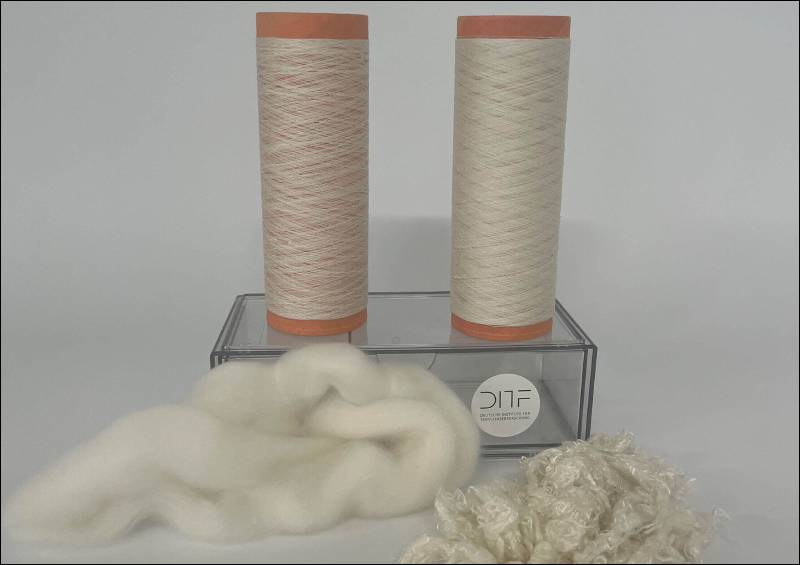
The German Institutes of Textile and Fiber Research (DITF) is advancing a new approach to textile fibre production through its patented HighPerCell process, enabling the creation of staple fibre yarns from cellulose-based continuous filaments. The innovation is part of the InnoCell project, aimed at bringing market-ready sustainable yarn solutions to the apparel industry.
The HighPerCell process produces cellulose fibres in a closed-loop system using ionic liquids as solvents, enabling near-complete recycling and significantly reducing waste generation compared to conventional viscose processes. It also offers process advantages over Lyocell, including simpler control and reduced fibrillation in the resulting fibres, improving suitability for apparel applications.
A key development milestone is the conversion of cellulose multifilaments into staple fibre yarns, carried out in collaboration with Gebr. Otto Baumwollfeinzwirnerei GmbH & Co. KG (Otto Garne). The process involves spinning short fibres into yarns, supported by high-quality carded slivers, and includes subsequent dyeing to achieve strong colour depth and fastness.

The resulting yarns differ from filament fibres, offering a softer, more breathable and matte texture, making them particularly suitable for next-to-skin garments.
For large-scale production, the project is shifting from purified chemical pulp to locally sourced renewable raw materials such as beech wood, hemp and flax. This transition is expected to improve sustainability by reducing CO2 emissions while maintaining industrial viability, with the HighPerCell process demonstrating adaptability to multiple feedstocks.
The development is also aimed at strengthening sustainable product positioning for apparel manufacturers, combining closed-loop recycling with regional raw material sourcing.
As part of the project output, DITF and Otto Garne are currently developing prototype garments, including a T-shirt designed to deliver high comfort while maintaining a significantly improved environmental footprint.