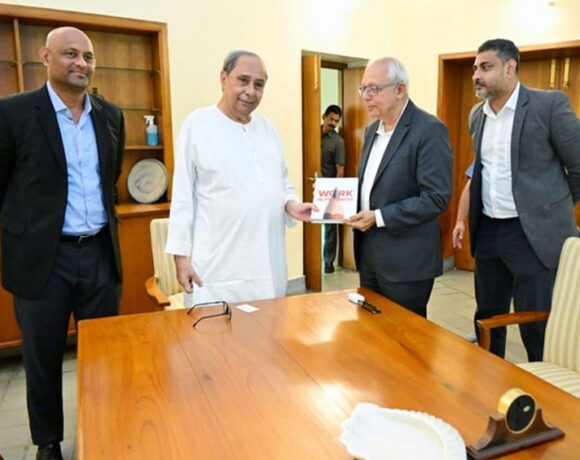
CITI Warns Proposed US Tariffs Could Severely Impact Indian Textile Exports

The proposed imposition of fresh US tariffs on goods from nearly 60 countries, including India, over allegations of forced labour has emerged as a major concern for India’s textile and apparel industry. Terming the move a “serious threat” to the sector, Ashwin Chandran, Chairman of the Confederation of Indian Textile Industry (CITI), strongly rejected the allegations, calling them completely false and unfair.
Chandran highlighted the importance of the United States as India’s largest export destination for textiles and apparel.
“The US is the single largest market for India’s textile and apparel exports. Out of the country’s total textile and clothing exports of US$ 36 billion last year, nearly US$ 11 billion was shipped to the US market,” he said.

Expressing concern over the potential impact of additional duties, Chandran said the industry is actively contesting the allegations and the ongoing investigation.
“We have very strongly represented against these allegations and against this investigation. These claims are completely unfair and do not reflect the realities of the Indian textile industry,” he said.
According to Chandran, any increase in tariffs would adversely affect Indian exporters and manufacturers, regardless of the rate imposed.
“Whether the tariff is 10 percent, 12 percent, 15 percent or even 20 percent, any additional duty will hurt Indian textile exports. Indian textile companies will inevitably face losses,” he stated.
He warned that the consequences could extend beyond immediate financial losses, as the textile and apparel business is highly seasonal and dependent on long-term customer relationships.
“Once you lose customers, it becomes extremely difficult to regain them in a short period. If orders are lost for a particular season, companies effectively lose three to four months of business, which severely impacts production and capacity utilisation,” Chandran explained.
He noted that many exporters have already been forced to offer substantial discounts to retain buyers amid growing uncertainty.
“In several cases, companies have provided discounts ranging from 15 to 25 percent in order to retain their customers and remain competitive,” he said.
Refuting allegations related to forced labour practices, Chandran emphasized that the organised textile sector in India adheres to stringent labour standards and undergoes regular compliance audits by global brands and retailers.
“In the organised sector, instances of child labour or bonded labour are virtually non-existent today. International brands and retailers conduct rigorous audits and inspections of their suppliers on a regular basis,” he said.
Commenting on India’s efforts to diversify export destinations through new trade agreements, Chandran welcomed recent developments such as the proposed Comprehensive Economic Partnership Agreement (CEPA) with Oman.
“While the US and the European Union continue to remain our primary export markets, we are actively exploring opportunities in new regions. Trade agreements with countries such as Oman and New Zealand will help diversify our export base and create new growth avenues for the industry,” he said.
The proposed US tariffs, if implemented, could pose a significant challenge to India’s textile and apparel sector, which remains one of the country’s largest employment-generating industries and a major contributor to export earnings.