Global Cotton Production Set To Decline In 2026/27, India Emerges As Bright Spot: ICAC
The global cotton sector is expected to contract modestly in the 2026/27 season as rising production costs, adverse weather conditions and competition from alternative crops continue to weigh on grower sentiment, according to the latest Cotton This Month report released by the International Cotton Advisory Committee (ICAC).
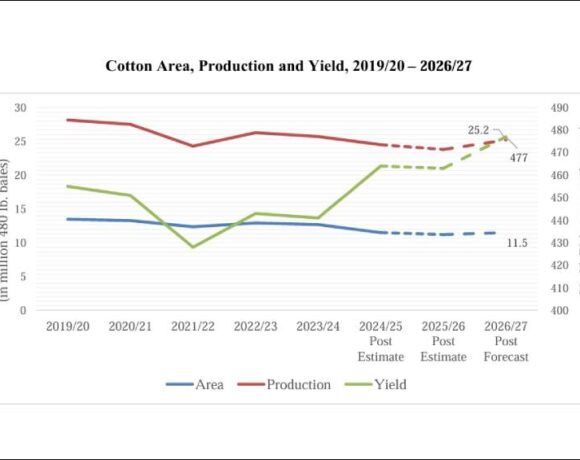
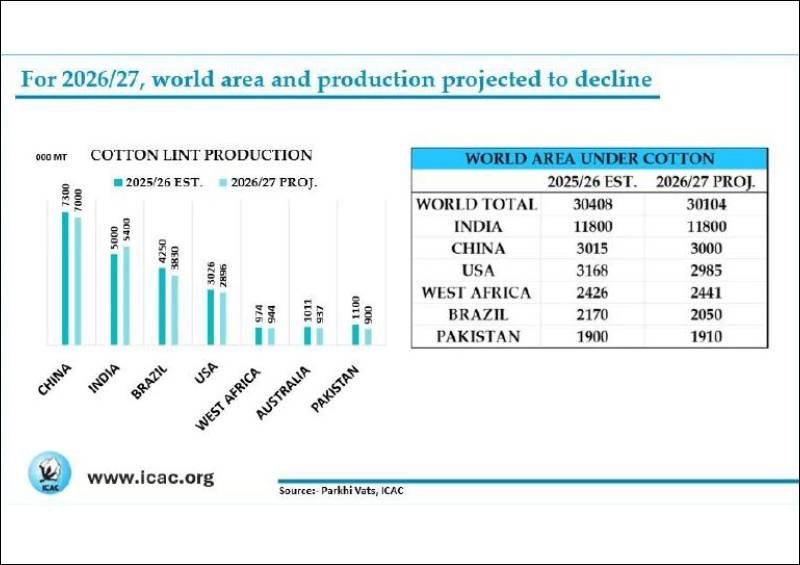
Global cotton area is projected to decline by 1 percent to 30.1 million hectares, while production is forecast to fall 2 percent to 25.7 million tonnes. International cotton trade is also expected to weaken, declining 1.4 percent to 9.5 million tonnes.
ICAC attributed the slowdown to a combination of higher fertiliser and input costs, drought concerns, weather-related uncertainties and increasing competition from crops such as corn. The continued expansion of man-made fibres is also putting pressure on cotton demand globally.

Fertiliser prices remain a key concern for producers. Global fertiliser prices rose by more than 12 percent during the first quarter of 2026, driven by geopolitical tensions in the Middle East and export disruptions linked to the Strait of Hormuz, influencing planting decisions across major cotton-producing regions.
China is expected to retain its position as the world’s largest cotton producer despite a slight reduction in area and output. The country is focusing on higher-performing cultivation areas while phasing out lower-yielding and water-stressed land. As a result, China is projected to achieve the world’s highest cotton yield at 2,421 kg per hectare.
In the United States, cotton area is forecast to decline by 6 per cent and production by 4 per cent amid widespread drought conditions affecting nearly 98 per cent of the crop. However, improved yields supported by favourable El Niño weather patterns are expected to partially offset production losses, while exports are projected to increase by 3 percent.
Brazil, which has witnessed four consecutive years of cotton expansion, is expected to see growth moderate in 2026/27. Cotton area is projected to contract by 6 percent, resulting in a 10 per cent decline in production as farmers face rising input costs, weaker market signals and competition from corn cultivation.
India stands out as a notable exception to the global trend. With cotton acreage expected to remain stable at around 11.8 million hectares, the largest in the world production is projected to increase by 8 percent. The growth is expected to be supported by a normal monsoon outlook and rising domestic demand for cotton.
Meanwhile, Australia and Pakistan are likely to face significant challenges. Australia’s cotton production is forecast to decline by 10 percent due to persistent dry conditions and reduced irrigation availability. Pakistan’s output is expected to fall by 18 percent as the sector grapples with poor seed quality and increased pest pressure.
The ICAC outlook suggests that while the global cotton industry faces a challenging year ahead, India is well-positioned to strengthen its role in the international cotton market through stable acreage, improving production prospects and robust domestic consumption.