Wastewater To Wardrobe: TU Delft And Hul Le Kes Pioneer Sustainable Dyeing Innovation
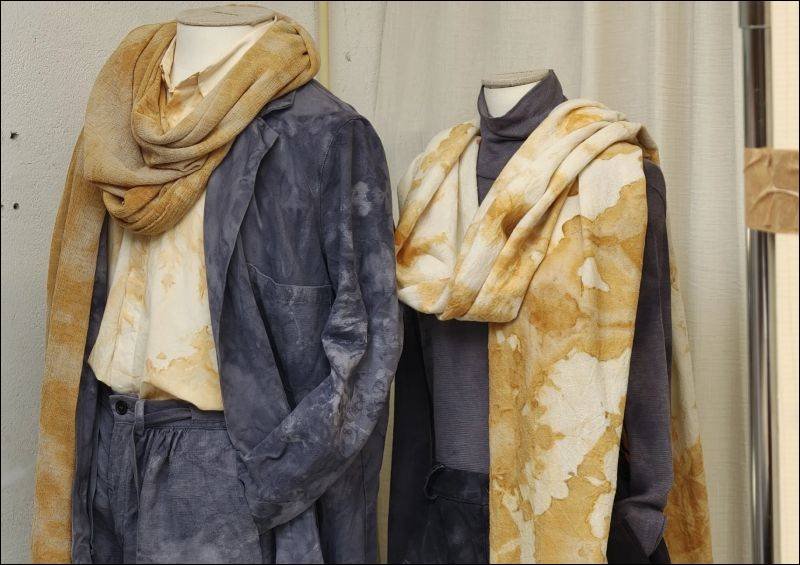
Researchers at the Delft University of Technology (TU Delft) have successfully transformed wastewater treatment sludge into a sustainable textile dye, creating garments that demonstrate a novel approach to circular fashion.
Developed in collaboration with Dutch sustainable fashion label Hul le Kes, the innovation uses a melanin-like biopolymer recovered from sewage sludge as a natural pigment for textile dyeing. The resulting garments mark the first successful application of the material in wearable fashion, offering a potential alternative to both animal-derived and synthetic dyes.
Turning Waste into Value
The research was led by TU Delft scientist Dr. Yuemei Lin, who developed a method to extract a melanin-like pigment from sewage sludge generated during wastewater treatment. The recovered biopolymer was subsequently applied to wool dyeing, producing aesthetically appealing shades while demonstrating the material’s practical viability.

What began as a laboratory experiment quickly evolved into a tangible textile application. Initial trials using dyed wool yarn showed promising results, encouraging collaboration with Hul le Kes, a fashion label recognised for its commitment to circularity, craftsmanship and responsible material innovation.
The partnership culminated in a collection of prototype garments that showcase the potential of wastewater-derived pigments in fashion applications.

Yuemei Lin, TU Delft scientist.
A Sustainable Alternative to Conventional Dyes
Melanin is a naturally occurring biopolymer valued for its colouration properties as well as functional benefits such as UV protection, antioxidant activity and metal-binding capabilities. Commercial melanin is traditionally sourced from cuttlefish ink, a practice that raises sustainability and ethical concerns while facing limitations linked to seasonal marine harvesting.
Although synthetic melanin alternatives exist, researchers note that chemically produced versions often differ from natural melanin in both structure and performance.
The wastewater-derived pigment developed by TU Delft offers a promising circular alternative. Beyond reducing reliance on marine resources and petrochemical dyes, the biopolymer exhibits beneficial textile properties and has shown the potential to enhance dye uptake efficiency during processing.
Advancing Circular Textile Innovation
The project reflects growing interest in converting industrial and municipal waste streams into high-value textile resources. By extracting functional materials from wastewater treatment residues, researchers are exploring new pathways to reduce environmental impact while supporting resource circularity across industries.
However, both TU Delft and Hul le Kes emphasise that the current garments serve as a proof of concept. Further testing, regulatory approvals and scalability assessments will be required before the pigment can be commercially adopted by the textile and apparel industry.
Science Meets Sustainable Fashion
For Hul le Kes, the collaboration aligns closely with its philosophy of combining traditional craftsmanship with innovative sustainable materials. The Dutch label has built a reputation for promoting circular fashion models through upcycling, natural materials and socially conscious design practices.
The project demonstrates how interdisciplinary partnerships between scientific institutions and fashion brands can accelerate the development of next-generation sustainable materials, potentially opening a new chapter in environmentally responsible textile coloration.
As the textile industry intensifies efforts to reduce its environmental footprint, innovations such as wastewater-derived dyes highlight the growing potential of circular solutions that transform waste into valuable resources, taking sustainability from the treatment plant to the runway.