
Monsoon Prospects: Emerging El Niño Raises Fresh Concerns For India’s Cotton And Textile Industry
Delayed rains, slower cotton sowing and an evolving El Niño pattern could influence fibre availability, prices and the textile value chain in the months ahead
India’s South-West monsoon in 2026 has arrived with a mixed outlook, bringing cautious optimism for agriculture while raising fresh concerns for the country’s cotton and textile industry. Although the monsoon has advanced across several regions and reservoir levels remain healthier than the long-term average, below-normal rainfall forecasts linked to the emergence of El Niño have introduced uncertainty for the kharif season.
According to the latest assessment, the South-West monsoon reached Kerala on June 4 and continues to progress across the country. However, rainfall during the early part of the season has remained below normal, while kharif sowing has started at a slower pace compared to last year. For the textile industry, which depends heavily on a healthy cotton crop, the next few weeks will be crucial in determining production prospects and market sentiment.

The Indian Meteorological Department (IMD) has projected seasonal rainfall at around 90 per cent of the Long Period Average (LPA), with a high probability of below-normal precipitation as El Niño conditions are expected to strengthen during the July-September period. Since nearly 70 per cent of India’s annual rainfall is received during the South-West monsoon, any prolonged weakness could directly affect agricultural output, particularly rain-fed crops such as cotton.
Cotton has already emerged as one of the early indicators of weather-related stress. Initial kharif sowing data shows cotton acreage declining by nearly 23 per cent compared to the same period last year. While sowing is expected to accelerate once rainfall becomes widespread, delayed planting could influence crop development, yields and harvesting schedules later in the season.
The delayed progress has been attributed not only to uneven rainfall but also to subdued market signals and farmers waiting for sustained monsoon showers before undertaking large-scale sowing operations. Agricultural experts believe that rainfall during the coming three to four weeks will play a decisive role in determining whether the current gap can be recovered.
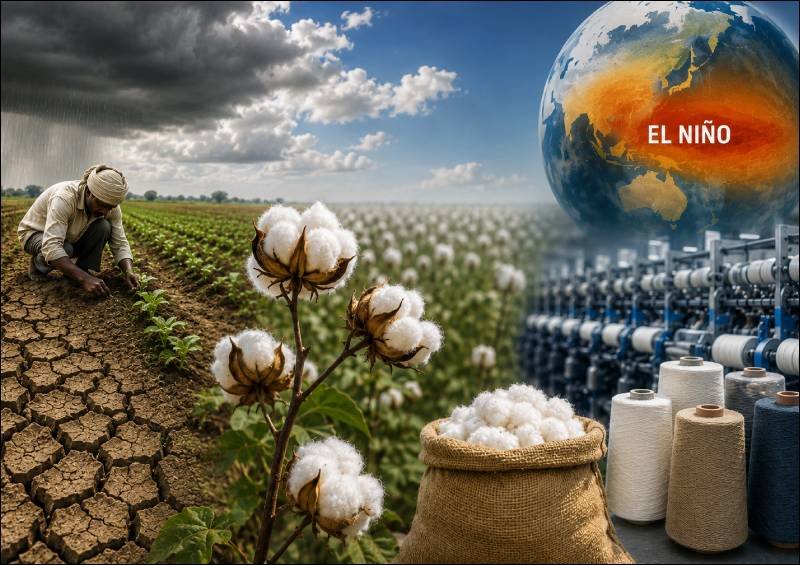
Adding to the uncertainty is the gradual development of El Niño. The weather phenomenon, characterised by warming sea surface temperatures in the Pacific Ocean, has historically been associated with weaker Indian monsoons. Reduced rainfall often translates into lower soil moisture, increased irrigation demand and greater stress on crops such as cotton, rice, maize, pulses and oilseeds.
Meteorologists are also closely monitoring the Indian Ocean Dipole (IOD), which can sometimes offset the adverse effects of El Niño. However, the IOD currently remains neutral, offering little natural support to compensate for the anticipated reduction in rainfall. As a result, forecasters expect El Niño’s influence to be more pronounced during the remainder of the monsoon season.
The situation follows an exceptionally harsh summer. During April and May, large parts of northern, central and eastern India experienced severe heatwave conditions, with temperatures crossing 45°C in several regions. The prolonged heat increased crop water requirements, heightened irrigation demand and raised concerns over agricultural productivity. Although the advancing monsoon is expected to bring relief, weather agencies caution that above-normal temperatures could continue in parts of northwestern India during breaks in monsoon activity.
One encouraging factor is the country’s reservoir position. Water storage levels entering the monsoon season remain above the ten-year average, providing a relatively favourable starting point for irrigation if rainfall weakens temporarily. However, regional disparities remain, with some southern and eastern reservoirs continuing to face water stress.
For India’s textile sector, weather developments during the next few months will be watched as closely as cotton market fundamentals. Cotton availability directly influences spinning mills, yarn prices, fabric manufacturers and apparel exporters. Any significant reduction in cotton production could tighten domestic supplies, create volatility in fibre prices and affect procurement strategies across the value chain.
At the same time, industry observers note that it is still too early to draw firm conclusions. Cotton sowing traditionally gathers momentum during June and July, and widespread monsoon activity in the coming weeks could substantially improve acreage and crop prospects. Government agencies have also issued region-specific advisories encouraging farmers to delay sowing until adequate rainfall is received, adopt drought-tolerant varieties where necessary and follow water-efficient cultivation practices.
Beyond cotton, the evolving weather scenario also has implications for logistics, rural demand, power consumption and overall industrial activity. A stable agricultural season generally supports stronger rural incomes, which in turn contribute to domestic textile and apparel consumption. Conversely, a weak monsoon can increase inflationary pressures, affect raw material costs and influence purchasing behaviour across consumer markets.