From Engineering Excellence To Enduring Value, A.T.E.’s Growth Journey: Abhijit Kulkarni
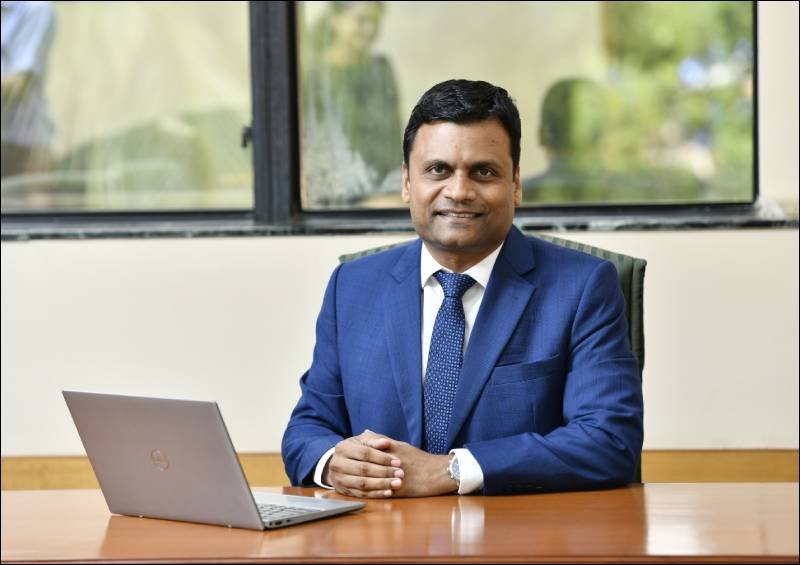
With more than eight decades of experience in the textile industry, A.T.E. Enterprises Private Limited is entering a new phase, one shaped by technology, sustainability, digitalisation and changing customer expectations. Following his elevation as Director of A.T.E. Enterprises Private Limited, Abhijit Kulkarni brings a broader strategic perspective to the company’s future, with a focus on customer success, profitable growth, and building a future-ready organisation. In this exclusive interview with Associate Editor, Henry Dsouza, Textile Insights, Kulkarni discusses A.T.E.’s growth roadmap, the opportunities emerging from India’s textile transformation, the growing role of automation and AI, and why the company’s future lies in creating value beyond the machine.
Congratulations on your promotion as Director of A.T.E. Enterprises. What does this new role mean to you and how will your responsibilities change from your previous position?
I see this appointment as both an honour and a greater responsibility. As President, my primary focus was on leading three business units: Textile Engineering Group (TEG), TeraSpin and HMX and delivering business results. As Director, my role will broaden towards shaping the strategic direction and long-term future of A.T.E. that remains closely aligned with the evolving priorities of our customers and principals. I will work closely with our Managing Director, Anuj Bhagwati, on these issues.
We are seeing that areas such as sustainability, digitalisation and automation are becoming fundamental to business in the future and we need to change accordingly. The focus will now be not only on how we manage and grow our businesses today, but also on how we prepare the organisation for the opportunities and challenges ahead. A key priority will be making A.T.E. more adaptable and flexible to customer and principal needs, and resilient in an increasingly volatile and rapidly changing business environment.

Developing people and future leaders will be equally important. We need to build an organisation with the right capabilities, leadership and mindset to respond quickly to emerging opportunities and changing market dynamics.
Going forward, what will be your top three strategic priorities in your new role as Director and what would you like to achieve through them?
My three priorities are closely connected, i.e., customer and principal success, profitable growth and people.
First, we will remain firmly customer-centric. Our growth ultimately depends on our customers’ success. By combining the technologies and solutions of our principals and group companies with the expertise of our teams and our principals, we want to deliver solutions that help customers improve their productivity, efficiency, sustainability and competitiveness.
Second, I want to drive sustainable and profitable growth. Long-term success requires both a growth-oriented mindset and strong financial discipline. We will focus on strengthening our existing businesses while identifying new opportunities that can create sustainable value for A.T.E.
Third, we need to build a future-ready organisation and leadership pipeline. Technology, automation, digitalisation, AI and changing geopolitical and market dynamics are rapidly reshaping our industry. The opportunities that are important today may evolve tomorrow, so we need people and leaders who can adapt, learn and respond to these changes.
If I look three to five years ahead, I would like A.T.E. to have achieved deeper customer and principal partnerships, consistent profitable growth, and a strong pipeline of future leaders. Most importantly, I want us to be recognised not merely as a representative of leading technologies, but as a trusted technology and solutions partner that creates measurable value for our customers and principals.
How do you envision the next phase of growth for A.T.E. Enterprises and what will be the key drivers of this growth?
A.T.E.’s next phase of growth will build on the strong foundation we have created over more than eight decades in the textile industry. Textile Engineering Group will continue to be a key pillar, while businesses such as TeraSpin and HMX will create additional growth opportunities through energy-efficient and productivity-enhancing solutions. Our group company A.T.E. HUBER Envirotech and Business Unit AxisValence are key parts of A.T.E.’s growth plans and are growing rapidly. These are looked by my colleagues Amar Khanolkar and K V Sanilkumar, together with Anuj and our Executive Director Nikesh Jain.
The larger opportunity, however, is to move beyond supplying machines and products to becoming a solutions partner for our customers. Through our network of principals and group companies,, we can address some of the industry’s most critical challenges — productivity, quality, energy efficiency, sustainability, automation and digitalisation. Labour availability and costs are also changing rapidly, making automation, digital technologies and AI increasingly important. At the same time, global brands are placing greater emphasis on sustainable manufacturing, water and energy efficiency, and compliance.
Our growth will therefore come from technology-led, sustainable and productivity-focused solutions that help customers reduce operating costs while improving performance. I believe this combination of technology, customer understanding and sustainability will define A.T.E.’s next chapter of growth.
The Indian textile industry is undergoing major technological transformation. What opportunities do you see for A.T.E. in this changing landscape?
I believe the Indian textile industry is at the cusp of a significant growth phase and this presents a tremendous opportunity for A.T.E. Group. India has a young population, a stable economy and is increasingly emerging as a global manufacturing hub. With new and expanding trade agreements, there is considerable potential to increase India’s share of global textile and apparel exports, while rising incomes will also drive domestic consumption.
We also see strong opportunities in technical textiles, advanced fabrics, man-made fibres and high-value manufacturing, where India has significant headroom for growth. At the same time, sustainability is becoming a decisive factor as global brands demand responsible manufacturing, better wastewater management, energy efficiency and greater use of recycled materials.
Our role will increasingly be to work closely with customers and our principals to address these evolving requirements. I see the opportunity not simply in selling technology, but in helping Indian textile manufacturers become globally competitive, sustainable and future-ready.
How do you see automation, digitalisation, Industry 4.0 and AI reshaping the demand for textile machinery and solutions in India?
Automation, digitalisation and AI are moving from being technology differentiators to becoming essential enablers of competitiveness in the textile industry. The fundamental driver is simple — manufacturers want to achieve higher productivity, consistency and operational efficiency with fewer people and less manual intervention.
We have already seen this transformation in spinning, where processes such as bobbin and cone transportation, auto-doffing and packing have become highly automated. The next phase will be machines that not only perform tasks but also communicate, analyse data and take decisions. Predictive maintenance is a good example, machines will increasingly identify potential failures and indicate when intervention or component replacement is required.
AI will also move beyond the factory floor into areas such as demand forecasting, production planning and supply chain management, helping manufacturers anticipate market requirements and respond faster.
For A.T.E., the opportunity is to combine our eight decades of industry knowledge with the capabilities of our technology partners and group companies. Whether through automated material handling, cutting and sewing, colour dispensing, storage systems or digital solutions, our focus will be on helping customers automate repetitive tasks, make better decisions and create smarter, more productive factories.
What role will innovation play in your growth strategy, particularly in energy efficiency, productivity, sustainability and smart manufacturing?
Innovation will be at the heart of our growth strategy, but I believe innovation is much broader than developing a new product. It can be a better process, a smarter way of working, a new service model or a more effective way of creating value for customers.
Our focus will be on innovations that deliver measurable outcomes, higher productivity and quality, lower energy consumption and operating costs, greater automation and a reduced environmental footprint.
This philosophy is reflected across our group companies and the technologies we offer. TeraSpin, for example, focuses on energy-efficient solutions for spinning, while our A.T.E. HUBER Envirotech’s wastewater-management solutions address environmental performance. AxisValence helps improve productivity and quality through static control and HMX provides sustainable and energy-efficient comfort cooling that can improve both workplace comfort and productivity.
Going forward, we will work closely with our principals to bring smarter, more sustainable solutions to the market.
Ultimately, our approach is captured in A.T.E.’s philosophy of Partnering People and the Planet. Innovation must create value not only for the customer’s business, but also for people and the environment.
With increasing competition in the Indian textile machinery market, what will differentiate A.T.E. from other technology and machinery providers?
In a competitive market, I believe differentiation comes from the value you create beyond the product. At A.T.E., our strength is built on more than eight decades of experience, strong customer relationships and our ability to bring together global technologies with a deep understanding of the Indian market.
Our first differentiator is our technology portfolio. We work with leading technology partners and group companies to offer world-class solutions.
The second is our solution-oriented approach. We aim to understand the customer’s challenge first and then identify the right technology or combination of solutions, rather than simply selling a machine.
Equally important is our people and service capability from technical consultation and installation to training and after-sales support.
Finally, trust is a major differentiator. A.T.E. has built long-standing relationships with customers and principals over decades.
Ultimately, our objective is to be more than a technology provider. We want to be a long-term partner who understands our customers’ businesses and contributes to their success.