
Beyond Manufacturing: The Brandix Blueprint For A Resilient Global Indian Apparel Industry
As the global apparel industry navigates geopolitical uncertainty, shifting trade dynamics, supply-chain disruptions and rising sustainability demands, integrated and flexible manufacturing ecosystems are becoming increasingly important.
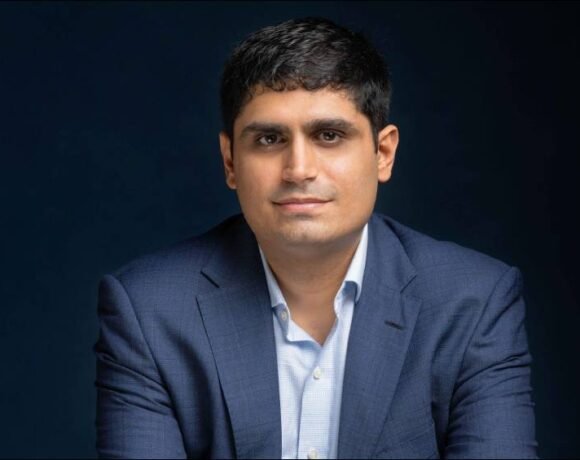
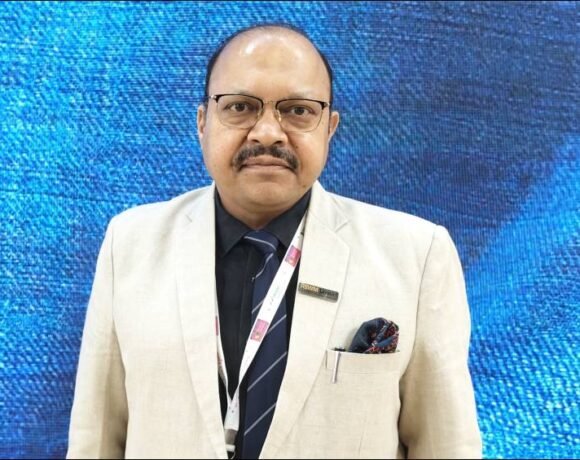
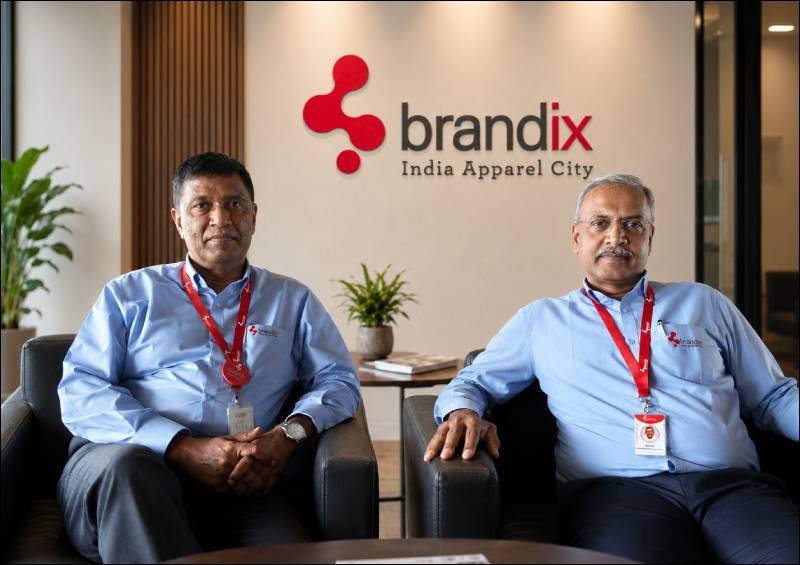
In an exclusive conversation with Henry Dsouza, Associate Editor, Textile Insights, Brandix India Apparel City’s Udaya Perera and Saravanan C., discuss the company’s integrated manufacturing model, India’s China+1 opportunity, the future of technical textiles, sustainability, global supply-chain resilience and Brandix’s growth vision towards 2030 and beyond.
The Brandix Apparel City infrastructure is impressive and goes beyond expectations. What lessons can other textile parks learn from the Brandix model?
Udaya Perera: The key lesson is how to create a truly integrated, plug-and-play facility. The infrastructure, road network, logistics and utilities have all been planned to support industrial operations efficiently.

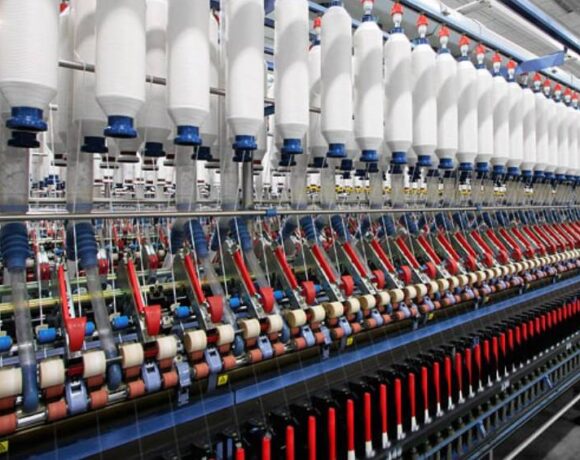
We have integrated facilities such as water treatment and effluent treatment plants, with the capacity to scale significantly as operations expand. The entire ecosystem from the mill and textile production to apparel manufacturing and ancillary services, including packing is integrated within the facility.
This level of integration is one of the key strengths of the Brandix model. Industrialists and government officials who visit the facility can see how logistics, utilities and manufacturing operations can be brought together under one ecosystem. That is the key lesson we believe other textile parks can take from our experience.
How do you see the apparel supply chain evolving and what role will integrated ecosystems such as Brandix Apparel City play in the future?
Saravanan C.: Integrated ecosystems will play an increasingly important role in making apparel supply chains faster, more efficient and more resilient. The model we have developed at Brandix Apparel City is designed to significantly reduce lead times by bringing key stages of the supply chain closer together.
At present, we have a largely self-sufficient cotton-knit ecosystem. However, we are gradually expanding our product portfolio. Teejay, for example, has begun adding man-made fibre fabrics, opening the way for further diversification.
As the ecosystem grows, we can also attract more suppliers of essential inputs, trims and other components. The key is achieving sufficient scale. Once a critical mass of production is established, it becomes commercially viable for more Indian suppliers to set up operations within the park.
For example, we already have ITL, which manufactures tags and labels and has upgraded its technology to meet the evolving requirements of US brands. We had discussions with another potential supplier, but the current production volumes were not sufficient to support two players in the same segment.
As production volumes increase, more suppliers can be brought into the ecosystem and sustained over the long term. This will create a deeper, more integrated supply chain, reduce dependence on external suppliers and further improve the speed and competitiveness of apparel manufacturing.
Brandix operates across multiple countries and manufacturing locations. Beyond simply having a global footprint, how do you actively manage these different locations to respond to geopolitical changes, trade agreements and shifting customer requirements?
Udaya Perera: One of the key factors we have to remain sensitive to is geopolitics. When geopolitical developments make one location less attractive, another location may become more competitive. Our geographical spread allows us to respond to these changes and manage the associated risks.
Trade agreements also vary from country to country, creating different advantages across locations such as India, Sri Lanka and Bangladesh. We are also exploring opportunities in Mexico, which could provide strategic access to the large US market because of its geographical proximity.
Saravanan C.: The major advantage of operating across multiple locations is the ability to shift business within the group when market conditions change. For example, during recent tariff changes, if production became more competitive in Bangladesh or Sri Lanka than in India, we could shift the business to another Brandix location.
This ensures that the business remains within the Brandix network rather than moving to a competitor. Once a customer shifts an order to another company, winning that business back can take at least a year and is often difficult. Our presence across multiple countries allows us to respond quickly, balance our operations across locations and retain business within the group.
That flexibility has been a significant advantage of our global manufacturing footprint.
The apparel industry has faced extraordinary disruption in recent years from the pandemic and tariffs to geopolitical tensions and wars. How has Brandix adapted its business strategy to remain resilient amid this uncertainty?
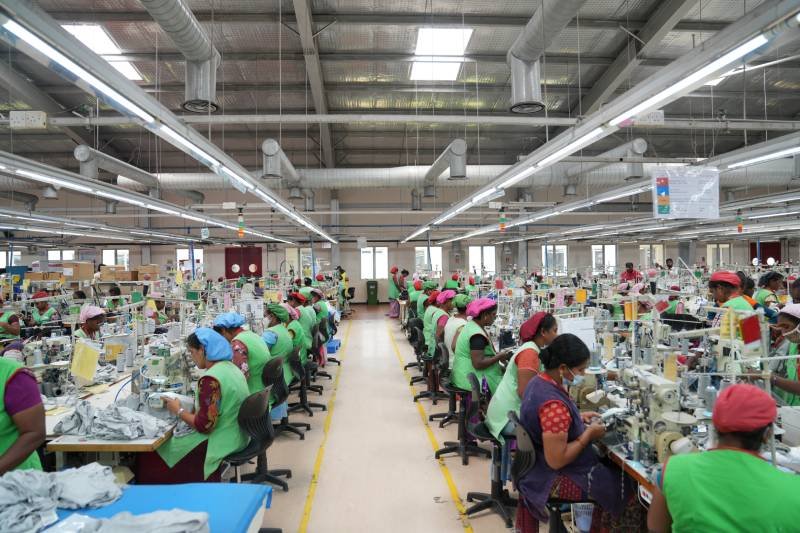
Udaya Perera: Sri Lanka was able to manage the pandemic relatively well because our manufacturing operations are geographically spread out. We housed employees in hostels and other facilities to ensure their safety and continuity of operations, with some employees working in shifts from these locations.
Like India, we also diversified into the production of PPEs, masks and gowns. Although we faced lockdowns and significant challenges, our plants were not shut down for an extended period. With government support, we were eventually able to transport employees from their homes and gradually resume operations.
Saravanan C: During the pandemic, orders declined significantly and we faced challenges for nearly six months. However, we did not terminate any employees and continued paying salaries. Some employees were placed on furlough with partial pay, while we also diversified into the production of PPEs, including products supplied to private organisations and government agencies. This helped us sustain operations during that difficult period.
What is your outlook for the global apparel market over the next five years?
Saravanan C.: The global apparel market is in a much better position today than it was immediately after the pandemic. Following COVID-19, the industry experienced a period of revenge spending, which led to a sharp surge in demand. However, brands and retailers subsequently placed excessive orders, resulting in high inventory levels and a sudden decline in new orders.
The market has now largely stabilised and returned to a more normal, pre-pandemic pattern. While tariffs and geopolitical tensions, including ongoing conflicts, continue to create some volatility, the overall outlook is positive.
Once these uncertainties ease, I believe the global apparel business will continue to grow steadily over the next five years. Pricing structures may be different from what they were four or five years ago, but the underlying business environment looks promising.
How do you see India’s position in the evolving China+1 sourcing strategy, particularly as global brands diversify their supply chains?
Saravanan C: India is well-positioned to benefit from the China+1 strategy. However, in recent years, countries such as Bangladesh have gained an advantage through favourable tariff structures and India has not progressed as quickly as we would have liked.
One of India’s key challenges is that we continue to export a significant amount of raw material rather than finished products. As we move from exporting cotton and other raw materials to exporting more finished apparel, our overall export numbers should increase significantly.
Trade agreements will also play an important role. The government has been actively signing agreements with multiple countries and the implementation of agreements such as the India–EU trade agreement could provide a significant boost to India’s apparel exports.
Another major opportunity lies in technical textiles. India has traditionally not been as strong in this segment, but the sector is now receiving increased attention. Technical textiles span a wide range of applications, including home textiles, medical textiles and automotive textiles and India has the capabilities to compete strongly in these areas.
India’s availability of a large and relatively stable workforce is another major advantage. Unlike some markets, Indian workers are generally less likely to relocate for relatively small differences in wages, which contributes to workforce stability and improved productivity. At our facilities, the efficiency levels of our workforce are already comparable to, and in some cases better than, those in China, depending on the product.
The China+1 shift is happening, although perhaps not at the pace we would like. Earlier, China was often the only major sourcing option. Today, global companies have several alternatives, including India, Sri Lanka, Bangladesh, Cambodia, Vietnam, Africa and Haiti.
India is a more complex market for international companies to enter, particularly because of cultural and operational differences compared with countries such as Vietnam and Cambodia. However, India is firmly on the global investment radar. Companies from markets such as Taiwan and Japan are increasingly considering India when evaluating new manufacturing locations. That represents a significant change and is a positive indication of India’s growing position in global supply chains.
Do you see man-made fibres and technical textiles playing a larger role in India’s textile exports?
Saravanan C.: At Brandix Apparel City, our operations have traditionally been focused largely on cotton and cotton-blended products. However, this is now changing.
Teejay India has begun manufacturing specialised fabrics in collaboration with the Japanese company Toray. These fabrics are used in products supplied to leading global brands, including Uniqlo. This is an example of how the industry is gradually moving towards more specialised and value-added man-made fibre products.
We are also seeing new business opportunities emerging across a wider range of products, helping us diversify beyond lingerie and traditional knitted products.
In the technical textiles segment, the Indian government has introduced several initiatives, including the Production Linked Incentive (PLI) Scheme, to encourage investment and manufacturing. Home textiles have already seen significant growth, while automotive and medical textiles are still developing and have considerable room for expansion.
Do you see technical textile manufacturing expanding at Brandix Apparel City?
Saravanan C.: Definitely. We are confident that our workforce can be trained to manufacture a wide range of products. The capabilities of our employees today are very different from what they were 15 years ago.
Our experience during COVID-19, when employees were quickly trained to manufacture masks and PPEs, demonstrated the adaptability of our workforce. This gives us confidence that we can train employees to manufacture new and specialised technical textile products.
As global markets introduce increasingly stringent sustainability and traceability requirements, how is Brandix preparing to meet these evolving expectations?
Saravanan C: Sustainability has been a core focus for Brandix long before many of today’s sustainability initiatives came into place. We have been pioneers in this area, with several platinum-certified factories in Sri Lanka.
At our facility here, approximately 30-40% of our water requirement is met through rainwater harvesting. We are also rapidly expanding our renewable energy capacity. One of our factories has already converted its rooftop into a solar installation and the park currently has around 2.3 MW of solar capacity, which we plan to increase to approximately 10 MW.
Our sustainability approach is centred around three key areas: Earth, Water and People.
In terms of environmental responsibility, Brandix is a zero-landfill company. Even the sludge generated from our effluent treatment plants is processed through a solar sludge dryer using German technology. The drying process increases its calorific value, allowing the material to be used for co-processing in cement factories rather than being sent to landfill.
As a group, sustainability is deeply embedded into our operations and continues to be a major priority as global customers and markets raise their expectations on environmental performance, traceability and responsible manufacturing.
What additional efforts are you making to attract Indian companies to invest here?
Udaya Perera: Until now, our focus has been global rather than specifically focusing on India. However, we would certainly welcome more Indian investors.
One possible reason Indian companies may be less focused on Sri Lanka is the size of their domestic market. With a population of around 1.5 billion, India has a vast home market, whereas Sri Lanka, with a population of about 20 million, has always had to look outward.
That said, we are now trying to offer investors greater flexibility. In addition to the Special Economic Zone (SEZ), we are also looking at opportunities in the Domestic Tariff Area (DTA). This will give investors a choice based on their business model and whether their focus is on exports or the domestic market.
What kind of government support or policy changes would help attract greater investment from the Indian textile industry?
Saravanan C.: One of the key challenges is the current policy framework for Special Economic Zones (SEZs). Today, SEZs have become less attractive for Indian companies that want to manufacture for the domestic market.
For example, a company manufacturing within an SEZ and supplying products to the Indian market may have to pay duties on the finished product. However, a similar product imported from countries such as Bangladesh may enter India at a lower or zero duty under trade agreements. This creates a significant disadvantage for companies manufacturing within an Indian SEZ.
These are policy issues we have been discussing with the government. Over the past few months, we have also had several high-level political and bureaucratic visits. The government has seen first-hand the scale of operations, employment generation and the potential for further expansion.
Our existing facilities are equipped to scale up significantly. With the right policy changes, we could potentially generate between 5,000 and 10,000 additional jobs. The workforce is available, the infrastructure is in place and the capacity exists.
The government is taking these issues seriously, and discussions have been taking place at various levels. We are optimistic that the necessary policy changes will be introduced soon, making SEZs more attractive for Indian textile and apparel companies and encouraging greater investment.
What is one key change needed to make the apparel industry more resilient and sustainable?
Saravanan C.: One of the most important changes needed is greater regulatory support from the government. Several policy reforms have been under discussion for a long time, particularly those related to Special Economic Zones (SEZs).
The proposed DESH Bill, which was intended to modernise the SEZ framework, did not move forward. The government is now working on simplifying certain provisions of the existing SEZ Act, and we hope these changes will be introduced by the end of the year and subsequently taken up by the parliament.
Such reforms could significantly encourage more Indian companies to invest in established integrated ecosystems like Brandix Apparel City. The infrastructure and ecosystem are already in place, and a more supportive regulatory framework would allow companies to take advantage of these facilities more effectively.
Once these foundational policy changes are implemented, further investment and development will follow. We are already seeing several states exploring new textile parks, but the success of these initiatives will depend on creating the right policy environment and ensuring that the regulatory framework keeps pace with industry requirements.
What are Brandix’s key priorities and strategic goals as it looks towards 2030 and beyond?
Udaya Perera: We have developed a long-range plan extending to 2031. As a park organisation, our primary focus is sustainable monetisation. This is not simply about monetising land or expanding commercial activity, it is about generating value while preserving our strong sustainability commitments.
Our aim is to continue developing Brandix Apparel City as a clean, green and safe industrial park. The development of the surrounding community is also an important part of this vision. Since Brandix was established in 2006, the local community has developed significantly alongside the organisation, and we want to continue contributing to that progress.
The safety and well-being of our associates will remain one of our highest priorities as we expand.
Saravanan C.: From a business and employment perspective, we are targeting an additional 10,000 employees over the next four years, taking total employment at the park to approximately 30,000. This would involve the establishment of two or three additional factories.
Our objective is to grow the business while continuing to build a sustainable, safe and integrated industrial ecosystem.
What is your message to new investors and manufacturing companies considering setting up operations at Brandix Apparel City?
Udaya Perera: We welcome investors to visit Brandix Apparel City and see the facilities and infrastructure for themselves.
We are prepared to work closely with investors and support them throughout their journey, helping them establish and grow their operations with confidence. We believe the level of support we provide is a key differentiator, and our track record with existing investors demonstrates that this approach works.
Saravanan C.: The key advantage for an investor is that they can focus entirely on their core business manufacturing. Everything else is managed by us.
We effectively insulate our customers from the external complexities of setting up and operating a manufacturing facility. They do not have to recreate or reinvent the ecosystem, because we have already built and successfully managed it over the past 15 years.
Our role is to provide the infrastructure, services and support that allow investors to concentrate on production and business growth. We are ready to extend the same level of support to every new investor who joins Brandix Apparel City.Top of Form