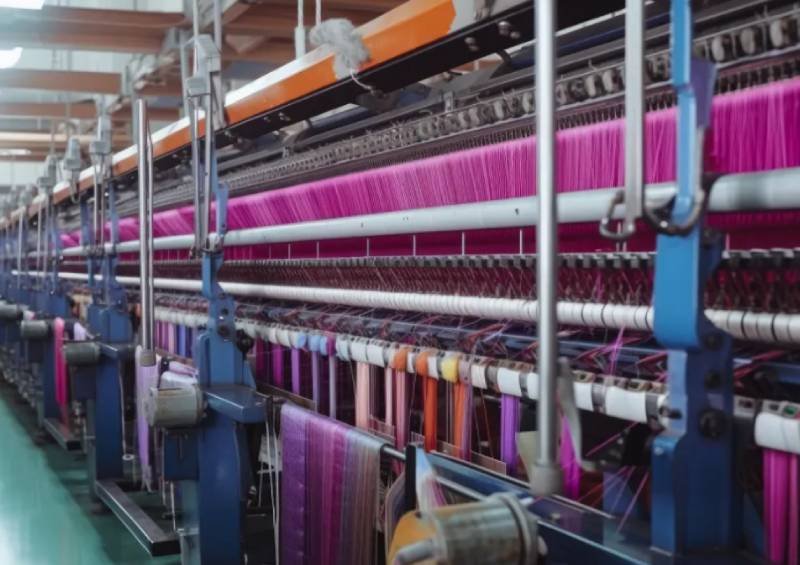
India has widened the scope of its national carbon market by bringing four additional carbon-intensive sectors petroleum refineries, petrochemicals, textiles and secondary aluminium, under the Carbon Credit Trading Scheme (CCTS). The expansion was notified by the government today i.e. January
After nearly two decades of negotiations, the India–European Union (EU) Free Trade Agreement (FTA) is being hailed as a defining moment for India’s textile and apparel industry, with zero-duty access expected to significantly reshape export dynamics, sourcing strategies and employment generation across the value chain. One of the most critical outcomes of the agreement is
The Confederation of Indian Textile Industry (CITI) has welcomed the conclusion of negotiations on the free trade agreement (FTA) between India and the European Union, calling it a historic development that could significantly accelerate the country’s textile and apparel exports in the coming years. CITI Chairman Ashwin Chandran said the agreement comes at a critical […]
The textile sector took centrestage at the Vibrant Gujarat Regional Conference (VGRC) in Rajkot, with industry leaders and policymakers highlighting its crucial role in Gujarat’s economic growth, employment generation and global competitiveness. According to a release from the Chief Minister’s office, experts stressed that textiles are moving beyond traditional
The Confederation of Indian Textile Industry (CITI) has urged the government to use the upcoming Union Budget to futureproof India’s textile and apparel sector through reforms aimed at enhancing resilience, innovation, and global competitiveness. “We are optimistic that the forthcoming Union Budget will significantly move the needle on policy and regulatory reforms,
The textile industry has welcomed the Union Ministry of Heavy Industries’ decision to withdraw its earlier Quality Control Order (QCO) pertaining to machinery and electrical equipment safety, effectively removing quality compliance requirements on imported textile machinery. Industry sources noted that the textile sector is among the largest importers of machinery,
The Tamil Nadu government has approved key amendments to its wind re-powering policy to address concerns raised by the wind energy sector. The changes which cover eligibility criteria, additional power assessment, development charges, power purchase agreements, banking rules and siting norms follow industry pushback against the original Tamil Nadu Re-powering,
Bangladesh Textile Mills Association (BTMA) has announced an indefinite shutdown of all textile mills across the country starting from February 1, intensifying tensions within the textile-apparel value chain and exposing the deepening financial distress of the primary textile sector. The declaration came during a press briefing on January 22, at the BTMA office, where
Amid global trade turbulence, India has emerged as a strategic beneficiary as major European apparel brands shift sourcing away from Bangladesh and toward India. Top brands from the UK and the European Union have begun anchoring negotiations with Indian exporters, signalling what industry observers describe as a tectonic reorientation in global apparel supply chains.
Egypt’s General Authority for Investment and Free Zones (GAFI) and the Hong Kong Trade Development Council (HKTDC) held a roundtable to explore new investment partnerships in the textile and ready-made garment sector. The meeting was chaired by GAFI CEO Mohamed El-Gousky and attended by HKTDC Garment Advisory Committee Chairwoman Katherine Fang Suk Kwan, representatives